To find out more about the wonderful world of Edgar’s Mission Sanctuary, click here 🙂
For the rest of the K words, click this pic or peruse the vegan dictionary in the sidebar

To find out more about the wonderful world of Edgar’s Mission Sanctuary, click here 🙂
For the rest of the K words, click this pic or peruse the vegan dictionary in the sidebar
Go to the Music Page for lots more great vegan music 🙂
Working on the vegan dictionary continues to be a very educational experience. Finding words which are defined in a way that normalises animal exploitation, (such as animals being described simply in terms of how they taste or how they are used by humans; or horrible, violent practices described in a brief, matter-of-fact way as if they are perfectly normal and inoffensive) and then redefining them so that they tell the whole story, good or bad. I’m finding out a lot of very interesting facts about animals I previously knew nothing about, as well as a lot of very upsetting things which are hidden from the general population in order to preserve the status quo.
Today I was leafing through the i section of the dictionary and, unusually, finding nothing that needed redefining …. until I reached inhuman, described thus in the Oxford Dictionary:
adjective: brutal; unfeeling; barbarous
And the synonyms for inhuman, given in the thesaurus section, are:
animal, barbaric, barbarous, bestial, bloodthirsty, brutal, brutish, diabolical, fiendish, inhumane, merciless, pitiless, ruthless, savage, unfeeling, unnatural, vicious.
Now I’m confused.
Isn’t it humans who enslave and brutalise animals for pleasure and profit? Isn’t it humans who are so unfeeling that they steal a baby from his mother and kill him so that they can have his mother’s milk for themselves? Isn’t it humans who show no mercy to the billions of terrified, innocent individuals who are savagely and routinely killed en masse?
With the exception of the word ‘animal’ it seems to me that those synonyms should be in the dictionary next to the word human, not inhuman.
The thing is that humans, most of them, do think of themselves as good and kind, decent and compassionate, and the dictionary reflects that. But, however good and charitable a human might be towards other humans, if their compassion doesn’t extend to other species then is not a part of them still barbaric, merciless, unfeeling, pitiless, ruthless and savage, albeit perhaps unwittingly so? Even if they do not commit the fiendish acts themselves; even if they are horrified at the idea of hurting a living being; if they know about it and still choose to pay for it, are they not directly and deliberately responsible for it? And isn’t that diabolical?
The good news is that it is entirely possible to make the Oxford Dictionary definition correct. If all humans went vegan (as nature intended) then the word human really would be synonymous with compassionate, and inhuman would mean what the Oxford Dictionary says it means 🙂
For more fantastic vegan music, visit the Music Page 😀

Herbivore noun
Oxford Dictionary definition: Plant-eating animal
Our definition: Herbivores are animals which are anatomically designed to live on plants. Herbivorous mammals have well-developed facial musculature, fleshy lips, a relatively small opening into the oral cavity and a thickened, muscular tongue. The lips aid in the movement of food into the mouth and, along with the facial (cheek) musculature and tongue, assist in the chewing of food. The lower jaw of plant-eating mammals has a pronounced sideways motion when eating. This lateral movement is necessary for the grinding motion of chewing.
The dentition of herbivores is quite varied depending on the kind of vegetation a particular species is adapted to eat. Although these animals differ in the types and numbers of teeth they posses, the various kinds of teeth when present, share common structural features. The incisors are broad, flattened and spade-like. Canines may be small as in horses, prominent as in hippos, pigs and some primates (these are thought to be used for defense) or absent altogether. The molars, in general, are squared and flattened on top to provide a grinding surface. The molars cannot vertically slide past one another in a shearing/slicing motion (as carnivores’ teeth do), but they do horizontally slide across one another to crush and grind. The surface features of the molars vary depending on the type of plant material the animal eats. The teeth of herbivorous animals are closely grouped so that the incisors form an efficient cropping/biting mechanism, and the upper and lower molars form extended platforms for crushing and grinding.
These animals carefully and methodically chew their food, pushing the food back and forth into the grinding teeth with the tongue and cheek muscles. This thorough process is necessary to mechanically disrupt plant cell walls in order to release the digestible intracellular contents and ensure thorough mixing of this material with their saliva. This is important because the saliva of plant-eating mammals often contains carbohydrate-digesting enzymes which begin breaking down food molecules while the food is still in the mouth.
Because of the relative difficulty with which various kinds of plant foods are broken down (due to large amounts of indigestible fibres), herbivores have significantly longer and in some cases, far more elaborate guts than carnivores. Herbivorous animals that consume plants containing a high proportion of cellulose must “ferment” (digest by bacterial enzyme action) their food to obtain the nutrient value. They are classified as either “ruminants” (foregut fermenters) or hindgut fermenters. The ruminants are the plant-eating animals with the celebrated multiple-chambered stomachs. Herbivorous animals that eat a diet of relatively soft vegetation do not need a multiple-chambered stomach. They typically have a simple stomach, and a long small intestine. These animals ferment the difficult-to-digest fibrous portions of their diets in their hindguts (colons). Many of these herbivores increase the sophistication and efficiency of their GI tracts by including carbohydrate-digesting enzymes in their saliva.
In herbivorous animals, the large intestine tends to be a highly specialized organ involved in water and electrolyte absorption, vitamin production and absorption, and/or fermentation of fibrous plant materials. The colons of herbivores are usually wider than their small intestine and are relatively long.
“Thus, from comparing the gastrointestinal tract of humans to that of carnivores, herbivores and omnivores we must conclude that humankind’s GI tract is designed for a purely plant-food diet.”
For the rest of the redefined words beginning with H, click on this pic (or go to the dictionary in the sidebar)
A friend of Vegan Smythe’s by the name of Sarah told him the story of her light bulb transformation from vegetarian to vegan. He loved the story so much that he made it into a song.
For more lovely vegan music, check out our Music Page 😀

A blind man named Jia Haixia and his friend, a double amputee with no arms named Jia Wenqi, have spent more than 10 years replanting trees to revive the once-barren environment around Yeli Village in northeastern China.
Haixia was born blind in one eye and lost the other in 2000 in a work-related accident. Wenqi lost both of his arms in an accident when he was only 3 years old. Together, they’ve leased 8 acres of land from the government and have begun replanting the land with trees to protect the village from flooding.
Jia Haixia was born blind in one eye and lost the other in a work accident. Together, however, they make an awesome tree-planting team. They wake up at 7 AM to begin their work every day. They don’t have money for saplings so they use tree cuttings. Haixia’s job is to climb trees and get the best…
View original post 3 more words

I’m so grateful to Eva Xanthopoulos for introducing me to vegan music – I had no idea there was so much out there! So now we just have to have a music page 🙂 Click on the link in the sidebar on the right to see a whole bunch of happy vegan music videos, and/or watch this space every day this week where we will post one of them, starting with the hilarious parody of Psy’s hit “Gangnam Style” by Henya Perez and friends.
Here is Vegan Style:

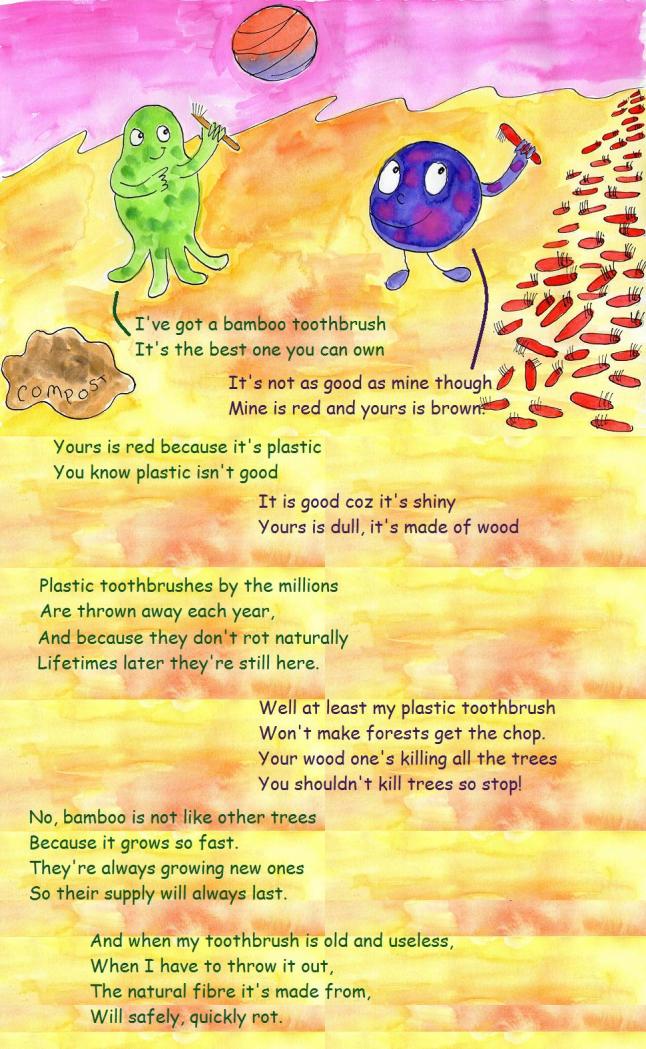
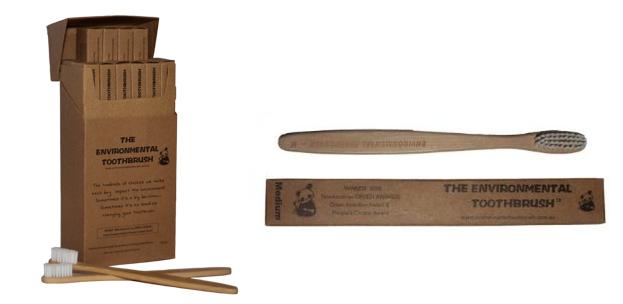
You can read I’ve got a bamboo toothbrush in Why are you a vegan? and other wacky verse for kids or here where you’ll also find links to how to get your own bamboo toothbrush 🙂


Maddicts (graphic novel for teens and up) …. starts tomorrow 😮

We are having fun making videos of some of our stories being read aloud and have decided to make Story Time a permanent fixture on our site. So, if you want to be read a story, just click on the link in the sidebar to your right (or the big picture above) and choose a video 🙂 There are only two on there at the moment, but give us time, we’ll keep them coming 😉
Welcome back to story time 🙂 sit back and relax, we’re going to tell you about the lovely Deidra
Are you sitting comfortably? Then we will begin 😀

Click on the pic to read this new short fairy tale
Or find it on the Fairy Tales shelf along with a couple of others 🙂

Elephant noun
Oxford Dictionary definition: Largest living land animal with trunk and ivory tusks.
Our definition: Elephants are large mammals of the family Elephantidae and the order Proboscidea. Two species are traditionally recognised: the African elephant and the Asian elephant. Male African elephants are the largest surviving terrestrial [land] animals and can reach a height of 4 metres and weigh 7,000 kg. All elephants have a long trunk, used for many purposes, particularly breathing, lifting water and grasping objects. All African elephants, male and female, have tusks whereas only some Asian males have tusks. About 50% of Asian females have short tusks known as tushes – which have no pulp inside. Usually in mammals tusks are enlarged canine teeth, but in elephants they are actually elongated incisors and are essentially no different from other teeth. One third of the tusk is actually hidden from view, embedded deep in the elephant’s head. This part of the tusk is a pulp cavity made up of tissue, blood and nerves. The visible, ivory part of the tusk is made of dentine with an outer layer of enamel. Their tusks can serve as weapons and as tools for moving objects and digging. Elephants’ large ear flaps help to control their body temperature. African elephants have larger ears and concave backs while Asian elephants have smaller ears and convex or level backs.
Elephants are herbivorous and can be found in different habitats including savannahs, forests, deserts and marshes. They prefer to stay near water. Females, known as cows, tend to live in family groups, which can consist of one female with her calves or several related females with offspring. The groups are led by an individual known as the matriarch, often the oldest cow. Elephants have a fission-fusion society in which multiple family groups come together to socialise. Males, known as bulls, leave their family groups when they reach puberty, and may live alone or with other males. Adult bulls mostly interact with family groups when looking for a mate. Calves are the centre of attention in their family groups and rely on their mothers for as long as three years. Elephants can live up to 70 years in the wild. They communicate by touch, sight, smell and sound; elephants use infrasound (low frequency sound), and seismic communication (sometimes called vibrational communication) over long distances. Elephant intelligence has been compared with that of primates and cetaceans. They have self-awareness and show empathy for dying or dead individuals of their kind.
African elephants are listed as vulnerable by the International Union for Conservation of Nature, while the Asian elephant is classed as endangered. One of the biggest threats to elephant populations is the ivory trade, as the animals are poached for their ivory tusks. Other threats to wild elephants include habitat destruction and conflicts with local people.
Horribly, in addition to murdering them for their ivory, human beings have exploited elephants for entertainment in zoos and circuses for centuries; and now the military thinks they might be useful for sniffing out bombs!
Thank goodness for The Elephant Sanctuary, Tennessee, a natural habitat refuge developed specifically for African and Asian elephants, which is home to beautiful animals, rescued or retired from zoos and circuses, who can now live out their lives in a safe haven dedicated to their well-being.

We were so excited yesterday when we discovered, in our Reader, this brilliant post by Chrissy from Hold The Eggplant. Hold The Eggplant is all about navigating the vegan lifestyle, looking at fashion, food, travel, book reviews and all sorts, from a vegan perspective. We thank Chrissy from the bottom of our hearts for this enthusiastic review of our site.
Veganism is growing by the day (hooray!), but it’s not just grown-ups who are embracing compassionate living; many children and young people are too! Whether raised from birth as vegans, or choosing to embrace compassionate living as young people, vegan numbers are growing and times are changing, and I for one couldn’t be happier about it.
Most of the information available for vegans centres on food and health; there are countless sites we can search for menu inspiration and recipes, and tips to eat better. Some of these sites are family friendly, but few tackle the process of what it actually means to grow up vegan. Sure, we grown-ups know that being vegan is the most life-affirming action we can take, but how does that translate for children and young people? What resources are available for them to tackle the complex terrain of living vegan in a non-vegan world?
This is what makes Violet’s Veg*n E-Comics
View original post 251 more words
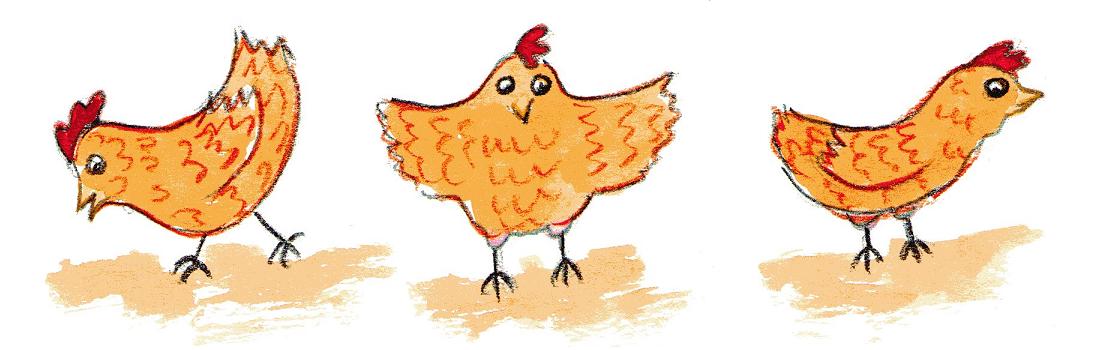
Chickens are people
Just like dogs.
They enjoy dust baths
And jumping on logs.

Chickens will play games
Like ‘chase’ and ‘steal your smalls’.
They’ll splash you in the paddling pool,
Though not keen on fetching balls.

Some of them are gentle,
Some of them are tough.
Some of them are bossy,
Some timid and soft as fluff.

They all have personality
And every one is different.
Just like Rover and Fido and Max
They might be quiet or exuberant.

Yay for happy endings! Tissues at the ready … and click PLAY 😉
Bless his heart and bless all the people that have dedicated their lives to helping and saving animals. There is hope for the animals in this broken world because of people like you

Crab noun
Oxford Dictionary definition: 1. Shellfish with 10 legs 2. This as food
Our definition: 1. Crabs are sentient beings who live in all the world’s oceans, in fresh water, and on land, are generally covered with a thick exoskeleton and have a single pair of claws. They attract a mate through chemical (pheromones), visual, acoustic or vibratory means. Pheromones are used by most fully aquatic crabs, while terrestrial and semi-terrestrial crabs often use visual signals, such as fiddler crab males waving their large claw to attract females. Crabs are mostly active animals with complex behaviour patterns. They can communicate by drumming or waving their pincers. Males will fight to win females or to defend territory. Fiddler Crabs dig burrows in sand or mud, which they use for resting, hiding, mating and to defend against intruders. Crabs are omnivores, feeding primarily on algae, and taking any other food, including molluscs, worms, other crustaceans, fungi, bacteria and detritus, depending on their availability and the crab species.
2. Crabs are boiled alive by humans who want to eat them.
*************
The Cc page is done now (click on the pic or go to the dictionary in the sidebar).
I’ll be starting on Dd today 😀

I’m working on the Cs now and was delighted to find that the first word which needed redefining was Cake:
Oxford Dictionary definition: Mixture of flour, butter, eggs, sugar etc. baked in the oven.
Our definition: There is absolutely no need of eggs and butter when making a cake. There are so many delicious vegan, and even raw vegan, cake recipes – some very sophisticated and complicated and some, my favourites, needing nothing more than flour, sugar (or other natural sweetener such as agave), vegetable oil and water. And I do not exaggerate when I say that they taste better than any cake I tasted in my pre-vegan days. But you don’t need to take my word for it, look at oatielover’s chocolate cake and Lisa’s vanilla layer cake or any of the thousands of vegan cake recipes out there – there’s something for everyone. All this typing’s making me peckish, please excuse me a moment while I grab one of the blueberry muffins I made earlier 😉
And talking of Blueberry Muffins – this is how I made them:
I mixed together 8 ounces of organic spelt, 2 teaspoons of baking powder, 4 ounces of organic sugar, 4 tablespoons of organic vegetable oil, and about 150 ml of water. Then, when that was all combined into a smooth mixture I added a load of rinsed organic blueberries and mixed those in well. I then generously filled 6 large paper cake cases with the mixture and baked them in a muffin pan at 180°c (fan oven) for half an hour. Easy as pie! Or rather, cake!

Icing is optional but highly recommended 🙂
Don’t fancy blueberries? What about a butterfly cake?
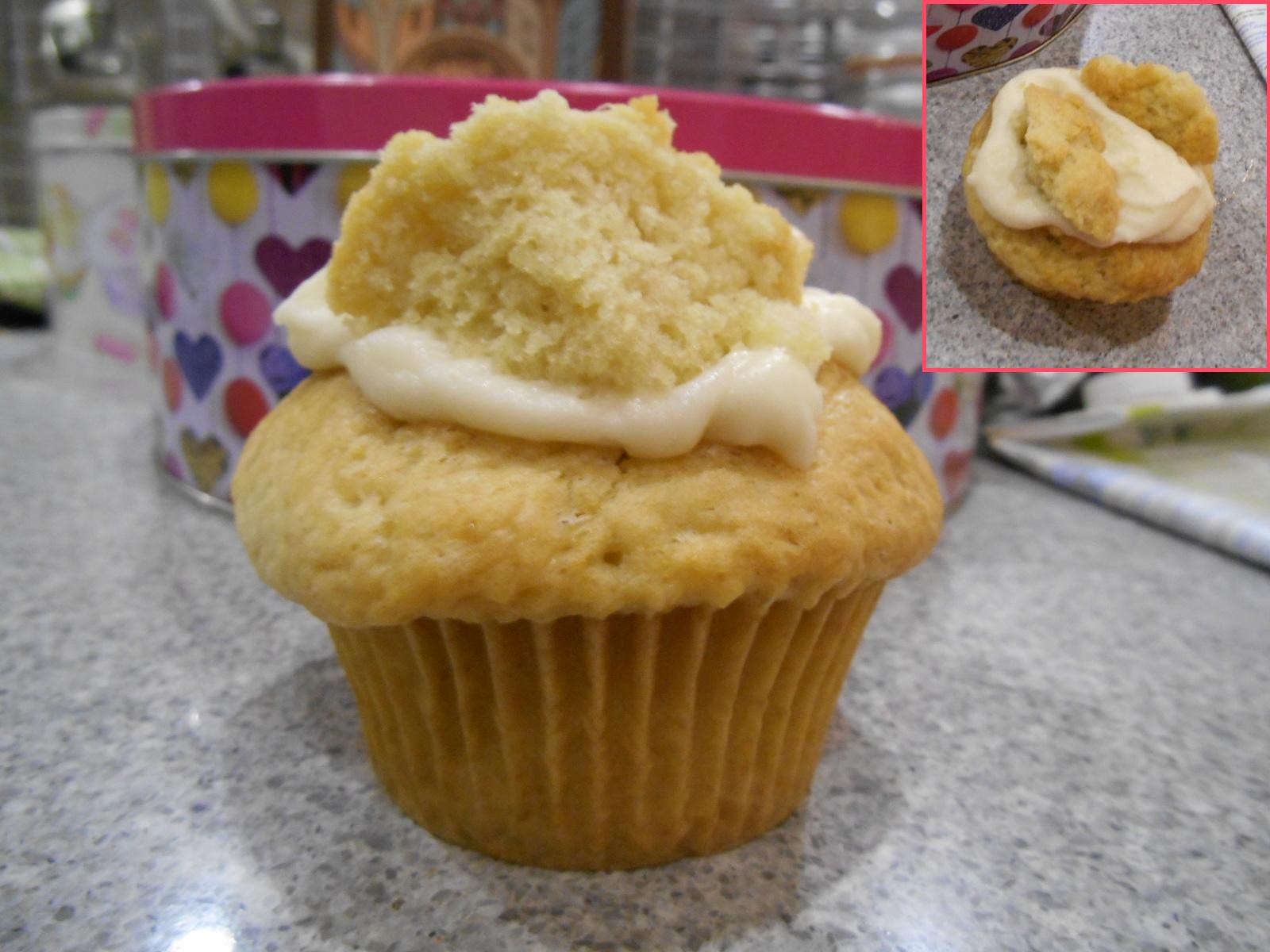
Same recipe, minus the blueberries. When they’re cold, scoop out the top of the cake, fill the hole with icing, cut the cut-out bit in half and stick it in the icing to look like wings.
Anything omnivores can do, vegans can do better! Stick that in your cake-hole Oxford Dictionary!
Think of the bears …. save the bears
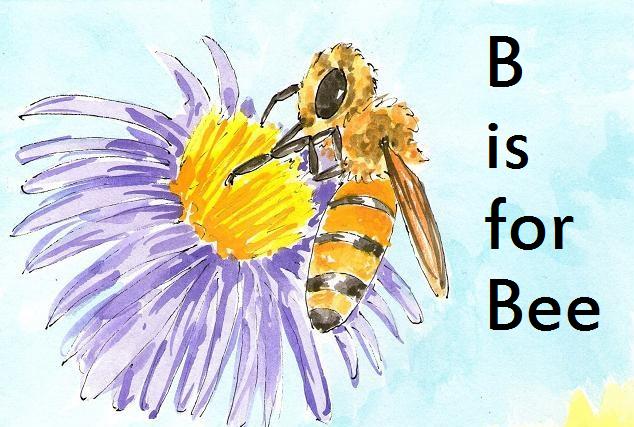
Compiling the vegan dictionary is taking a long time and I won’t be able to complete a letter in one day as I naïvely first thought. I have only just finished Bb so won’t be able to share any C words until at least tomorrow 🙂 In the meantime, Miranda thought it might be a good idea to post an excerpt of Bb – so here it is:
Bee noun
Oxford Dictionary definition: Four-winged stinging insect, collecting nectar and pollen and producing honey and wax.
Our definition: There are lots of different types of bee in the UK, around 250 species – 24 species of bumble bee, 225 species of solitary bee and just one species of honey bee. Honey bees will live through the winter, eating and working all winter long, which of course requires a large store of food – hence the honey they’ve worked hard for all summer. With Bumble bees however, the new queens, after mating, find somewhere to hibernate and the rest of the colony dies off. While hibernating she does not need to eat so there are no honey stores. In the spring when she has to work hard, she makes a small pot of honey for herself. Solitary bees typically produce neither honey nor wax. They are important pollinators as the females, who are all fertile, build their own nests and take care of their own young so pollen is gathered for provisioning the nest with food for their brood. Bees gathering nectar (eg honey bees) may accomplish pollination, but bees that are deliberately gathering pollen (eg solitary orchard mason bees) are more efficient pollinators. There are also 500 species of stingless bee

Click on the pic and you may Bbegin reading 😉

So often we realise, and sometimes we don’t realise, that the words we use normalise animal exploitation and degradation. A man might be angrily referred to as a ‘pig’ because he behaves in an obnoxious or sexist manner; a person might be called an ‘animal’ if they are aggressive or bad mannered; some animals are described by the way they taste instead of by characteristics which actually tell us something about them as individuals; people are desensitised to the harsh realities which face captive animals every day because words, like ‘abattoir’ for example, are defined simply as slaughterhouse which doesn’t begin to convey the horror and becomes an accepted and unquestioned fact that doesn’t make people recoil or revolt.
The other side of this coin is that some words are only described in relation to animal farming when in fact there is so much more to them (see alfalfa).
So we thought it would be a good idea to make a vegan dictionary, with words defined from a vegan point of view, and we’ll keep it high up in the sidebar for easy reference. It will take a long time to complete – so far I have just done A! – but it is a very interesting endeavour and I am enjoying it.

I began by referring to my big old Oxford dictionary. I went through the A section, page by page, and every time I came across a word which normalised animal exploitation or degradation, or which was defined in a way which did, I copied it down and defined it honestly and fully to the best of my ability. I also include the Oxford definition in my dictionary for comparison.
You can find the dictionary by clicking on the picture at the top of this post, or on the picture of the dictionary in the sidebar and that will take you to links to the lettered pages – so far, as I said, just A, but I’ll get started on B today!
I believe that most people, whether they be veg*n or not, have compassion for animals and the reason that many of those who feel love for other species still eat some of them is because they have been conditioned from birth not to question it. It is deeply embedded in the language they speak.
When I was 13 I told my dad that I wanted to be vegetarian and he asked me why. I told him that it was because I didn’t want animals to be killed. He explained to me earnestly that it was all done humanely; that they don’t suffer. He didn’t know that. He didn’t know anything about animal farming or slaughter, but he believed it to be true. He had been told that there were regulations in place to make sure the animals didn’t suffer and he believed it. And he told me that it was true. And that’s what most people think: it is normal, it is natural and it is humane.
But it isn’t any of those things so we need a new normal, and it starts with the language.
So we wrote down all the entrants’ names,
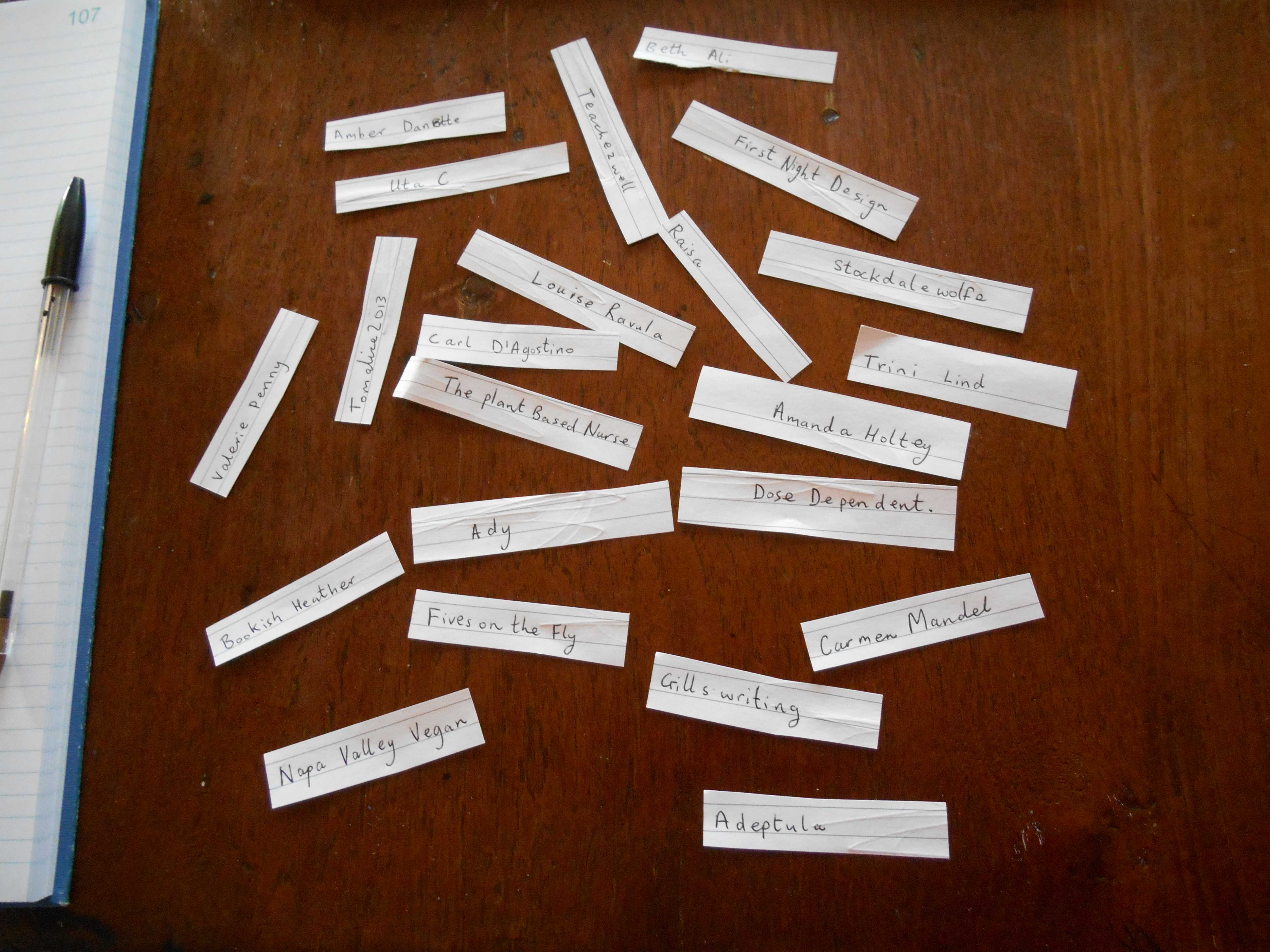
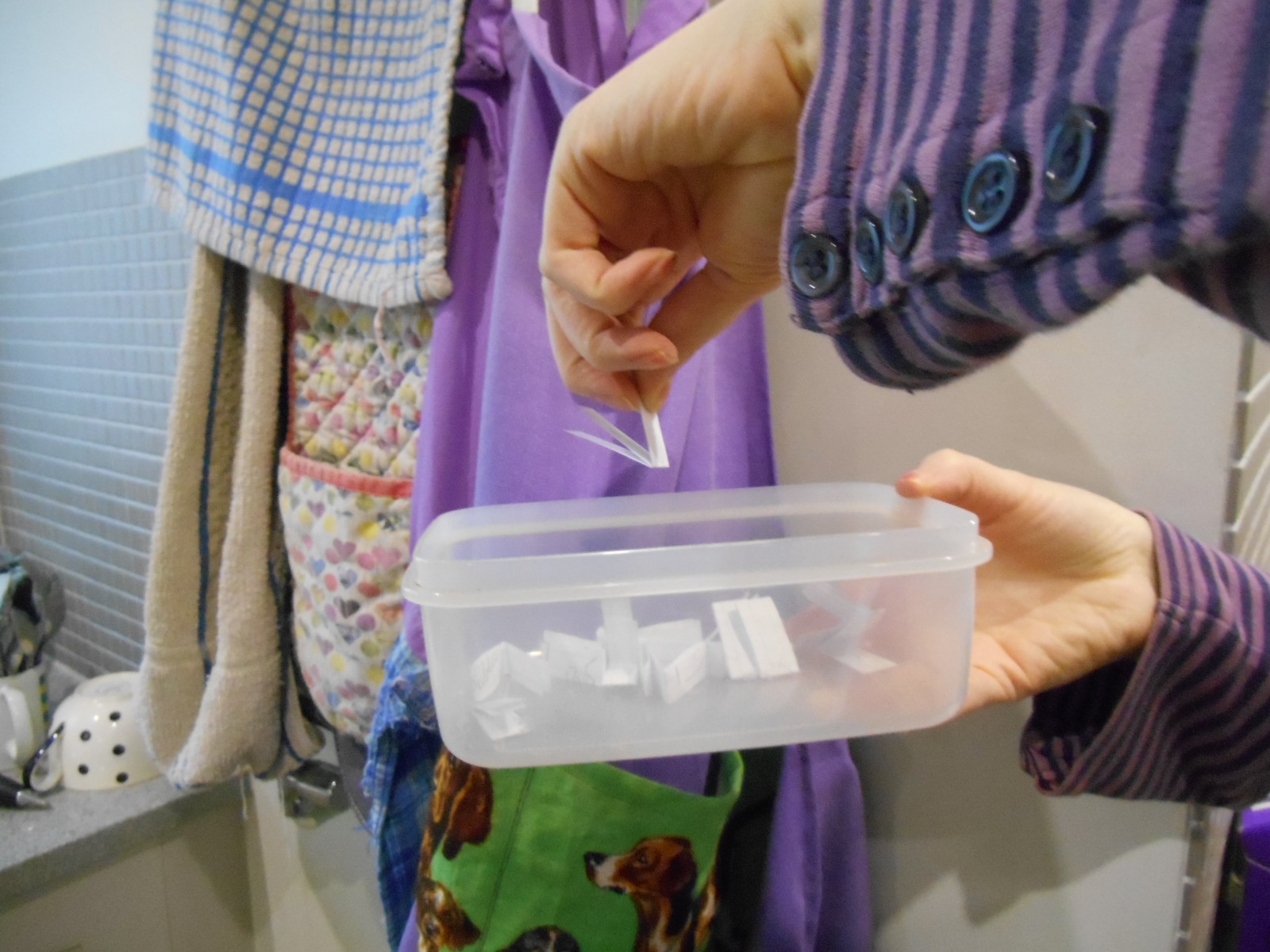
folded them up, put them in a bowl and, with eyes closed, picked out the winner.

And the winner is:

Congratulations Ady 😀 a copy of Why are you a vegan? and other wacky verse for kids will be on its way to you as soon as you give me your address (which you can do privately via the Contact page).
Thank you to everyone who entered – I wish I had enough to send one to all of you 😀
See you tomorrow when Episode 4 of Megan & Flos begins!

Comment on this, or this or this post to be entered into the prize draw for a chance to win a free copy of Why are you a vegan? and other wacky verse for kids
But hurry, you’ve only got until midnight Sunday (GMT), we’ll be drawing the winner on Monday morning 🙂
Good luck!

Where are you going Deidra? is one of our favourite, and one of the most popular, stories on this site so when we decided to publish a compilation of short stories and rhymes for little ones we really wanted to include it. Unfortunately the new book – entitled “Why are you a vegan?” And other wacky verse for kids – is full of rhyming stories (of course), and Deidra is not one of those.
So, we made it into one – and here it is, the true-ish story of Deidra the dairy cow, in rhyme, in case you’re interested.
This is how it begins:
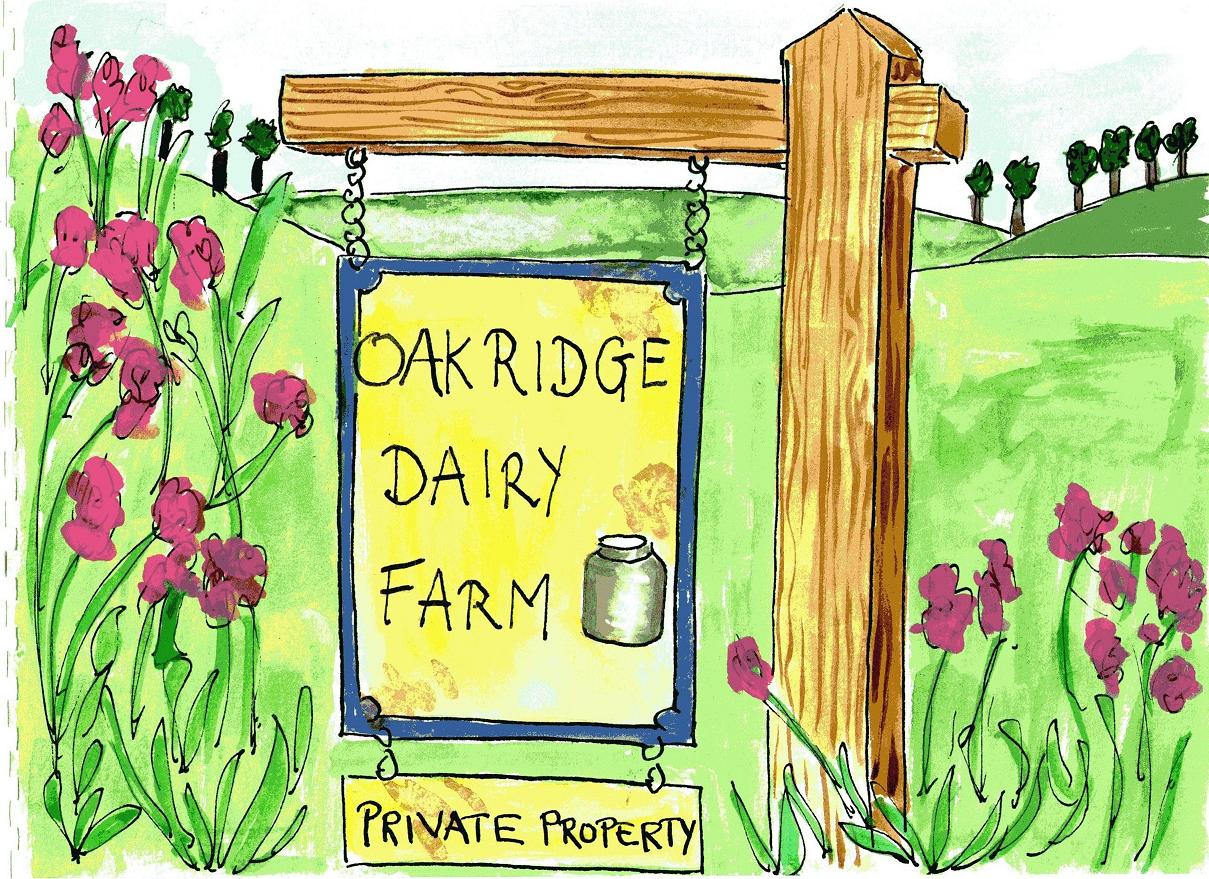
Once there was a dairy farm
With fifty lovely cows.
Most of them were black and white
But some of them were brown.
***
Gripping stuff I know! 😉
Where are you going Deidra? – In Rhyme

Well look at the time!
It flies by so fast!
With chime after chime
The present is past!
So we’d better make the most of it!
How much do you wanna bet there’ll be more veg*ns at the end of 2015 than there were at the beginning? 😉
Happy New Year everybody,
Love from Violet and Miranda
xxx

Dashing through the snow
In our purple vegan boots
O’er the hills we go
Eating juicy fruits.
ha ha ha
Bells on bracelets ring
Making spirits bright,
What fun it is to laugh and sing
A jingling song tonight.
***
Oh, jingle bells, walnut shells,
Chocolate raisins taste
Sweet, and so do peanut chews,
Vegan treats won’t go to waste.
😀


Congratulations hitandrun1964, aka Gigi, a clean, new copy of Well Fed Not An Animal Dead will be winging its way to you as soon as I get your address (I’ll email you) 🙂
Commiserations to everyone who wasn’t as lucky as Gigi, but all is not lost. You can still get a copy of this brilliant little book directly from the source for just £3 plus postage. But hurry, there are only a limited number left as it is not going to be reprinted since Graham Burnett published his new book The Vegan Book of Permaculture
I want to make a yule log for Christmas day so I thought I’d better practise. I found a vegan recipe and really helpful instructions at Vegan Good Things but, being both lazy and impatient, I decided to try to make a simpler version. I am very grateful to Leinana at Vegan Good Things for the how to part of the recipe and you should check out her post as she explains it much better than I will 🙂

So, I adapted the raspberry buns recipe from Well Fed … like so:
(Oh, first I preheated the electric fan oven to 190°c)
7 oz organic spelt
1 oz organic fair trade cocoa
3 tsp of organic baking powder
1 tsp of organic fair trade vanilla essence
150 ml – ish of organic Agave nectar
4 tablespoons of organic olive oil
enough organic oat milk (you can use any plant milk or even water) to make the mixture quite wet
Can anyone spot my mistake? Look at the photo above. Well, I didn’t realise what I’d done until I looked at the photo when I came to write this post. Have you spotted it? …….
Yes, I used corn flour instead of baking powder! Well the packaging is exactly the same, apart from the big black letters that spell CORN FLOUR!!!!
Ok, so I mixed all those ingredients together and poured the mixture onto the tin. Oh, I forgot to tell you – first prepare a flat tin by covering it with parchment paper smeared with margarine. See, I told you Leinana explains it better than me.

Then I smoothed it over with the back of a spoon so that it filled the tin.

Like so. And bunged it in the oven for 10 minutes. While it was cooking, I laid a clean tea towel on the work surface and covered that with another sheet of parchment paper.

Dusted the paper with organic icing sugar. When the ten minutes was up, I took the cake out of the oven.

And tipped it over onto the dusted paper. You have to do it real quick. I was a bit too cautious and it cracked at one end.
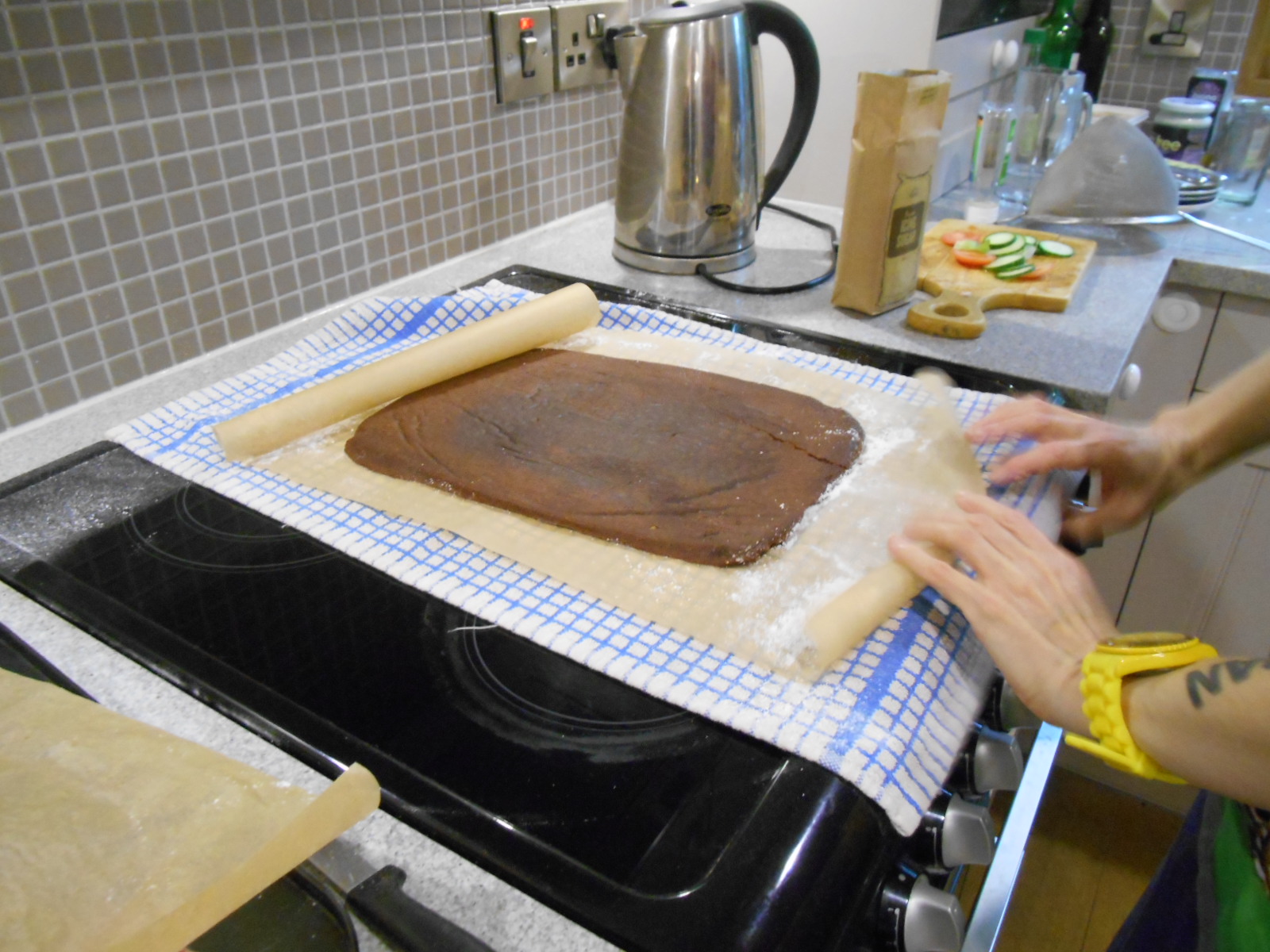
Nevermind. Then I quickly peeled the parchment paper off the top and, using the tea towel, rolled up the cake. Again, Leinana explains it better, pop over to her place.
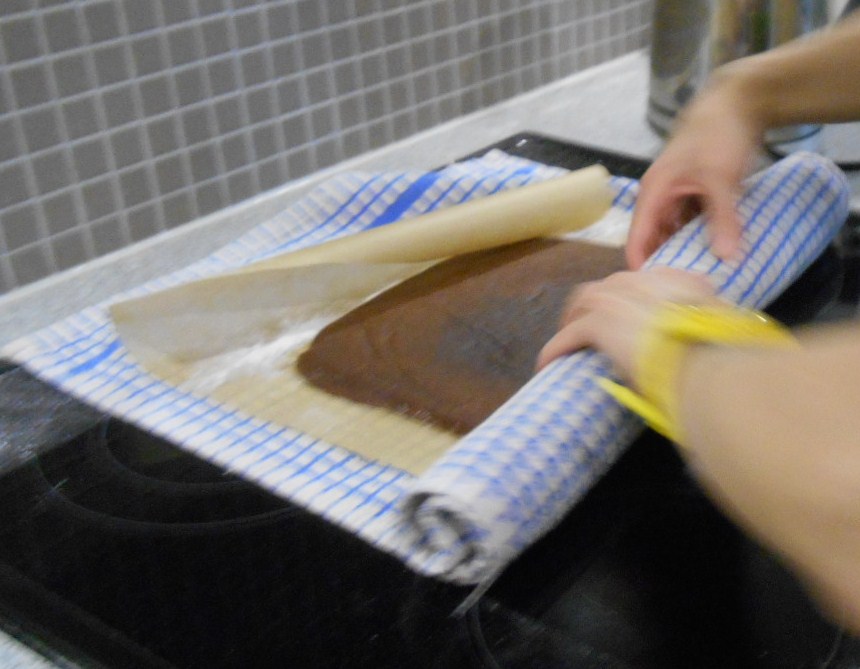
Then I put it to one side to cool. Next the icing, and again I kept it simple. Just vegan margarine, icing sugar, cocoa, a teaspoon of vanilla essence and a little drop of hot water from the kettle.
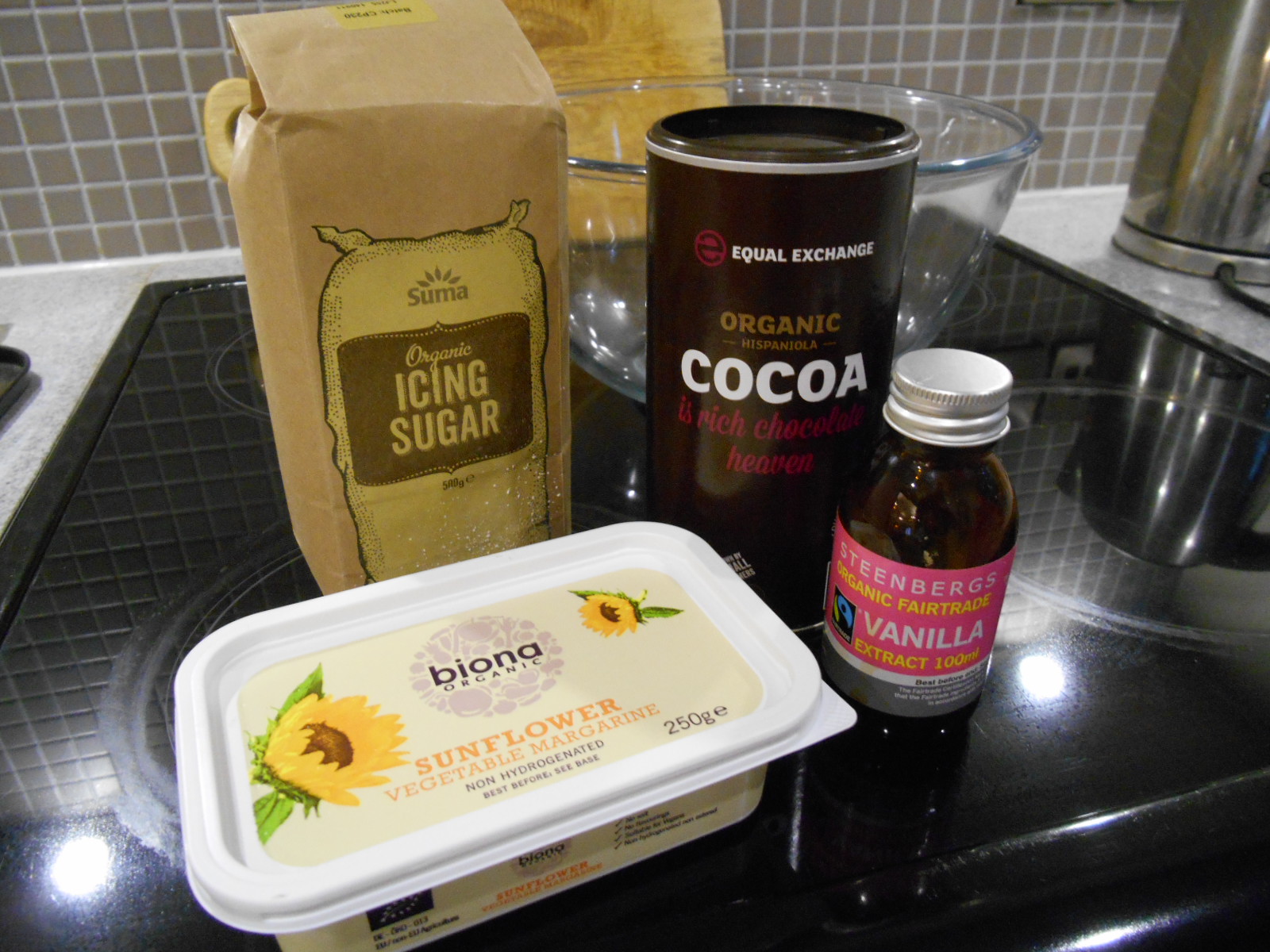
I don’t measure, just wing it and then adjust to taste. I did of course sieve the icing sugar and cocoa to get rid of all the lumps so I’m not irredeemably lazy 😉
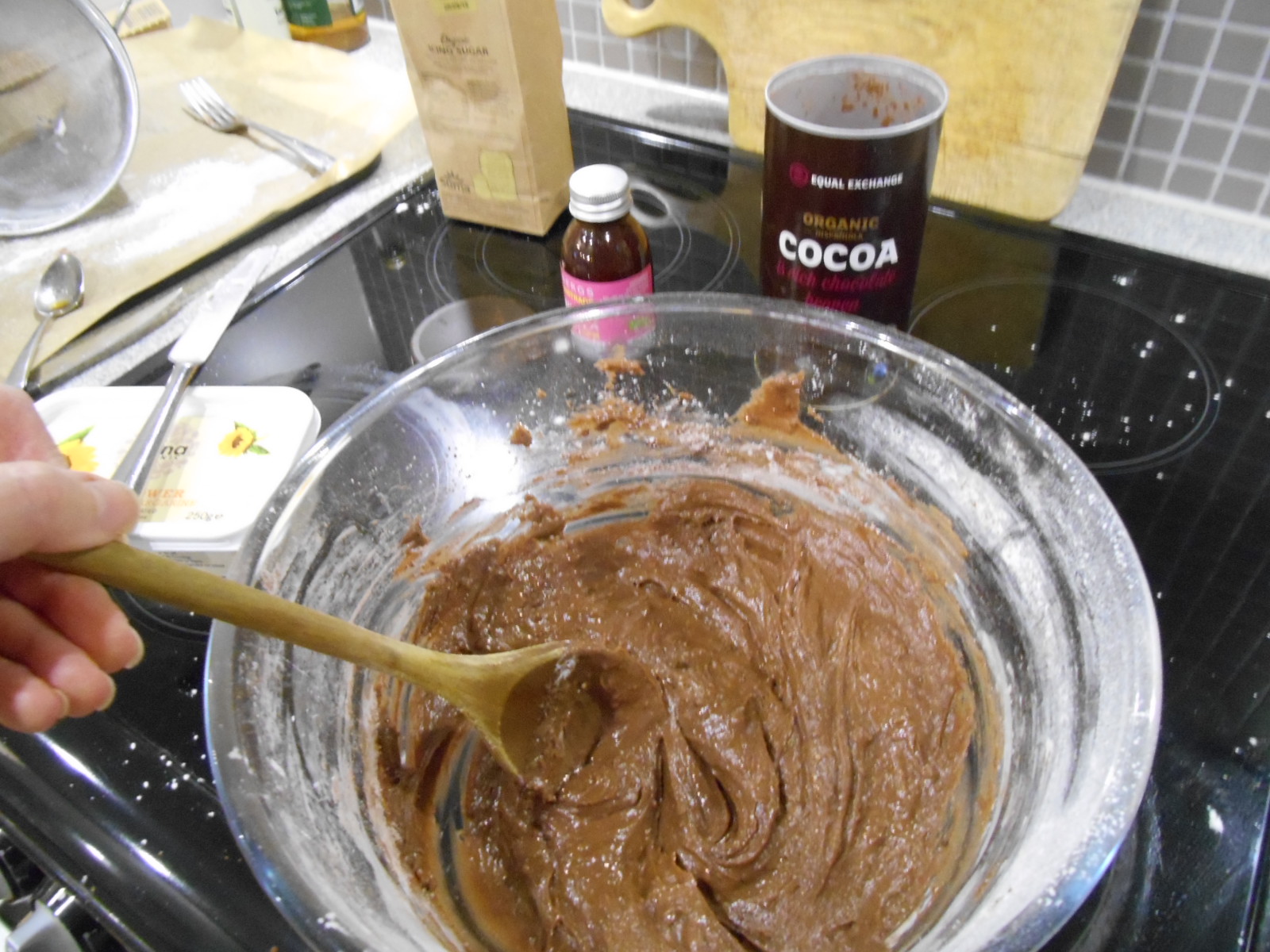
When I was happy with it I put it in the fridge. The next challenge was to distract myself so that I wouldn’t try to ice the cake before it was fully cool. And it was taking a long time to cool. Too long. I gave in in the end – well, it was cold on top 😀

And when I unrolled it, it broke into strips. I continued undeterred. Each strip was still curvy so I hoped it would work.

I pasted generous amounts of icing over top of all the bits and then, using the parchment paper, rolled it back up.

Not bad considering. It did slide a bit – it was too warm and the icing was melting a bit but, nevermind. I put it on a plate and covered it in more icing which helped hold it together.

Then I dragged a fork over it to make bark grooves
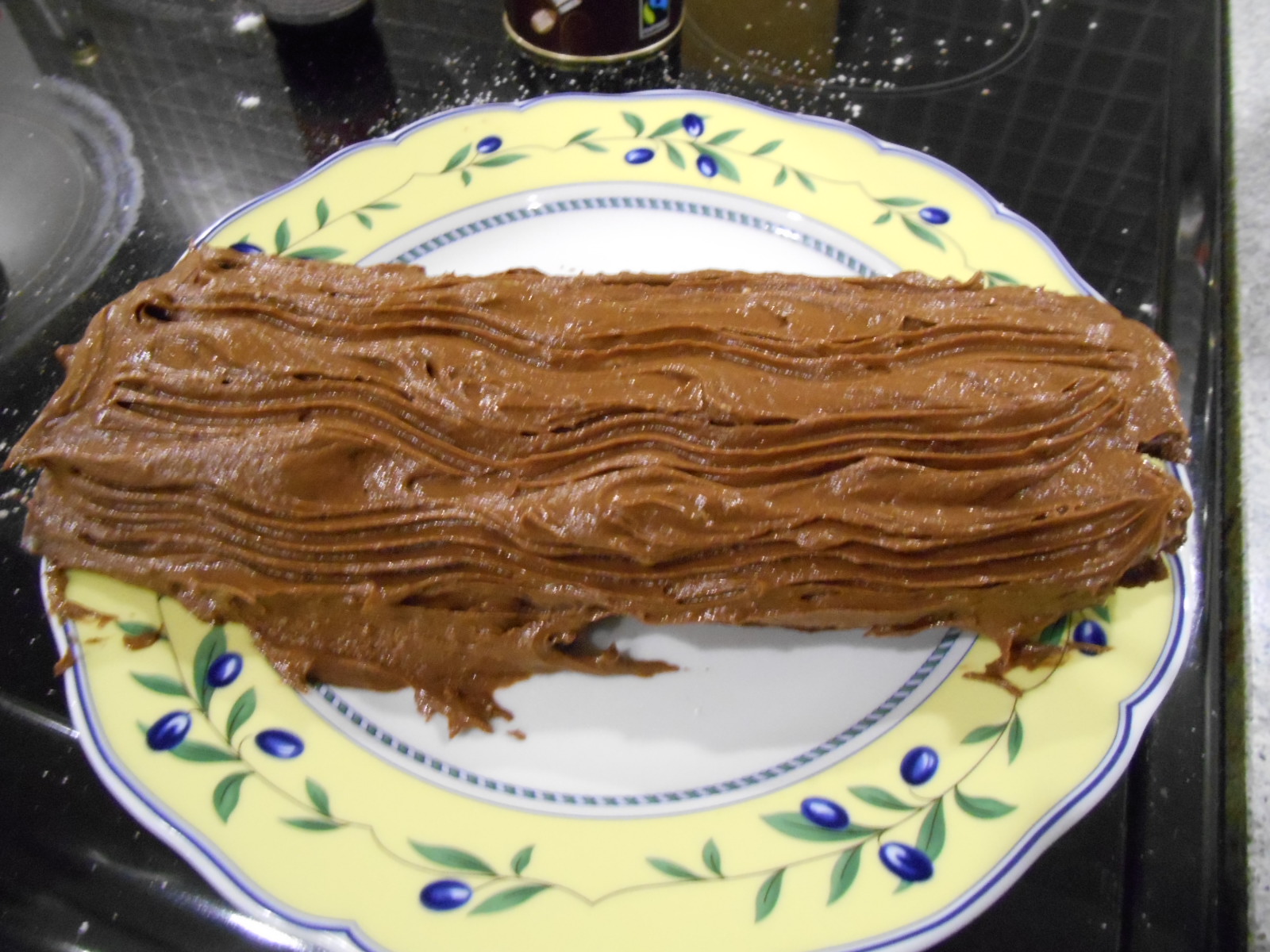
Then sieved some ‘snow’ over it

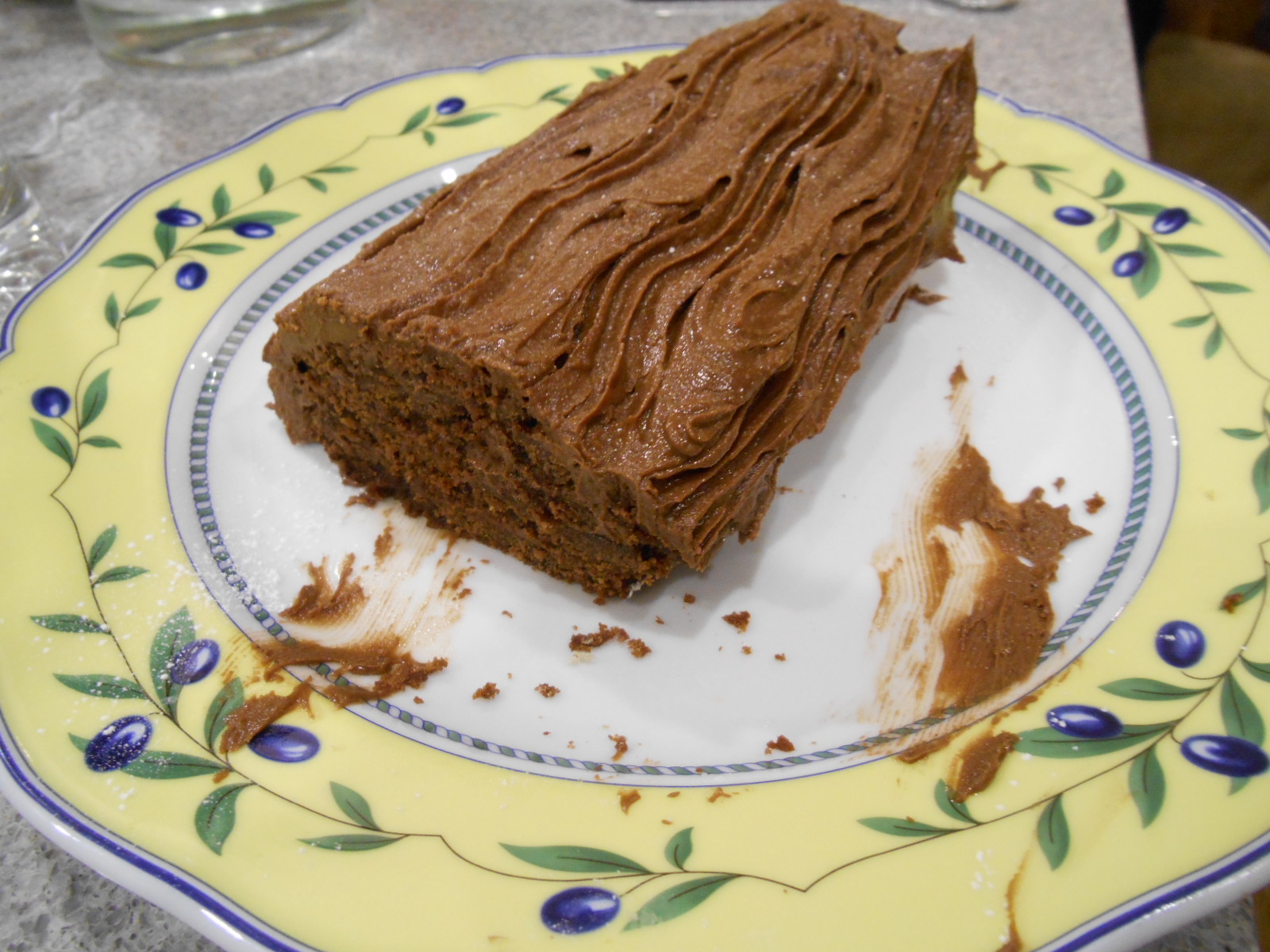
et voilà

Then chill.
And the verdict? Despite being made with corn flour instead of baking powder, the cake itself is very nice. The icing makes the log a bit too sweet and sickly for me, although husband and daughter didn’t think so 🙂 , so I think for my next attempt I will use a raw recipe for the icing – that way the whole thing will be sugar free!
I’ll let you know how that turns out on Christmas Eve 😀

When we began our home schooling adventure all those years ago we were very lucky to find this wonderful book. Unqualified Education is full of inspiring ideas and information, advice and encouragement. It is an absolute joy and still a great resource after the children have grown up.

We decided to home school when my eldest daughter was just 12 and my youngest was 9. It was not because they were bullied or anything, and they were not struggling with any of the work. It was just that life is short, and childhood so short that they should be able to enjoy it all. In school they were forced to conform to the ‘norm’, to study a set curriculum. It was so rigid. My eldest was so stressed. She got detention for wearing the wrong colour socks for PE; her friend who had cut his hair into a mohican, and had assured his teacher that he would wear it flat and combed tidily for school, was told “Absolutely not! Shave it all off!” They simply weren’t allowed to be individuals.
At home we were free. They could study what they wanted, how they wanted. We went bike riding and swimming. We grew vegetables and cooked and sewed and painted and, yes we did maths and English, but we read and read and read – really good books. We did history and learnt Welsh (a bit). What I knew I taught them; what I didn’t know we learnt together. It was the best time.
This book was a wonderful support and inspiration. Mind you, it’s a good book for anyone, whether home schooling or not. As you can see from the Contents page, there’s a lot in there, and the recipes in the cooking section are all vegetarian and nearly all vegan! There is the most amazing chocolate chip cookie recipe – mm mmmmm!
****
Anyway, I needed a new apron so I got out the book, looked up the apron pattern and upcycled myself one:

(You can click on the pics to enlarge them by the way)


I didn’t have a broadsheet newspaper but luckily Miranda had an old pad of flip-chart paper which she’d rescued from the bin at work and that was just right for this job.


I upcycled an old duvet cover – thoroughly washed of course! I didn’t do the little pocket because I wanted a big pocket – read on 🙂
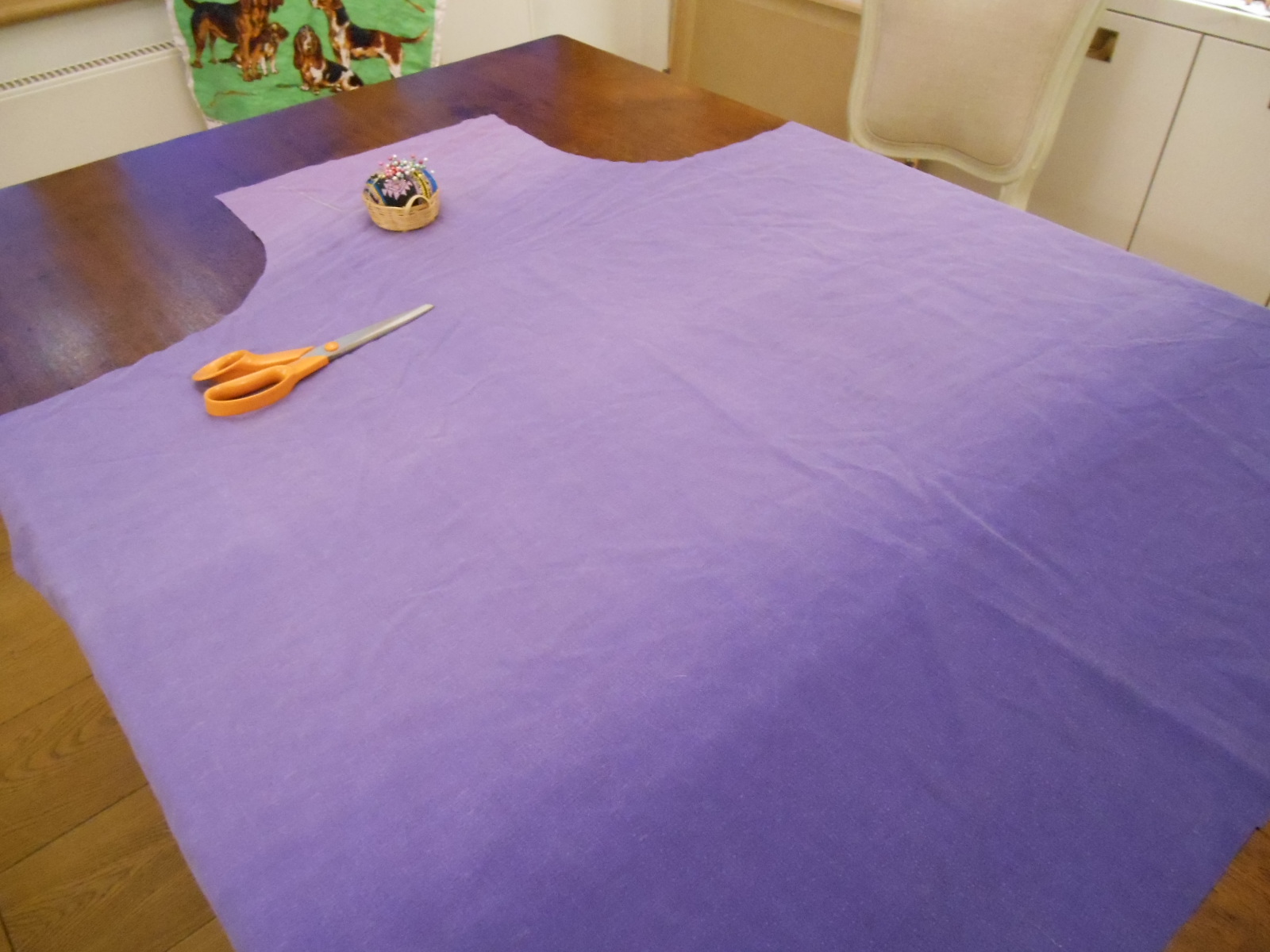

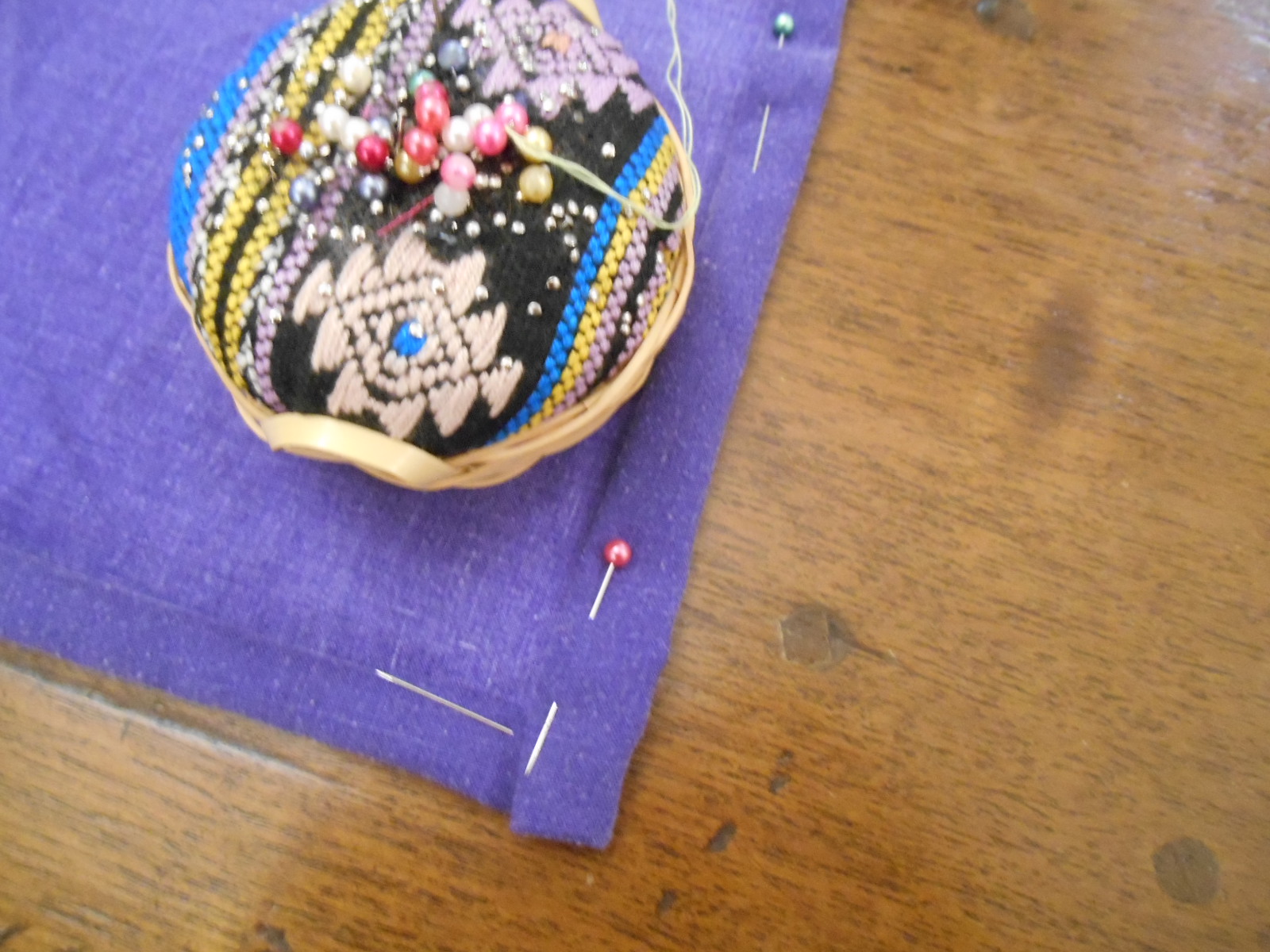
You can sew it by hand, it just takes a while. Luckily I had use of a sewing machine – thanks Mum 🙂
After the hemming was done I attached the ties as shown in the instructions.

I decided to make a pocket out of this gorgeous vintage tea towel found in a charity shop. I cut off the bottom row of dogs and hemmed the raw edge.
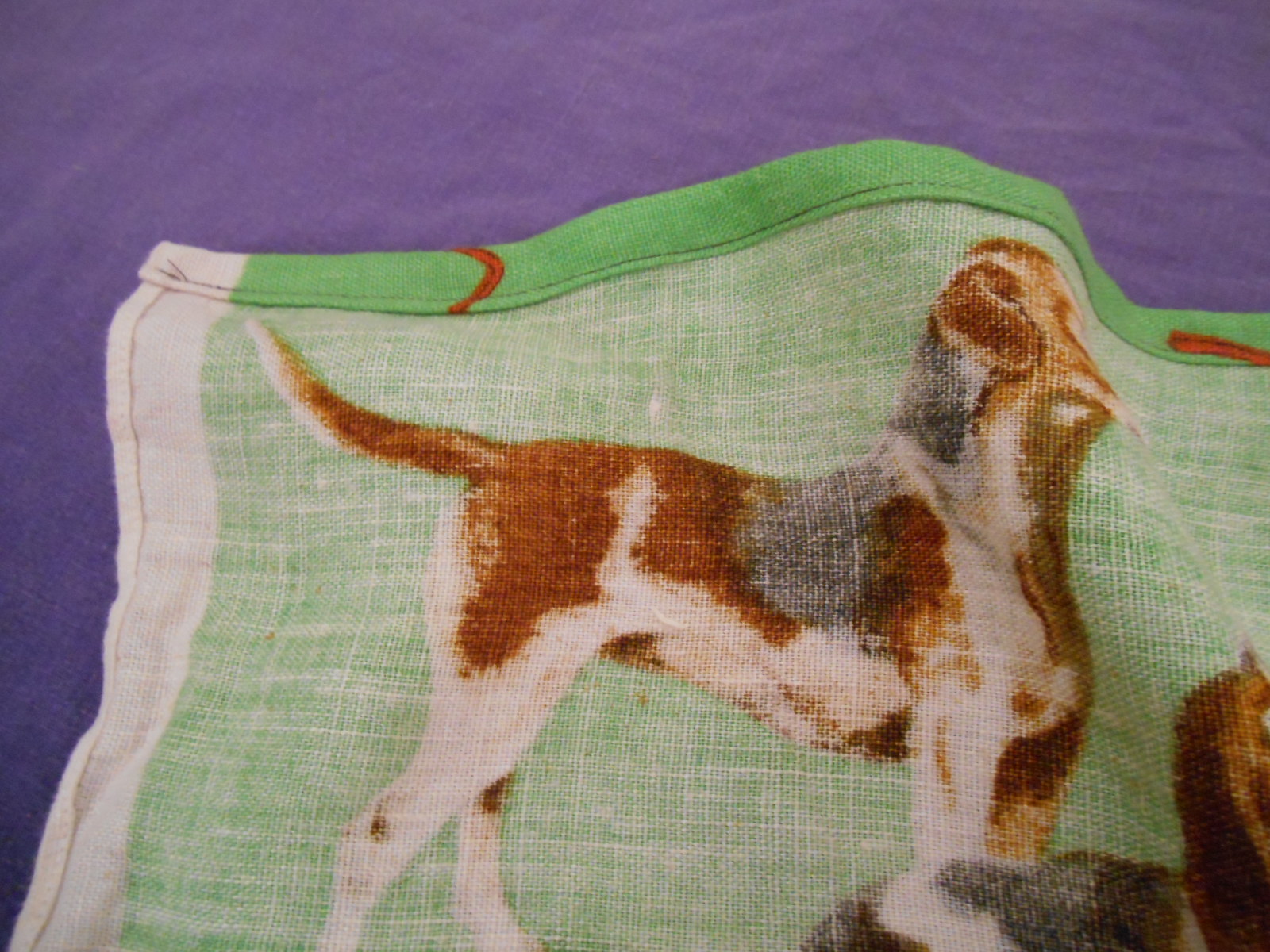
Then I put on the apron so that I could position the pocket and put in a pin to mark the position of the centre of the top of the pocket.

Then I sewed it on. With a pocket this size you have to sew up the middle, effectively creating two pockets. No dogs were harmed by this procedure – I was very careful not to sew over any of them 🙂
All done!


Miranda and I are delighted to be able to give away a new copy of the brilliant Well Fed Not an Animal Dead
Remember I recommended it a few weeks ago? (See here ) Well, I ordered a couple of copies for Christmas presents and got a free one thrown in. So, I would like to give it away to one of you lovely people.
Now, if you don’t already have a copy of this book, you’re going to want one – it’s full of brilliant recipes and vegan lifestyle advice and information – so go on, enter this prize draw!
🙂
All you have to do is comment on this post, telling me you want to enter. We will put the names of all the entrants in a box and pick one out on Saturday, so you’ve got until Friday the 19th of December 23:59 GMT (2014 of course 😉 ) to enter.
This is open to anyone, anywhere. Good luck! 😀


On the first day of Christmas my true love sent to me
A little organic pear tree
On the second day of Christmas my true love sent to me
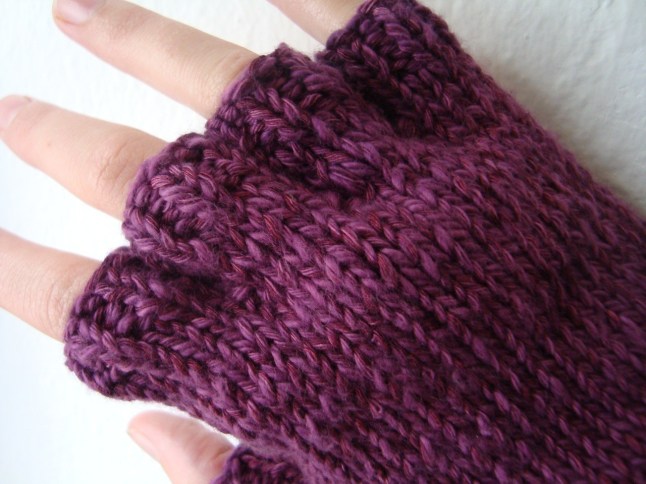
Two purple gloves
And a little organic pear tree

On the third day of Christmas my true love sent to me
Three corn pens
Two purple gloves
And a little organic pear tree

On the fourth day of Christmas my true love sent to me
Four gaming boards
Three corn pens
Two purple gloves
And a little organic pear tree
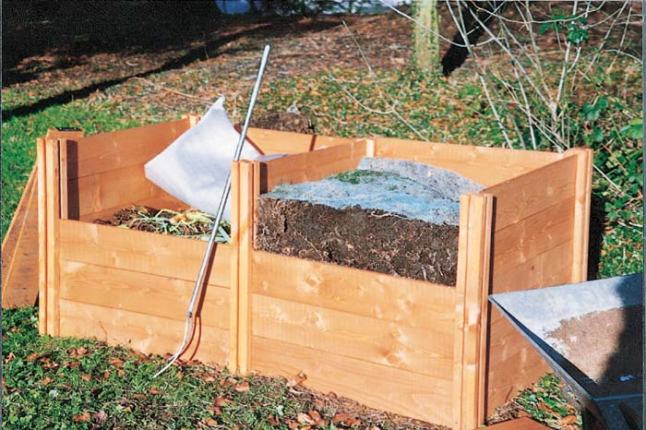
On the fifth day of Christmas my true love sent to me
Five compost bins
Four gaming boards
Three corn pens
Two purple gloves
And a little organic pear tree

On the sixth day of Christmas my true love sent to me
Six Christmas crackers
Five compost bins
Four gaming boards
Three corn pens
Two purple gloves
And a little organic pear tree
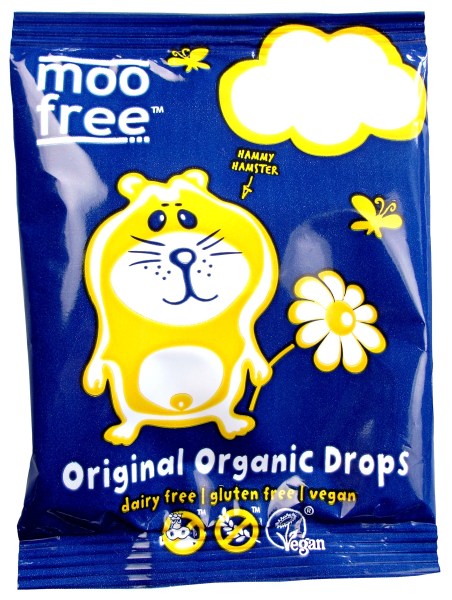
On the seventh day of Christmas my true love sent to me
Seven chocolate buttons
Six Christmas crackers
Five compost bins
Four gaming boards
Three corn pens
Two purple gloves
And a little organic pear tree

On the eighth day of Christmas my true love sent to me
Eight packs of crayons
Seven chocolate buttons
Six Christmas crackers
Five compost bins
Four gaming boards
Three corn pens
Two purple gloves
And a little organic pear tree
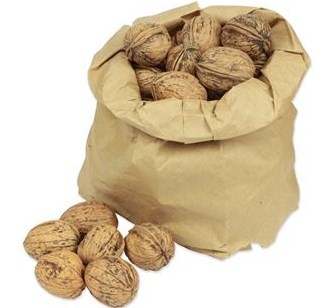
On the ninth day of Christmas my true love sent to me
Nine unshelled walnuts
Eight packs of crayons
Seven chocolate buttons
Six Christmas crackers
Five compost bins
Four gaming boards
Three corn pens
Two purple gloves
And a little organic pear tree

On the tenth day of Christmas my true love sent to me
Ten mince pies warming
Nine unshelled walnuts
Eight packs of crayons
Seven chocolate buttons
Six Christmas crackers
Five compost bins
Four gaming boards
Three corn pens
Two purple gloves
And a little organic pear tree
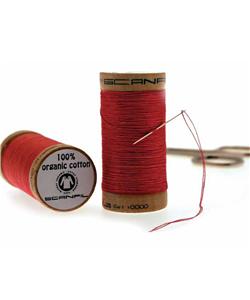
On the eleventh day of Christmas my true love sent to me
Eleven reels of cotton
Ten mince pies warming
Nine unshelled walnuts
Eight packs of crayons
Seven chocolate buttons
Six Christmas crackers
Five compost bins
Four gaming boards
Three corn pens
Two purple gloves
And a little organic pear tree

On the twelfth day of Christmas my true love sent to me
Twelve toys for cuddling
Eleven reels of cotton
Ten mince pies warming
Nine unshelled walnuts
Eight packs of crayons
Seven chocolate buttons
Six Christmas crackers
Five compost bins
Four gaming boards
Three corn pens
Two purple gloves
And a little organic pear tree
****
Click on the pics for links to websites selling ethical, fair trade, organic, vegan Christmas gifts.
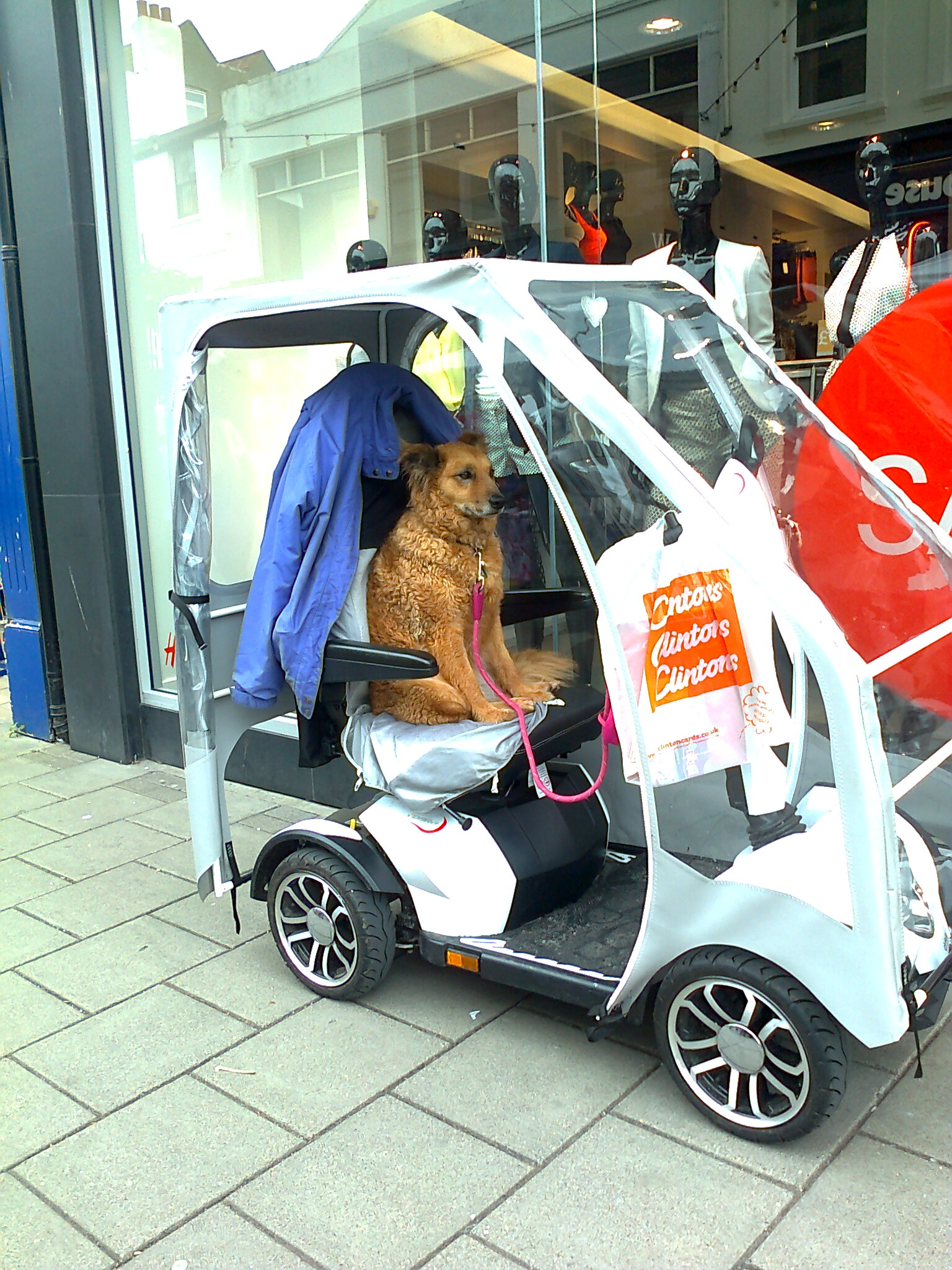 When you’re waiting for your human, you might as well be comfortable
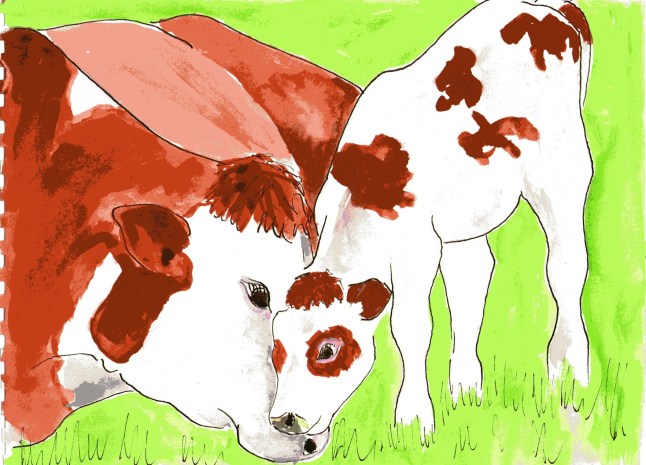
I’m tired, my knees ache, I have sore feet,
My belly is heavy with child inside.
Head is aching from the blistering heat,
What’s coming is worse, I’m desperate to hide.
****
Last year I cheerfully bore my first child,
All the discomfort and pain were worth it.
My love for him instant, instinctive, wild,
Overwhelmed me, the light in my heart lit.
****
I washed him and nursed him, my suckling angel,
My purpose in life was now clear to me –
To love him, protect him and teach him well.
Like any other mother I would be.
****
The sun set that day and the bright moon rose,
And we spent a blissful night together.
Brief nirvana before that bitter dose,
When hell swallowed me whole, meat and leather.
****
At dawn I heard their heavy stomping feet,
They approached us as I was feeding him.
Without shame…
View original post 99 more words

Click on the pic to enlarge and read
I bought this little book about 4 or 5 years ago at VegFest in Hove and it is the best, most useful little book I’ve got. You can see from how grubby my copy is that it has been well used! It’s only 50 pages long and has everything from vegan lifestyle tips, to recipes, to how to grow your own food and brew your own booze. It also lists vegan sources of essential nutrients (as you can see above), contains advice for mothers and infants and includes addresses of many other vegan resources. Whether you’re an experienced vegan or just embarking on this journey, this book will definitely be a valuable addition to your reading material. [Sadly this book is now out of print but maybe the people at Spiralseed, who made it, might have something else just as good].

Click on the pic to enlarge and read
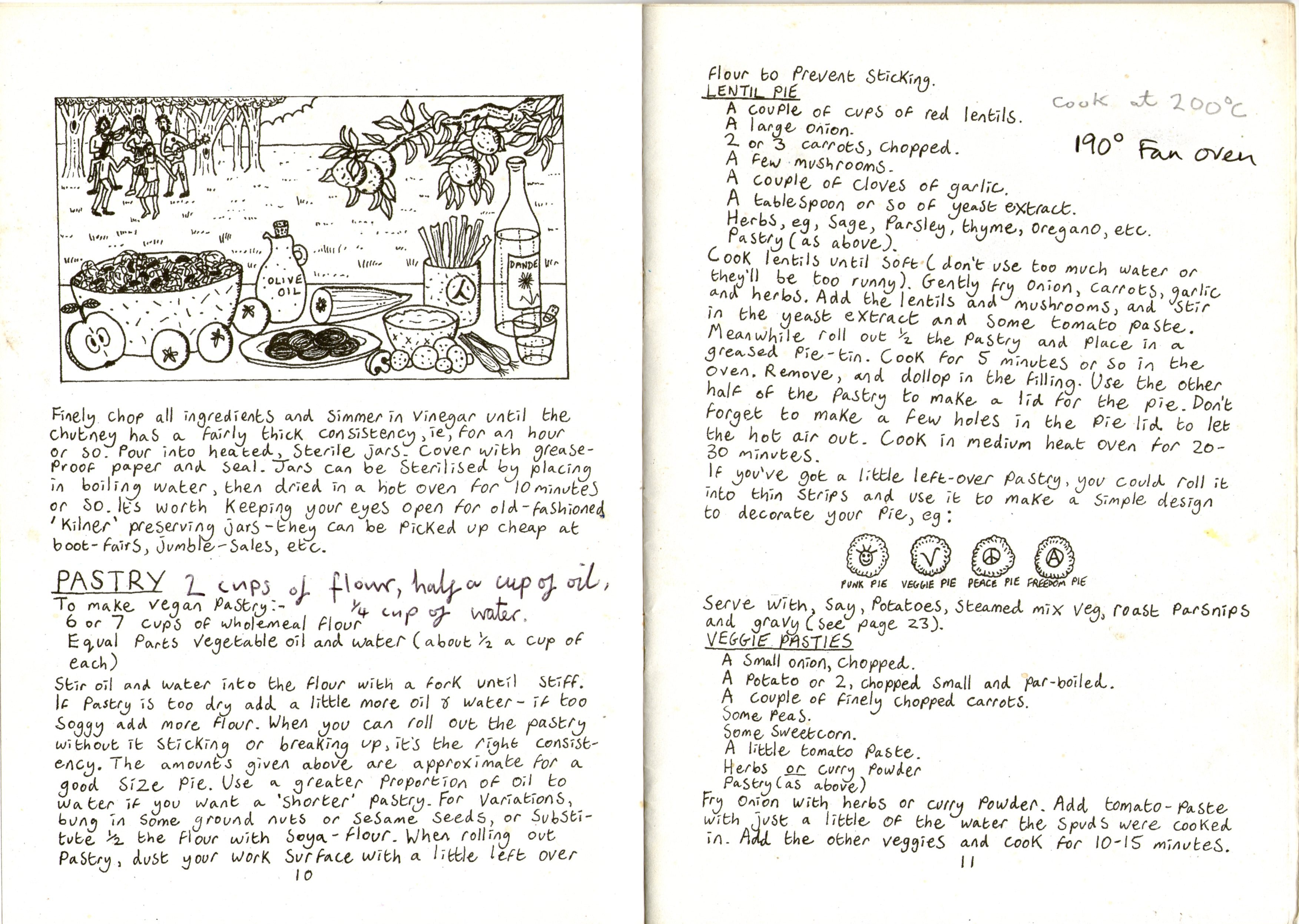
Click on the pic to enlarge and read
Above is one of my favourite recipes – Lentil Pie – absolutely delicious! I make the pastry with organic spelt to avoid the unpleasant side effects triggered by modern wheat which has been so manipulated since the middle of last century that it bears little resemblance to its natural ancestor and causes negative health affects on the bodies of many people. We’ve found through trial and error that the ancient relative of wheat, spelt, does not cause the headaches, heartburn or back-pain triggered in us by wheat. Which is great news because now we can have our cake and eat it!
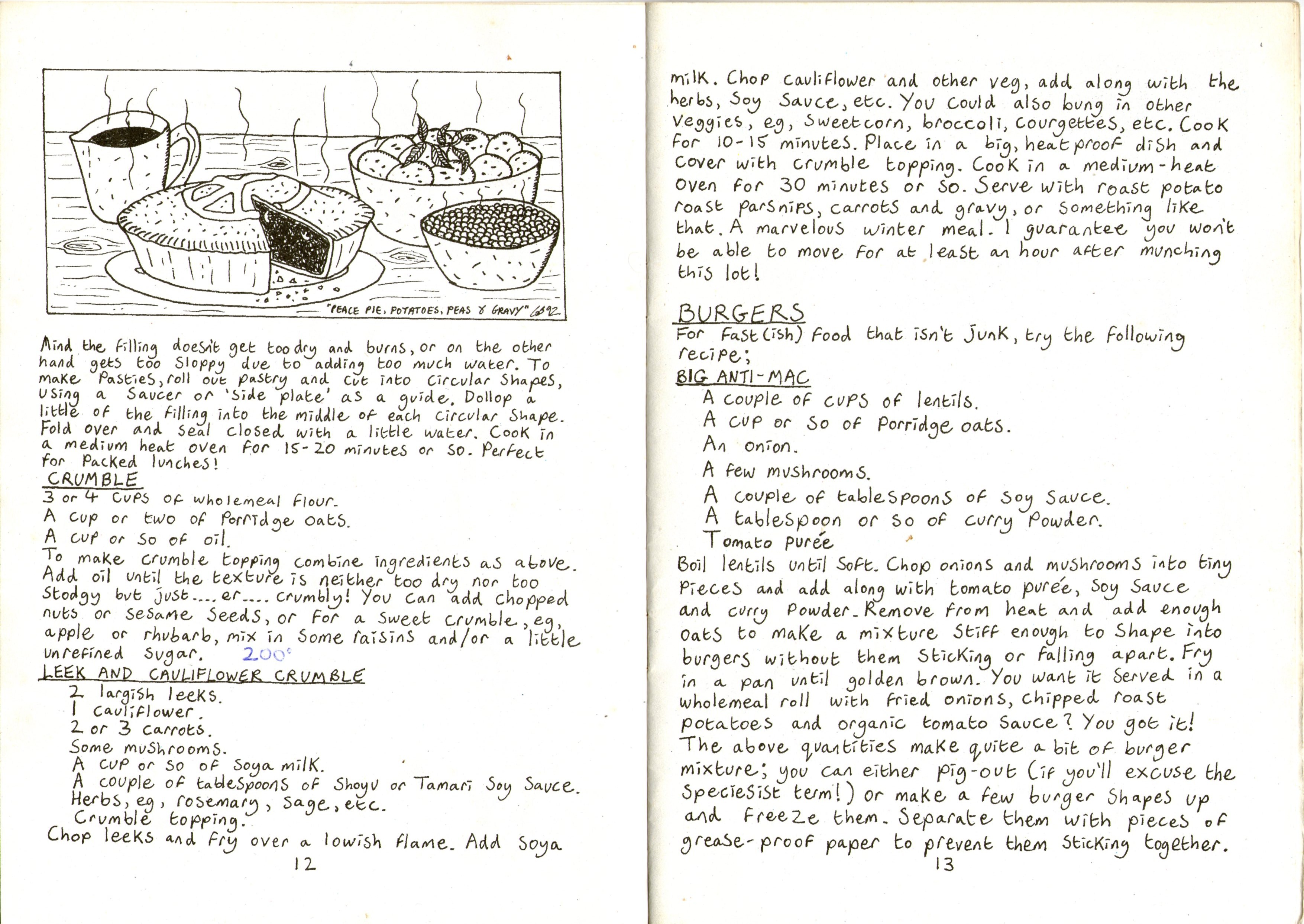
Click the pic to enlarge and read
And the recipe above is a great favourite with all the family – Lentil Burgers – or as they call them here, The Big Anti-Mac! These are so utterly delicious you’ll really feel like you’re indulging in naughty fast food but it’s full of nothing but good stuff. This recipe makes about 12 burgers for us which means we freeze most of them for several quick, healthy, delicious meals in the future. They can also be baked instead of fried and are just as scrummy! See here

Click to enlarge and read
Last but absolutely not least, I wanted to share with you the simplest, most delicious cake recipe I’ve ever found. Again we make it with spelt (this time with baking powder added to make it rise). The cupcake/muffin recipe can be adapted to make one large cake by cooking it slightly cooler for slightly longer than the several small cakes. You can add chocolate chips and/or cocoa to make a chocolate version. Whatever you like. Just use the recipe as a basic template. Mind you, the recipe is perfect just the way it is anyway. My husband especially loves these and always wants me to make more when he’s finishing his last one.
I just love this book and I think you’ll love it too 🙂




Try saying these 10 times fast!
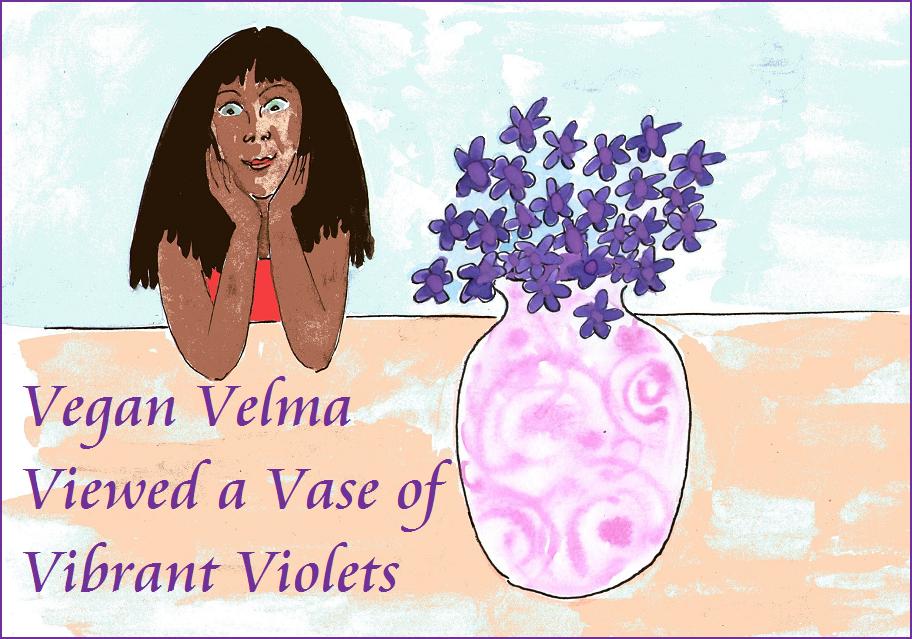
Vegan Velma Viewed a Vase of Vibrant Violets
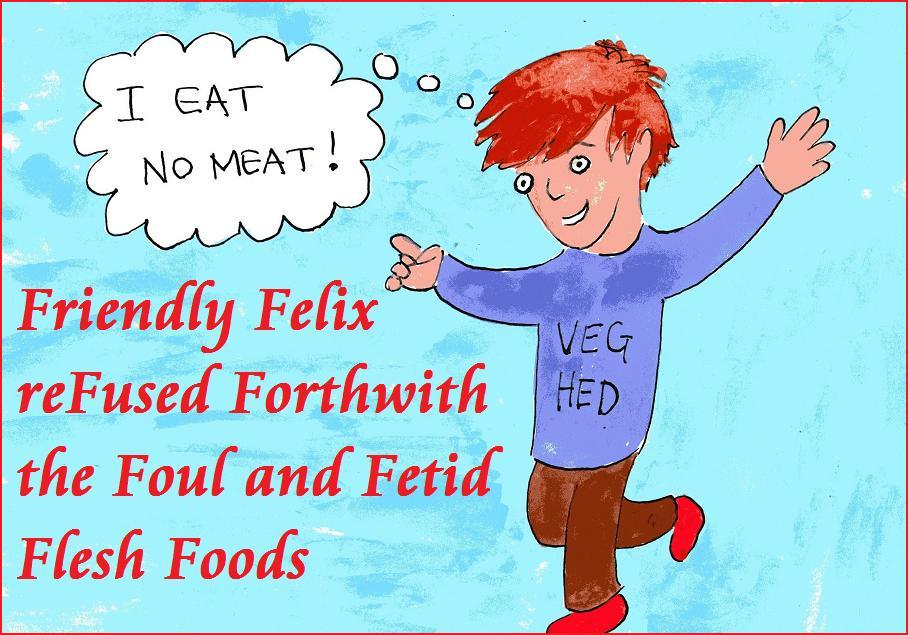
Friendly Felix reFused Forthwith the Foul and Fetid Flesh Foods

Vegan Vendors Val and Victor Vend Veg and stuff at Vegan Venues
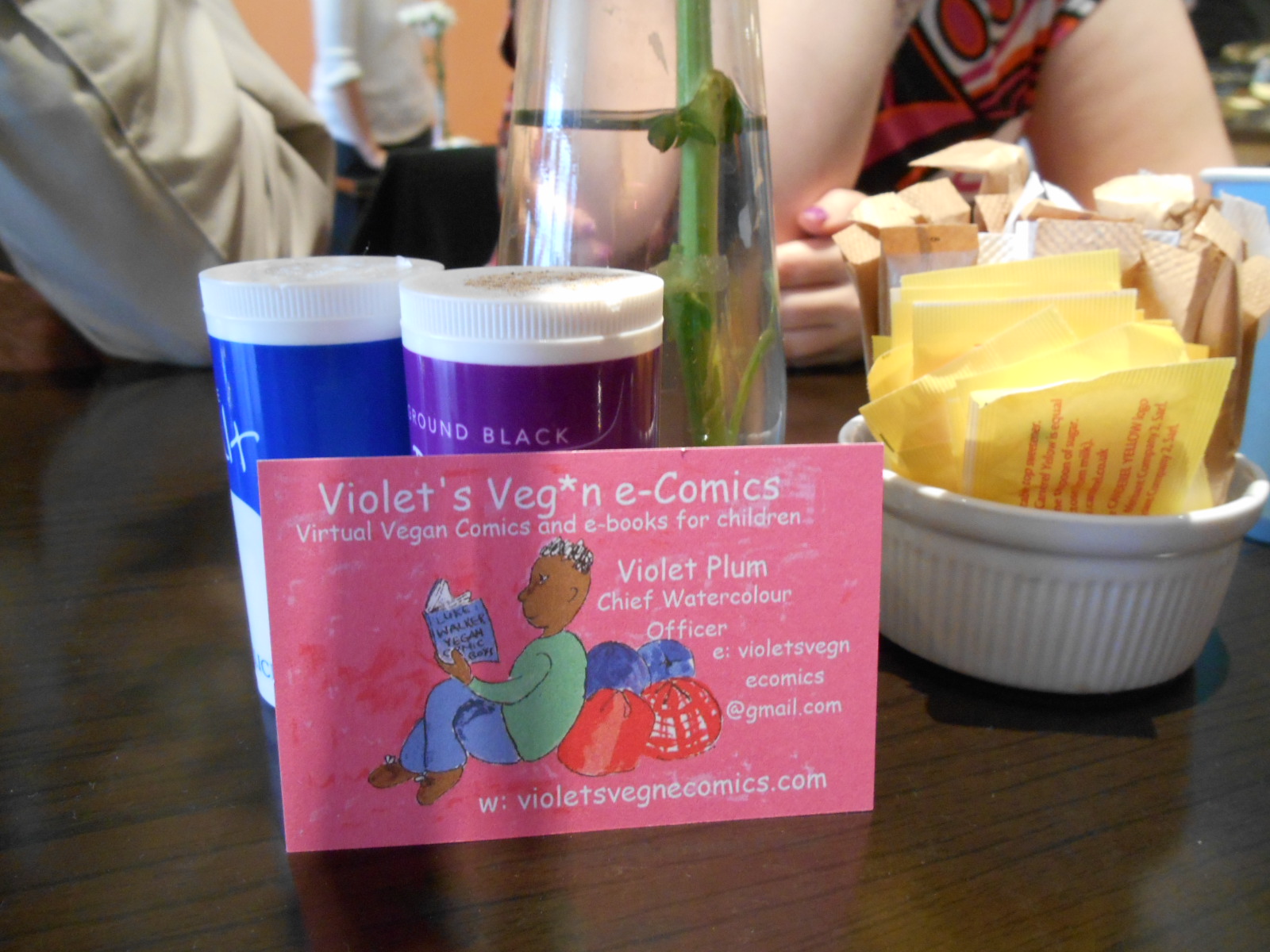
Remember this game? You have to see if you recognise anything in these pictures and work out where we were before clicking on the link at the end. Give it a go!

Gorgeous veg*n cafe – clean, bright, comfortable, friendly …

… with a delicious selection of veg*n food to choose from. Sorry I didn’t hold my breath when taking this photo – don’t look at it too long, it’ll make you feel dizzy!
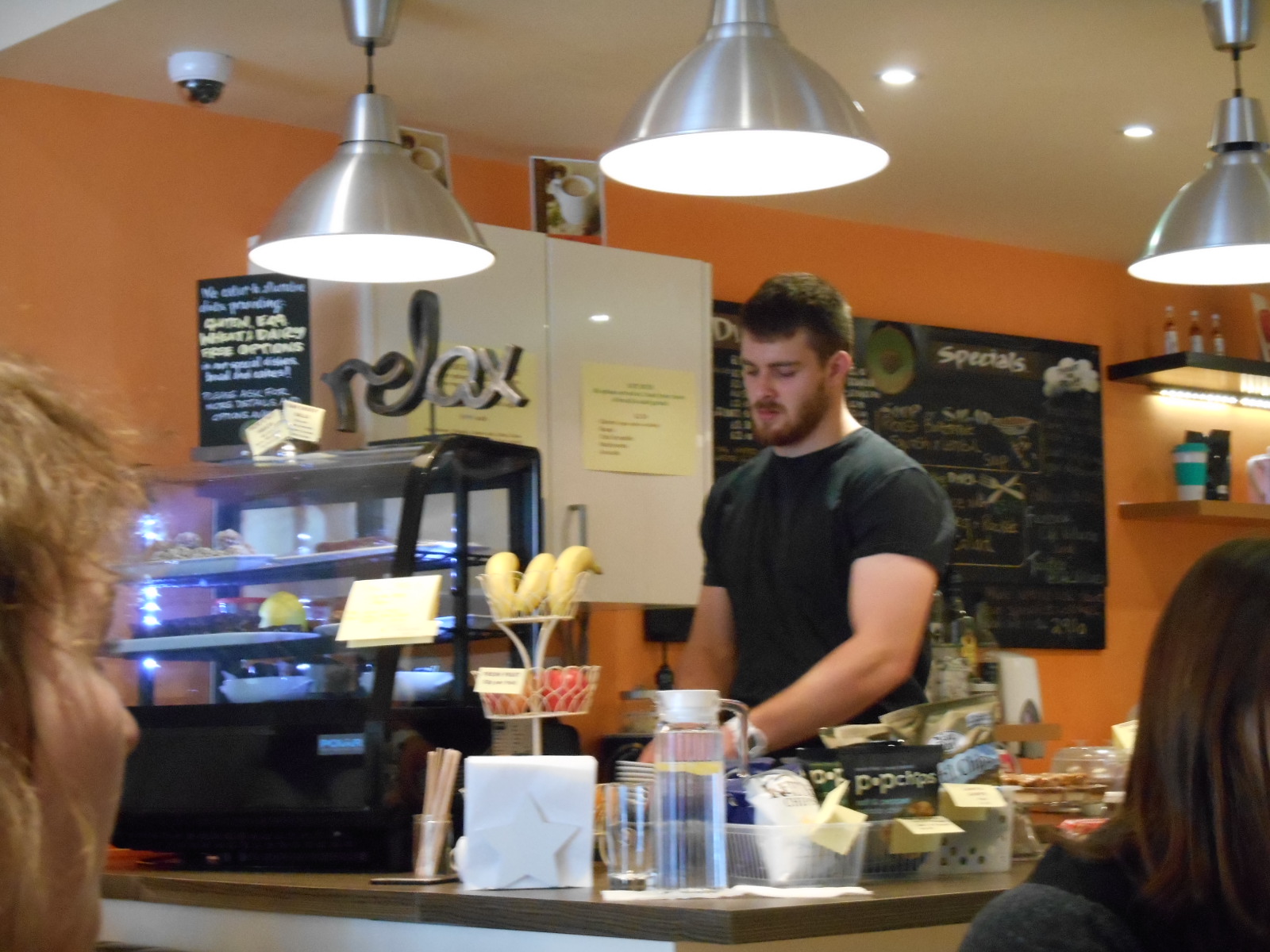
This one’s a bit easier on the eyes – and not just because it’s in focus!

Here’s a clearer look at the menu from the outside. We indulged in scrambled tofu with salad and baked potato, followed by a scrumptious slice of vegan, gluten-free chocolate cake. Mmm mmmmmm!
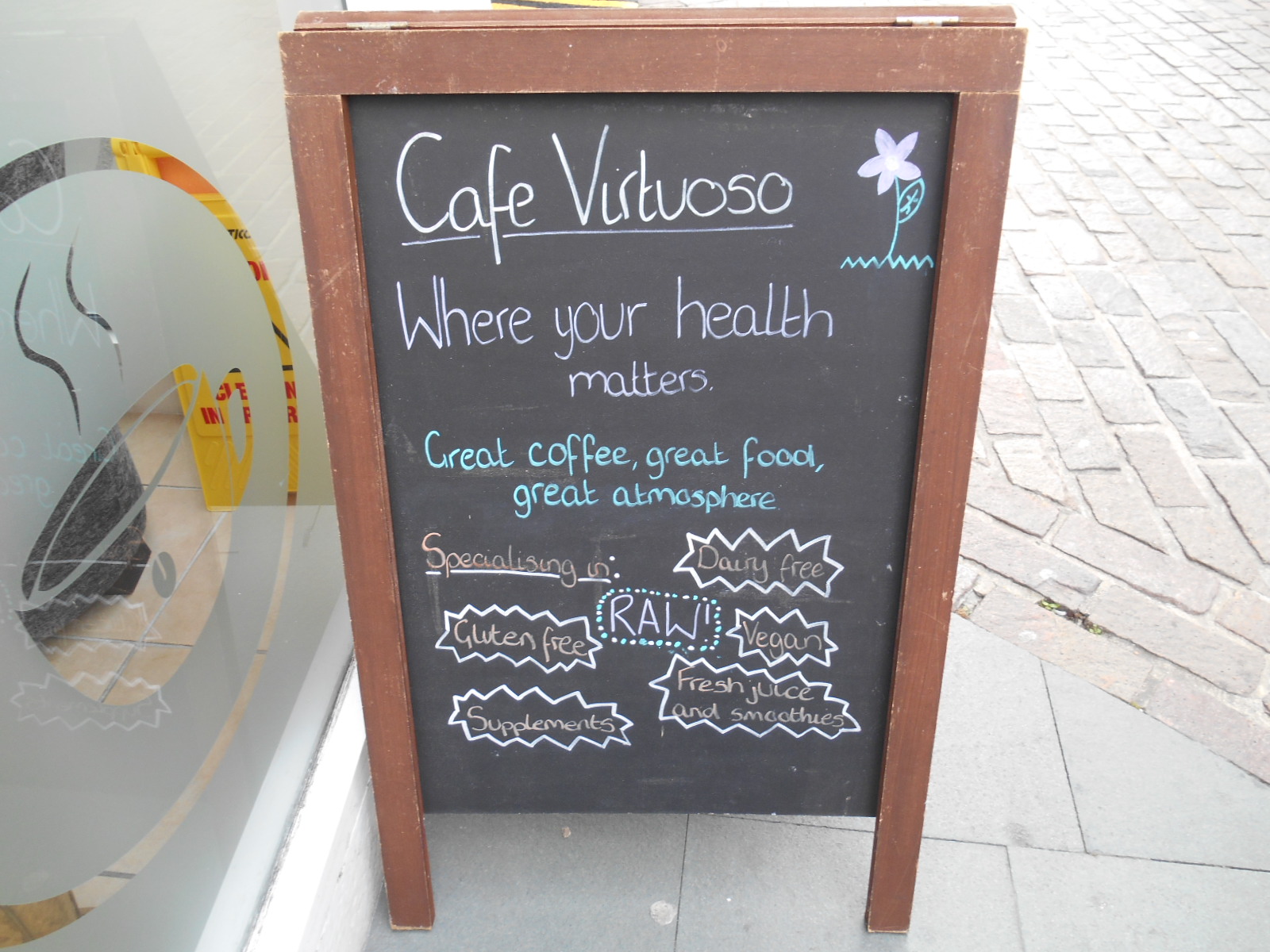
Have you got it yet?

We loved this place – you should definitely visit if you are in the area. We’ll certainly be returning next time we’re visiting family in that neck of the woods. Do you know where this is?
And the answer is …. here!
There should be one in every town 🙂
We are not fully raw; we still enjoy cooked potatoes, and lentils; we have rolled oats for breakfast; we eat tofu. But we do include as much raw as we can in our diet and it makes us feel great. Energised. I love juicing fruits and greens and making them into ice pops. I love frozen bananas instead of shop-bought ice cream. I love raw, and semi-raw cakes and treats which contain no sugar or added sweetener, and no gluten, are actually good for me, and yet make me feel indulgent as they are superior in taste and feel-good factor to traditional sugar-laden sweets. I am excited about all the new things I have learned this year about raw foods and how good they make me feel and I am grateful to so many people who have shared their experiences so that I can learn more.
One of these people is Kristina Carrillo-Bucaram, better known as FullyRawKristina
This lady is a positive inspiration, and though many of us may not be in a position to live as she does – such large quantities organic fresh produce are very expensive – we can each do as much as we can within our own means and feel better for it. For example, I have found that when I tried to be fully raw I got too skinny and simply wasn’t eating enough. Now that I compromise by adding cooked potatoes and lentils, for example, to my raw fruit and veggies, I feel great, am back to my normal weight and still getting a very nutritious diet. I love this video because Kristina encourages us to look at her example, and take from it what works for us. It’s all about experimenting until we get it right and being our own best, our own happiest, in our own way.
I used to make crispy cakes which were absolutely scrumptious but really not good for my health because of all the syrup in the recipe. So I thought, I wonder if I can make these gorgeous treats healthier by leaving out the syrup and substituting dates. Turns out – you can! I am therefore very excited to share with you my recipe for yummy, scrummy, chocolatey, nutritious crispy cakes.
Here’s what you’ll need:

Gluten-free, sugar-free, organic corn flakes; nothing-added organic peanut butter; pitted dates, soaked over-night; and chocolate (this one does have sugar in it admittedly, but you could use organic raw sugar-free chocolate instead if you prefer, I just didn’t have any today)
First get your chocolate melting in a little pot over some hot water.
Drain the water off your soggy dates and bung them in the food processor. Process them to a smooth, moist consistency and place them in a mixing bowl like so:
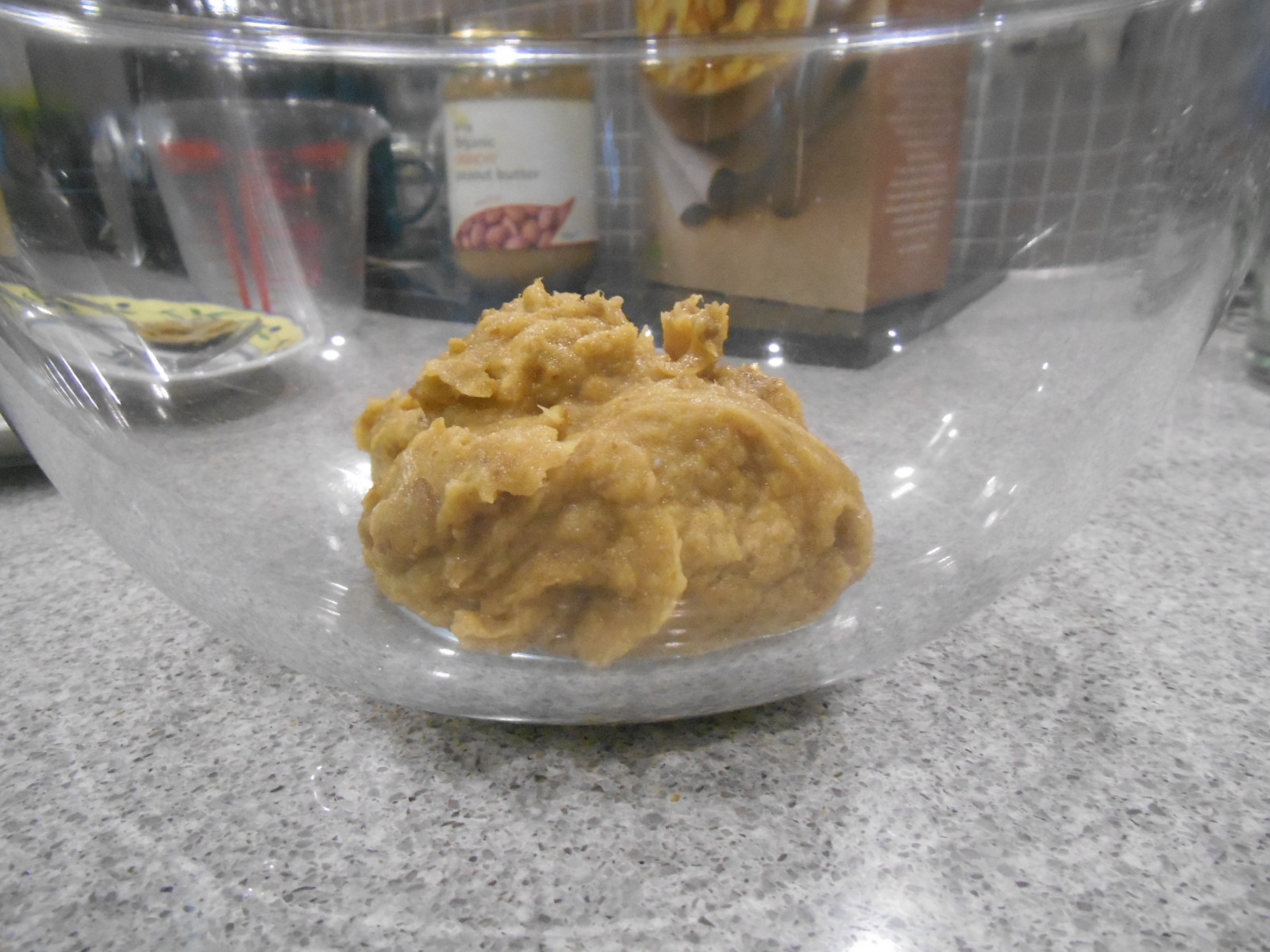
Then add a couple of generous tablespoons of peanut butter:

Combine thoroughly with a fork and then add your melted chocolate and mix that in too:
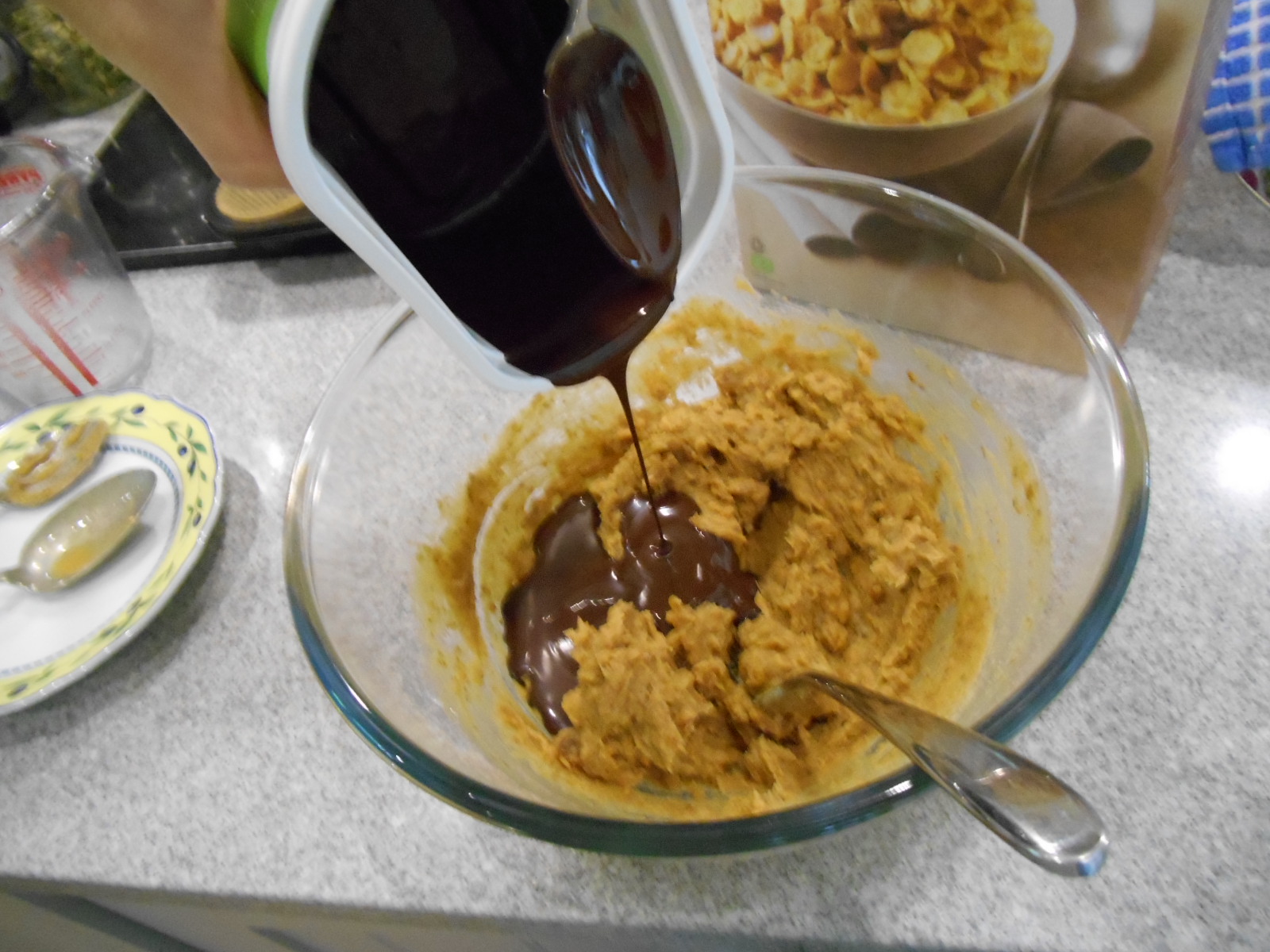
When that’s all well combined, it’s time to mix in the corn flakes. Add a few at a time and keep adding them until you can’t mix any more in (ie until the mixture is too dry to add more):

When I’d added all the cornflakes my mixture could take, I tasted it and felt it could do with a little more sweetness. So I added sultanas. You suit yourself:
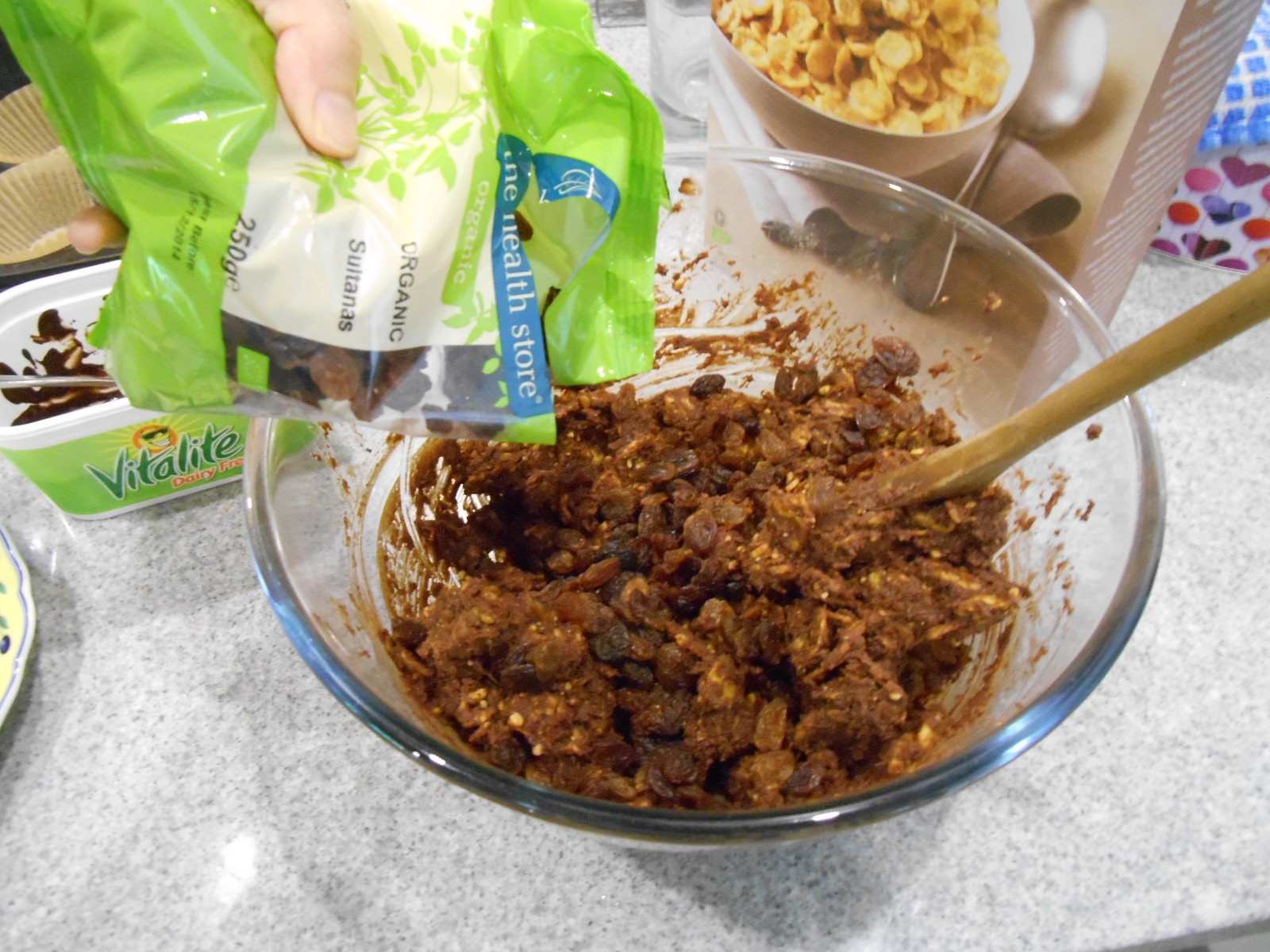
When you’re satisfied with your mixture, spoon it into some paper cake cases :

And chill until ….. you want to eat them:

Done!
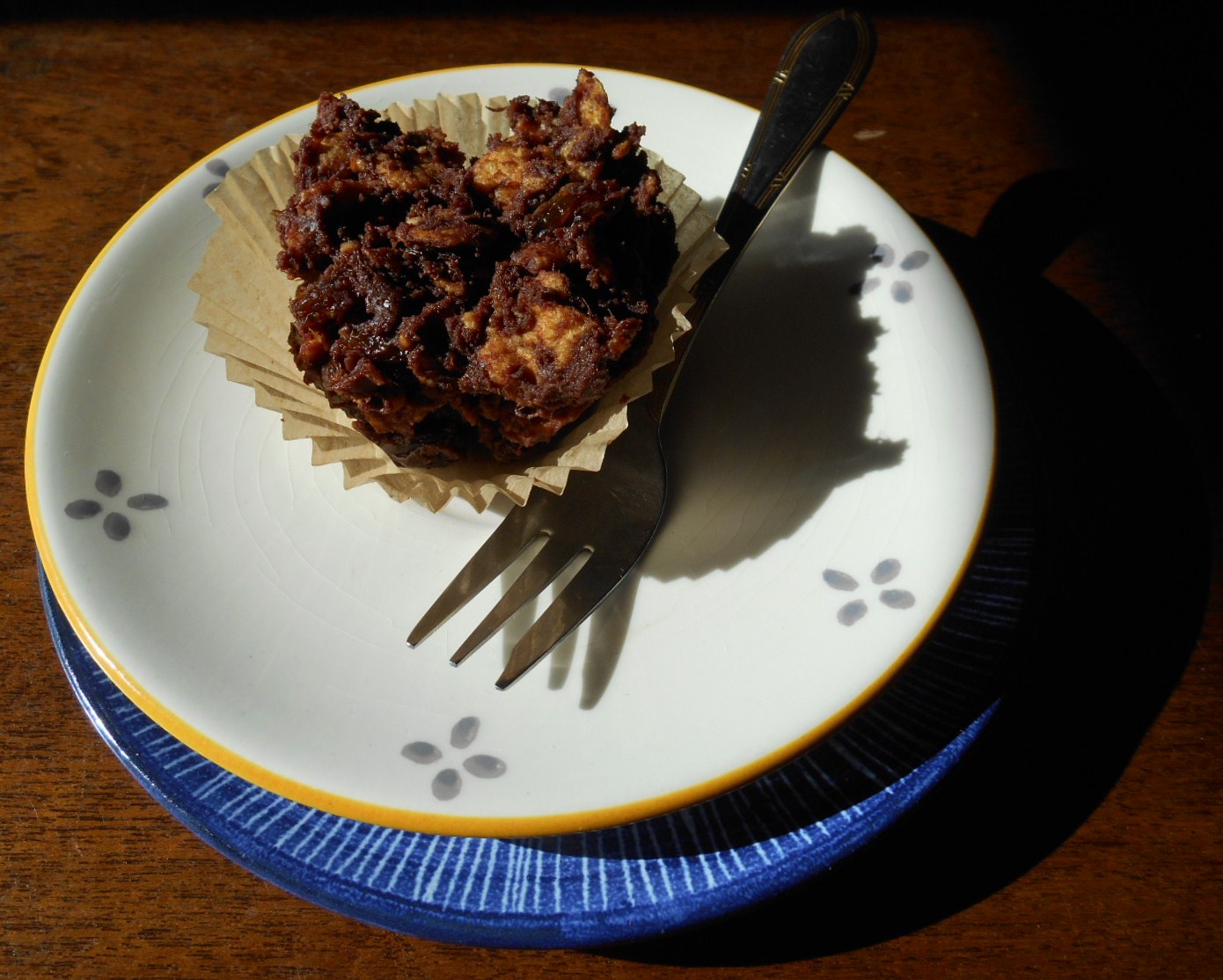
Yum!





 Violet's Vegan Comics