It’s ironic because it has happened during this story, but my hard-working laptop has finally given up the ghost. Because of everything I am learning in the crafting of Venus’s latest adventure I am determined to keep my electricity consumption to an absolute minimum so will not replace the laptop. Instead I am attempting to complete this story using my 7 inch tablet. I cannot scan the paintings onto the tablet so I’m photographing them with it. I cannot type words onto these photos so I am writing the words by hand directly on the pictures. I hope you will therefore forgive the foggier-than-usual results and bear with me as I endeavour to do the best job I can with the least possible electricity 😀
Once upon a time there were three humans and their names were Dowatiwant, Dowateewants and Dowatheywant. They did everything together. Dowatiwant was the one who decided what they would do, Dowateewants would copy him and Dowatheywant would copy them.
One day Dowatiwant went into the cornershop, followed by Dowateewants and Dowatheywant.
Dowatiwant bought a packet of crisps and a can of fizzy pop. Then Dowateewants bought a packet of crisps and a can of fizzy pop. Then Dowatheywant bought a packet of crisps and a can of fizzy pop. All three left the shop, one after the other, and walked to the park.
Dowatiwant sat down on a bench and opened his packet of crisps and his fizzy pop. Dowateewants sat down next to him and opened her packet of crisps and her can of fizzy pop, and Dowatheywant sat down next to her and did the same.
There they sat, talking and laughing, eating and drinking, crunching and slurping, until their crisps and their fizzy drinks were all gone.
Dowatiwant dropped his crisp packet on the ground and tossed his drink can over his shoulder. Dowateewants laughed, dropped her crisp packet on the ground and threw her drink can at a tree. Dowatheywant held on to his empty can and his empty crisp packet and picked up those tossed by his friends.
“What are you doing?” asked Dowatiwant.
“Why don’t you do what we did?” asked Dowateewants.
“I’m changing my name,” said their friend as he deposited their rubbish in the bin, “to Sharperthanimaner.”
“The connection between chucking bits of plastic on the ground and cute animals dying of starvation is a demonstrable fact. It’s not even one of those join-the-dots facts like fossil fuel use and homeless polar bears. It’s a dead-hedgehog-with-its-head-stuck-in-a-plastic-cup fact,” wrote Alex Proud, in ‘If you drop litter, you’re an idiot and must be punished’, The Telegraph, 17 February 2014
“… I’d ramp these [litter fines] up and enforce them with the kind of zeal that would have Dirty Harry gasping with mute admiration.”
Oxford Dictionary definition: large edible fish yielding caviar.
Our definition: Sturgeons are native to subtropical, temperate and sub-Arctic rivers, lakes and coastlines of Eurasia and North America. They are distinctive for their elongated bodies, lack of scales, and occasional great size: sturgeons ranging from 7–12 feet (2-3½ m) in length are common, and some species grow up to 18 feet (5.5 m). Most sturgeons are anadromous (migrating up rivers to spawn) bottom-feeders, spawning upstream and feeding in river deltas and estuaries. While some are entirely freshwater, a very few venture into the open ocean beyond near coastal areas.
Sturgeon are primarily benthic feeders (feeding on the river bed or ocean floor), with a diet of shells, crustaceans and small fish. They feed by extending their syphon-like mouths to suck food from the benthos. Having no teeth, they are unable to seize prey, though larger individuals can swallow very large prey items, including whole salmon. Sturgeons feed non-visually. They are believed to use a combination of sensors, including olfactory sensors, tactile chemosensory cues on the 4 barbules, and passive electroreceptors (ampullae of Lorenzini).
Many sturgeon leap completely out the water, usually making a loud splash which can be heard half a mile away on the surface and probably further under water. It is not known why they do this, but suggested functions include group communication to maintain group cohesion, catching airborne prey, nuptial behaviour, or to help shed eggs during spawning. Other plausible explanations include escape from predators, shedding parasites, or to gulp or expel air. Another explanation is that it “simply feels good”.
Sturgeon can live 100 years and have been around since the dinosaurs. Because of their long reproductive cycles, long migrations, and sensitivity to environmental conditions, many species are under severe threat from overfishing, poaching, water pollution, and damming of rivers. There is also a noticeable decline in sturgeon populations as the demand for caviar increases (see Roe on the R page). According to the IUCN, over 85% of sturgeon species are classified as at risk of extinction, making them more critically endangered than any other group of species.
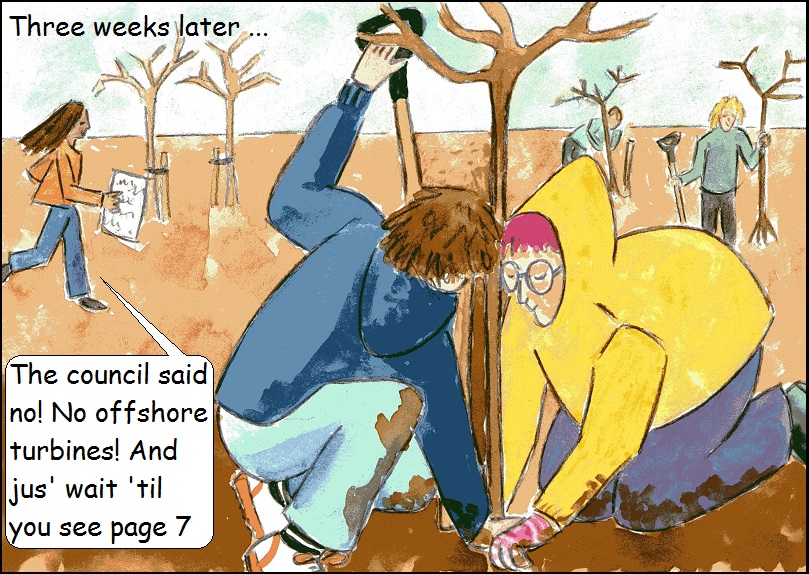
UPDATE: Lancashire county councillors have rejected Cuadrilla’s application to drill for shale gas at Preston New Road. Fantastic news and a huge relief! Thank you to everyone who signed the petition. Stay in touch with Greenpeace and Friends of the Earth because this is just the beginning. According to the Guardian article, Cuadrilla will certainly appeal the decision and our Conservative government is extremely pro-fracking. But we can stop them if we stick together. A big thanks goes out to all the councillors on the committee who stood strong and voted against Cuadrilla’s application.
A critical decision on fracking is taking place in Lancashire. County councillors are set to either slam the doors on plans to drill for shale gas, or give way to the fracking industry.
After an initial vote, councillors have hit a deadlock. Seven have come out in support of fracking, with seven other councillors standing against.
A final has been scheduled for Monday, 29 June. So between now and then, we need the councillors on the committee to know that if they take a stand against fracking, we will stand with them.
Please go to the Greenpeace site right now to sign the petition – it only takes a few moments and it could mean the difference between letting the frackers in or seeing them off for good.
And the best and most productive way to stand for trees is to adopt a plant-based diet. These forests are being felled at an alarming rate to provide grazing land or grow fodder crops for farm animals.
If you fancy growing your own delicious organic fruits and vegetables but you don’t have a garden, why not apply for an allotment? Click here to find out how.
It’s true that there are sometimes long waiting lists but not always. We were very lucky that our village was just setting up new allotments and we were able to get one within a few months of moving there. And there are still a few plots available now.
So go on, find out what’s available in your area – the National Allotment Society will give you all the info you need – and do something that’ll get you out in the fresh air and sunshine for a good dose of vitamin D and some healthy exercise, while at the same time providing you with quality, organic vegetables that are good for you and the earth 😀
The UK General Election is just weeks away. With MP candidates going all out to win our votes, this is a huge opportunity to push fracking up the political agenda.
Can you ask your local candidates to promise to oppose fracking if they’re elected?
Greenpeace and Friends of the Earth are appealing to us all to contact our local election candidates and ask them if they will promise to oppose fracking if they are elected.
And they’ve made it so easy: all you have to do is go to their website, and enter your postcode. You will then be told which candidates in your area have not signed the frack-free pledge and enabled to send them an email request to do so.
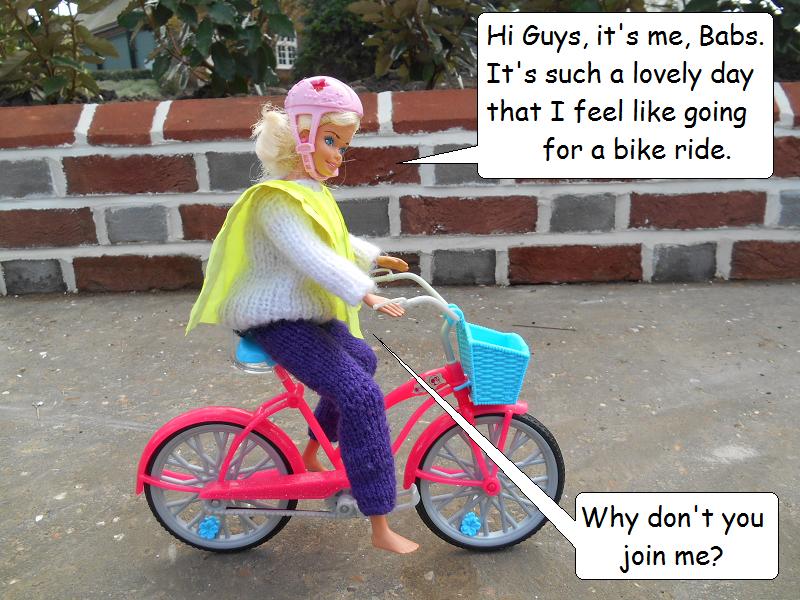
The Sustrans website will tell you all about the National Cycle Network in the UK which “is a series of traffic-free paths and quiet, on-road cycling and walking routes, that connect to every major town and city. The Network passes within a mile of half of all UK homes and stretches over 14,000 miles across the UK.”
They also have a shop where you can buy maps, books, clothes and accessories etc, although you might have a good cycle shop in your own neighbourhood where you can get everything you need; or, even better, check out the second hand shops and the shops of animal-friendly charities and re-use something someone else doesn’t need any more (for a fraction of the price).
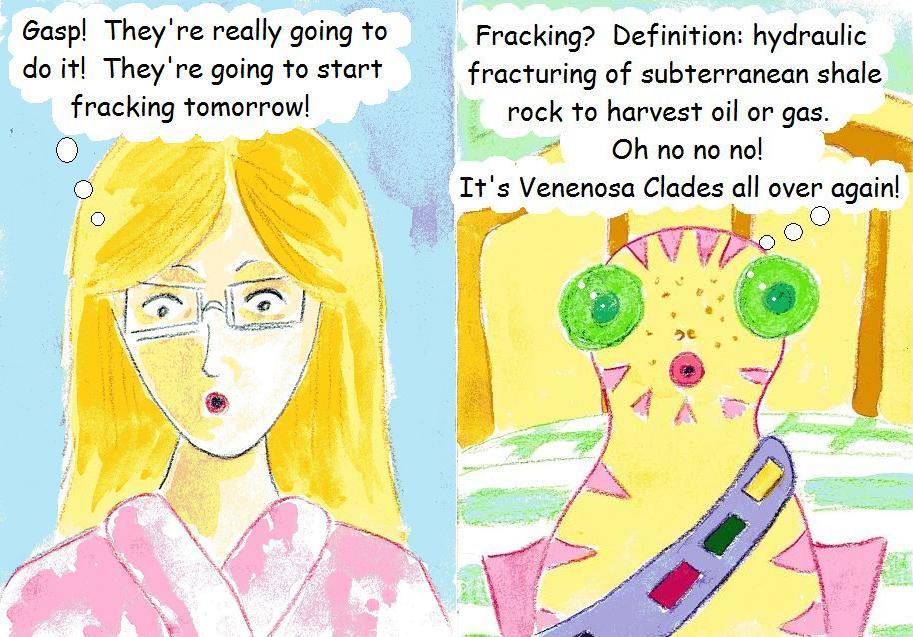
I know everybody’s very busy, but you really need to see this – just the animation in the first 7 minutes if that’s all you can spare – but the rest of it really makes it real and drives home why Flos is so determined to make it stop.
“Venenosa Clades was once a beautiful, flourishingplanet on which vast numbers of plant and animal species thrived due to the miraculous, life-sustaining element: water. All the different life-forms, whether they dwelt on land or sea or spent most of their time in the air, had one thing in common: their need for water. Venenosa Clades had so much water, above ground and deep under the surface, that there was never any need to worry about not having enough. And this was the case for millions of years.
“But, tragically, the planet suffered a severe volparinfection. Volpars are nomadic, seeking out vibrant host planets on which to settle and multiply. And they multiply fast, killing native species to make room for themselves and spreading across the whole world. Their propensity to reproduce is equalled only by their belief that they are the superior species and as such have a much greater entitlement to a planet’s natural resources than all native species put together.”
“The infection on Venenosa Clades was typical. It spread fast and was soon depleting the planet’s resources, to the point where it began to spread underground. With tremendous force it struck at the ancient clay rocks deep below the planet’s surface and the result was predictably disastrous. There were earthquakes where previously there had been none, and the pure underground water became contaminated with the gas released from the clay and other noxious substances. Still, awareness of the results of this activity didn’t halt the infection which continued its violent assaults on the planet.
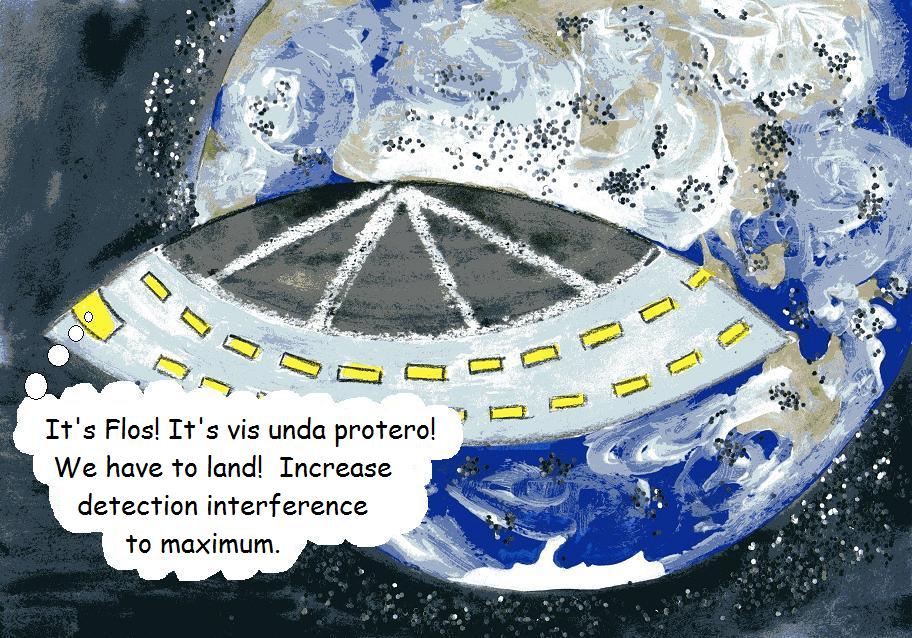
“Venenosa Clades’ native species’ subconscious cries for help were so loud and so desperate that we heard them, though we were thousands of light years away. Not knowing if there would be anything we could do, we answered their telepathic calls, travelling as fast as we could. But we arrived far too late to help anyone. The planet was devoid of life and had been for several years. However, the thoughts and memories of its former inhabitants were still floating in the ether so we were able to piece together what had happened. They called it vis unda protero, which roughly translates to your language as hydraulic fracture.”


























 Violet's Vegan Comics
