Catskill Animal Sanctuary rescues farmed animals, ignites social change to end their exploitation, and champions vegan living. Subscribe to their e-news, Herd Around the Barn: casanctuary.org/herd
Two best friends, Tillie and Phoebe, had a brilliant time, sneaking off to play when someone left the door open at their guardian’s house party. But it all went horribly wrong when 4 year old Phoebe got stuck in a hole she couldn’t get out of.
She might have known she would be ok though, since 11 year old Tillie was with her. Tillie stayed by Phoebe’s side for a week, leaving only for a quick runs to look for help each day before coming back to wait with her friend.
Residents witnessed Tillie running through a back yard several times over the course of the week, but they didn’t realize what was happening until a volunteer group called Pet Protectors put out a distress call on Facebook. Pet Protectors soon received a lucky tip from someone who had seen Tillie several times.
Our definition: A winkle is a small herbivorous shore-dwelling mollusc with a spiral shell. Winkle is also a common name applied to numerous different species of small, round snails. These are often species of sea snails, but also some small round freshwater snails, and even some land snails that have an operculum (a secreted plate that closes the aperture of a gastropod mollusc’s shell when the animal is retracted).
Oxford Dictionary definition: small edible sea fish.
Juvenile-whiting
Our definition: Whiting (Merlangius merlangus) fish are similar in appearance to their larger relatives, cod, haddock, coley and pollack. They have three dorsal fins separated by small gaps, the third fin extending almost to the tail fin. The tail is not forked, having almost a square end. The two anal fins are very close together, nearly touching one another and, together with the anterior fin, are elongated. The pectoral fin is also long and projects beyond the base of the anal fin. A whiting’s upper jaw projects slightly beyond the lower, and the lateral line is continuous along the length of the body. In colour, individual fish vary quite a lot, and there is often a small dark blotch at upper base of the pectoral fin. They can grow to up to 50 cm long.
Whiting matures at between three and four years of age, and spawning takes place at a depth of 20 to 150 m. The time of the spawning varies from location to location: from January to spring in the Mediterranean; from January to September in the area between the British Isles and the Bay of Biscay; and throughout the year in the Black Sea. A large female can produce up to one million eggs. The eggs float in the open ocean and the larval whiting swim with other sea plankton until they have attained a length of around 10 cm. The fish grow quickly, with females growing faster than males, and can live to about ten years of age. The diet of the whiting consists of bottom-living organisms, such as crabs, shrimps, small fish, molluscs, worms, squid and cuttlefish.
The biggest threat to whiting is “over-harvesting” (euphemism) by the fishing fleets of many nations (of course).
Oxford Dictionary definition: 1. large originally American bird bred for food. 2. Its flesh.
Our definition:
Turkeys are known to exhibit over 20 distinct vocalisations. Including a distinctive gobble, produced by males, which can be heard a mile away.
Individual turkeys have unique voices. This is how turkeys recognise each other.
Turkeys are intelligent and sensitive animals that are highly social. They create lasting social bonds with each other and are very affectionate, rather similar to dogs.
Turkeys have outstanding geography skills. They have the ability to learn the precise details of an area over 1,000 acres in size.
Like peacocks, male turkeys puff up their bodies and spread their elaborate feathers to attract a mate.
Baby turkeys (poults) flock with their mother all year. Although wild turkeys roost in the trees, as poults are unable to fly for the first couple of weeks of their lives, the mother stays with them at ground level to keep them safe and warm until they are strong enough to all roost up in the safety of the trees.
Wild turkeys are able to fly at up to 55 mph for short distances. Most domestic turkeys however are unable to fly due to being selectively bred to be larger than would be suitable in wild circumstances.
The male is substantially larger than the female, and his feathers have areas of red, purple, green, copper, bronze, and gold iridescence. Female feathers are duller overall, in shades of brown and grey.
The area of bare skin on a turkey’s throat and head vary in colour depending on its level of excitement and stress. When excited, a male turkey’s head turns blue, when ready to fight it turns red.
Oxford Dictionary definition: large edible fish yielding caviar.
Our definition: Sturgeons are native to subtropical, temperate and sub-Arctic rivers, lakes and coastlines of Eurasia and North America. They are distinctive for their elongated bodies, lack of scales, and occasional great size: sturgeons ranging from 7–12 feet (2-3½ m) in length are common, and some species grow up to 18 feet (5.5 m). Most sturgeons are anadromous (migrating up rivers to spawn) bottom-feeders, spawning upstream and feeding in river deltas and estuaries. While some are entirely freshwater, a very few venture into the open ocean beyond near coastal areas.
Sturgeon are primarily benthic feeders (feeding on the river bed or ocean floor), with a diet of shells, crustaceans and small fish. They feed by extending their syphon-like mouths to suck food from the benthos. Having no teeth, they are unable to seize prey, though larger individuals can swallow very large prey items, including whole salmon. Sturgeons feed non-visually. They are believed to use a combination of sensors, including olfactory sensors, tactile chemosensory cues on the 4 barbules, and passive electroreceptors (ampullae of Lorenzini).
Many sturgeon leap completely out the water, usually making a loud splash which can be heard half a mile away on the surface and probably further under water. It is not known why they do this, but suggested functions include group communication to maintain group cohesion, catching airborne prey, nuptial behaviour, or to help shed eggs during spawning. Other plausible explanations include escape from predators, shedding parasites, or to gulp or expel air. Another explanation is that it “simply feels good”.
Sturgeon can live 100 years and have been around since the dinosaurs. Because of their long reproductive cycles, long migrations, and sensitivity to environmental conditions, many species are under severe threat from overfishing, poaching, water pollution, and damming of rivers. There is also a noticeable decline in sturgeon populations as the demand for caviar increases (see Roe on the R page). According to the IUCN, over 85% of sturgeon species are classified as at risk of extinction, making them more critically endangered than any other group of species.
Oxford Dictionary definition: 1. large mouselike rodent. 2. colloquial unpleasant or treacherous person. verb 1. hunt or kill rats. 2. colloquial inform on.
Our definition:
Rats take care of injured and sick rats in their group.
Without companionship rats tend to become lonely and depressed.
Rats have excellent memories. Once they learn a navigation route, they won’t forget it.
When happy, rats have been observed to chatter or grind their teeth. This is often accompanied by vibrating eyes.
Rats make happy “laughter” sounds when they play.
Rats succumb to peer-pressure, just like humans. Brown rats are prone to disregard personal experiences in order to copy the behaviour of their peers. The urge to conform is so strong that they will even choose to eat unpalatable food if they are in the company of other rats who are eating it.
Although very curious animals, rats are also shy, and prefer to run away than confront a potential threat.
Rats are extremely clean animals, spending several hours every day grooming themselves and their group members. They are less likely than cats or dogs to catch and transmit parasites and viruses.
A rat can go longer than a camel without having a drink of water.
Rats’ tails help them to balance, communicate and regulate their body temperature.
Click here for the rest of the Rr page, click here, or go to the sidebar on the right, for the whole dictionary 😀
Oxford Dictionary definition: beaten eggs fried and often folded over filling.
Our definition: Omelettes are made from eggs laid by birds (usually chickens) kept in unnatural, confined conditions, more often than not in over-crowded barns with no access to the outside and no natural light or fresh air. Their miserable lives are short, ending when they begin to lay less eggs at about 12 to 18 months of age (naturally, healthy chickens could live into their teens if not taken by a predator, though those rescued from chicken farms don’t usually live longer than 4 years due to their harrowing start in life). Contrary to popular opinion, buying free range is not the cruelty free option since these birds’ lives will also end in brutal slaughter by the tender age of 18 months. NB farms can label their eggs free range if there is access to an outdoor area from the chickens’ barn even though most of the birds in the overcrowded barn are never able to reach the door. Male chicks are horribly killed en masse shortly after hatching.
Buying tofu, on the other hand, is the cruelty free option and if you love eggs, you’ll really love tofu 😀
Our definition: Nutria (also called coypu) are large, rodents who are more agile in the water than on land. They live in burrows, or nests, never far from the water. Nutria may inhabit a riverbank or lakeshore, or dwell in the midst of wetlands. They are strong swimmers and can remain submerged for as long as five minutes. Their average lifespan in the wild is eight to ten years. They are varied eaters, most fond of aquatic plants and roots, and are very very cute. Quite beaver-like 😀
Nutria can be rather social animals and sometimes live in large colonies, reproducing prolifically. Females have two or three litters every year, each consisting of five to seven young. These animals mature quickly and remain with their mothers for only a month or two.
Tragically, many misguided humans have cruelly exploited nutria on fur farms (“Originally native to subtropical and temperate South America, it has since been introduced to North America, Europe, Asia, and Africa, primarily by fur ranchers“) and, when these ventures failed and the captive animals escaped or were released into parts of the world where they didn’t belong, they bred fast and caused a lot of damage to wetlands. This has resulted in many attempts to cull them worldwide including, in the US, incentives being paid to people to hunt and trap them. They get $5 per nutria tail handed in to a Coastal Environments Inc. official.
Click here for the N page and here for the rest of the vegan dictionary
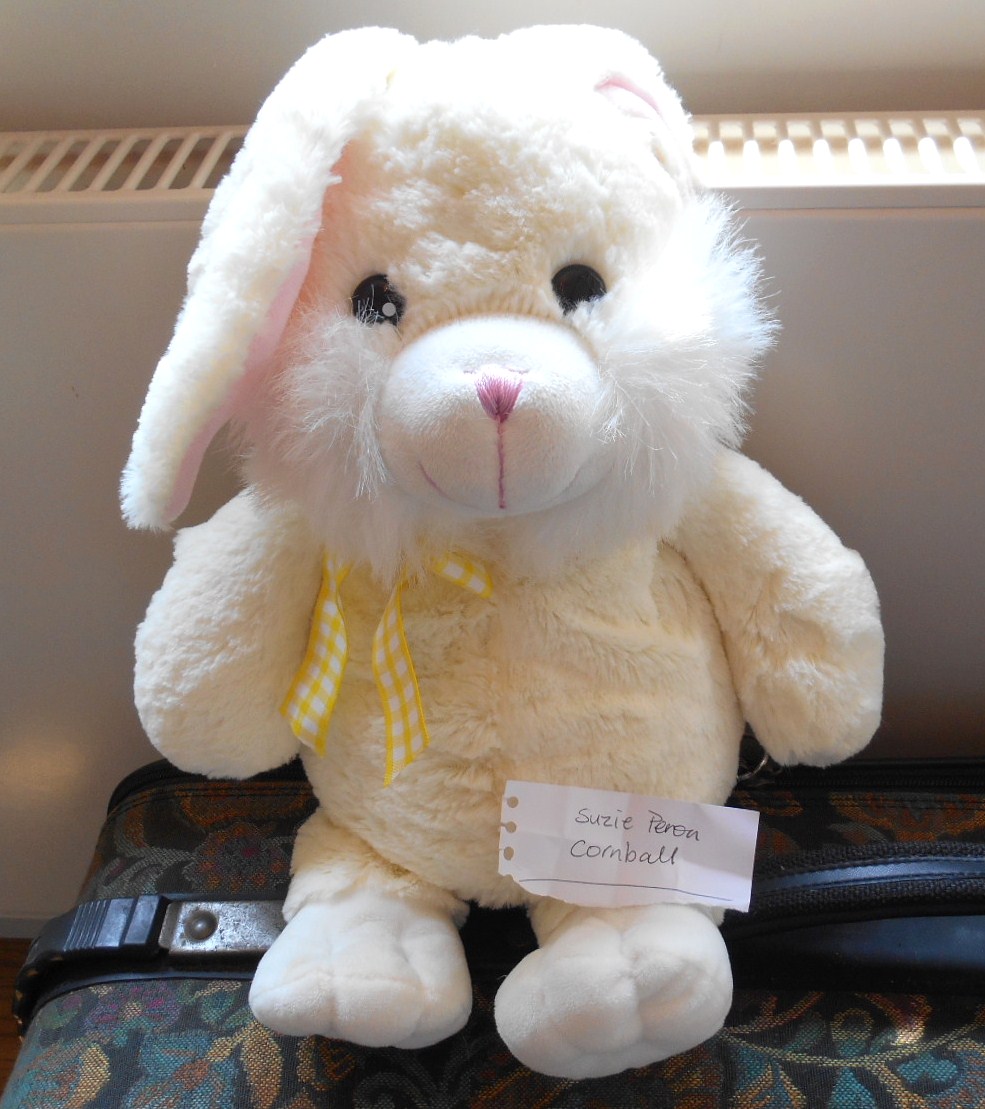
If you live in the UK and you’d like to adopt this little cutie, just think of a name for him or her and let me know in a comment on this or that post.
All suggested names (with name of suggester) will be put into a box tomorrow morning and one will be drawn out.
I’ll let you know then who the winner is 😀
Good luck 😀
NB: this secondhand soft toy has been rescued from Raystede charity shop and is hoping to find a loving new home.
At Raystede Animal Welfare Centre in East Sussex they take in around 1500 animals every year who need to be found new homes. They work hard to make sure that each animal is matched up with the right family to give them the best new chance in life and they provide advice on how to take the best care of the animals.
This is undoubtedly the case for so many animal rescue organisations which is why it’s so important, if we are able to provide a happy home for a companion animal, that we rehome abandoned, neglected, rescued animals rather than buy from breeders and perpetuate the problem.
He is such a sweetheart and anyone from the UK wishing to adopt him should comment on this post suggesting a name for him. Then, on Friday, we will put all the suggested names in a box and draw out a winner. The rescued bunny will be trusted to the loving care of the lucky prize winner to whom he will be promptly delivered 😀
These guys are amazing. Not only do they provide sanctuary for over 2000 rescued animals, they also do undercover investigations into farms which lead to the exposure of horrible cruelty and the prosecution of the perpetrators. Take a look at what they’ve accomplished over the last 20 years and support them if you can 🙂
Click here for some wonderfully moving true stories of animal farmers who awoke to the reality of what they were doing and completely turned things around 🙂
Following international pressure from animal lovers across the world, it has been announced that the Halong Bay bears can be rescued by Animals Asia. Click here for the whole story,
and to get an idea about the amazing work that Animals Asia do, look at Layla 🙂
And here she is again, having grown quite a bit 🙂 :
Our definition: The Atlantic mackerel (Scomber scombrus) is a beautifully streamlined, fast-swimming fish. It has silver underparts and metallic green and blue upper parts with irregular bands along the back.
Click the Mms for the rest of the M Words
And check out the Vegan Dictionary in the sidebar for words beginning with other letters, defined in a way that doesn’t normalise animal exploitation and degradation.











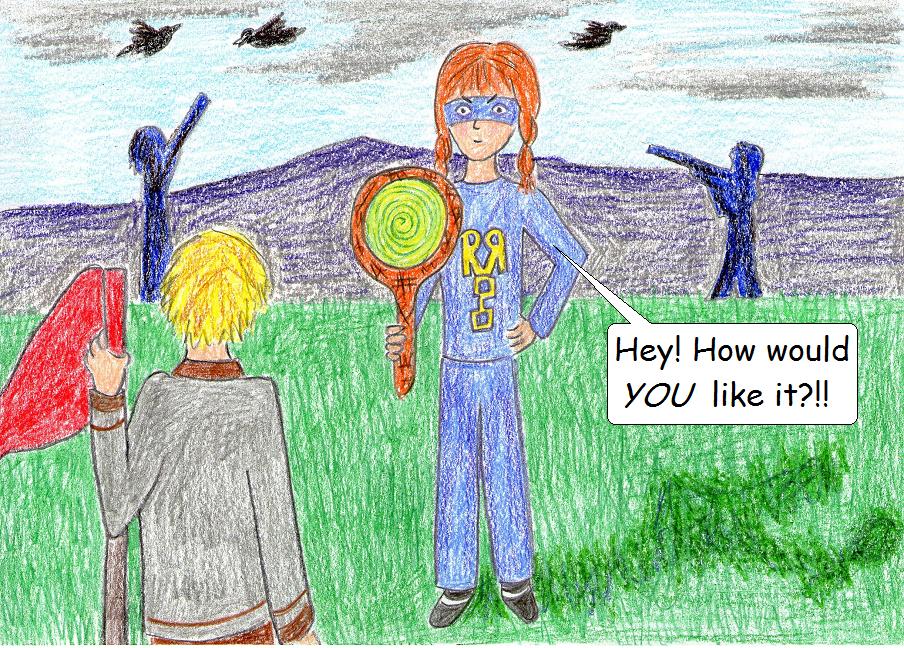

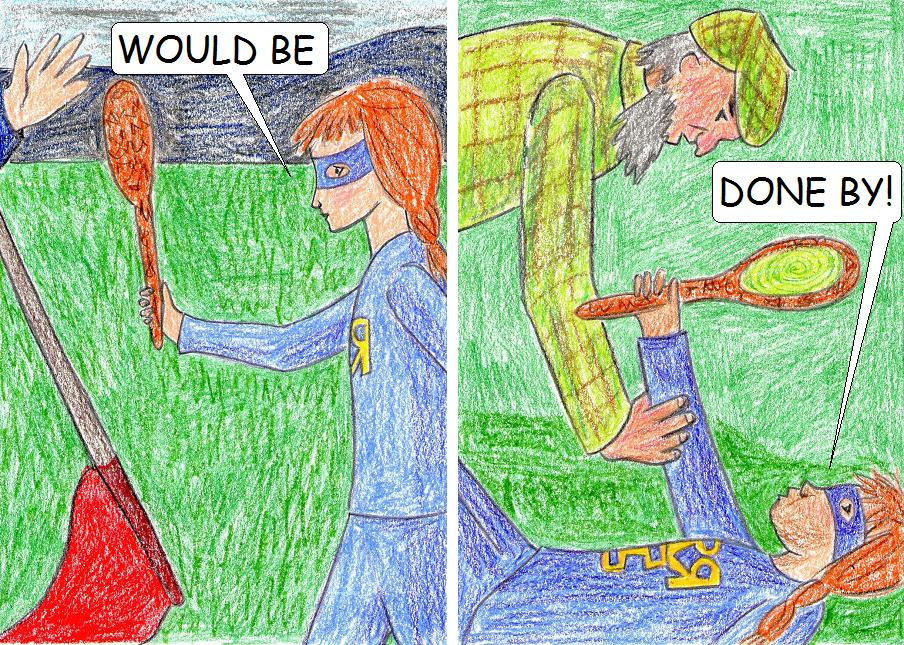
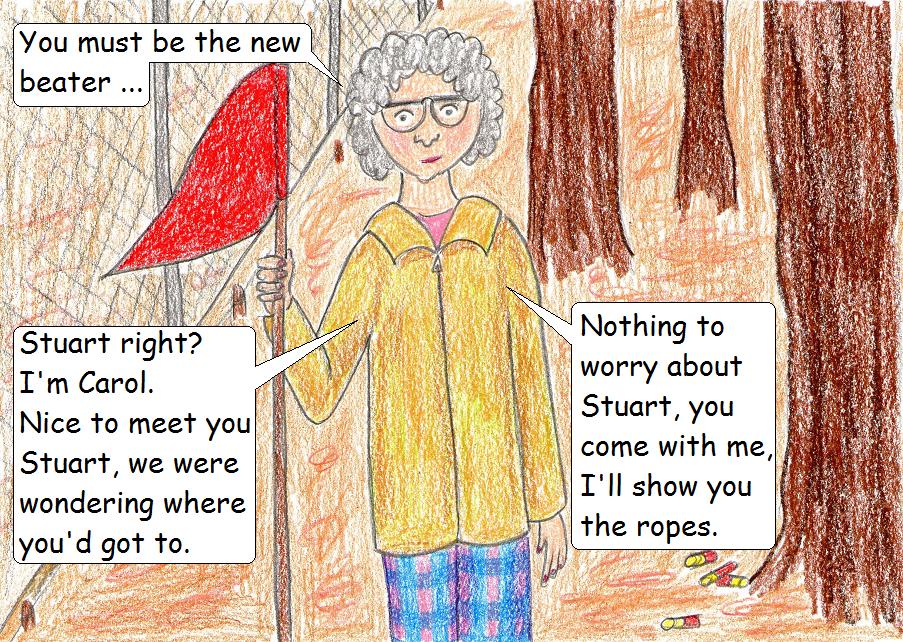


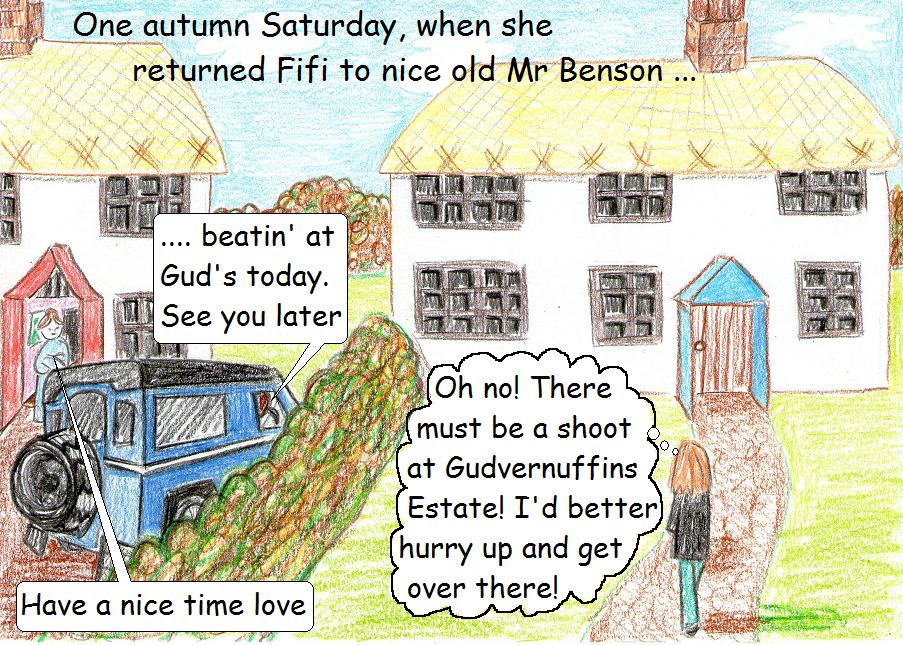




 Violet's Vegan Comics