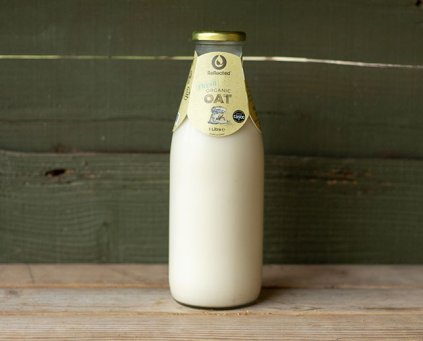
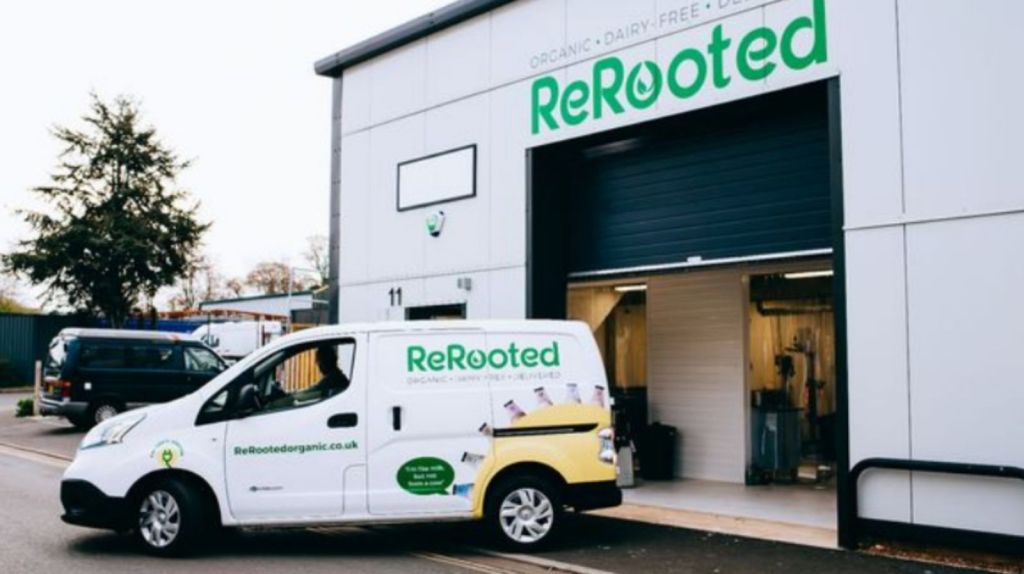
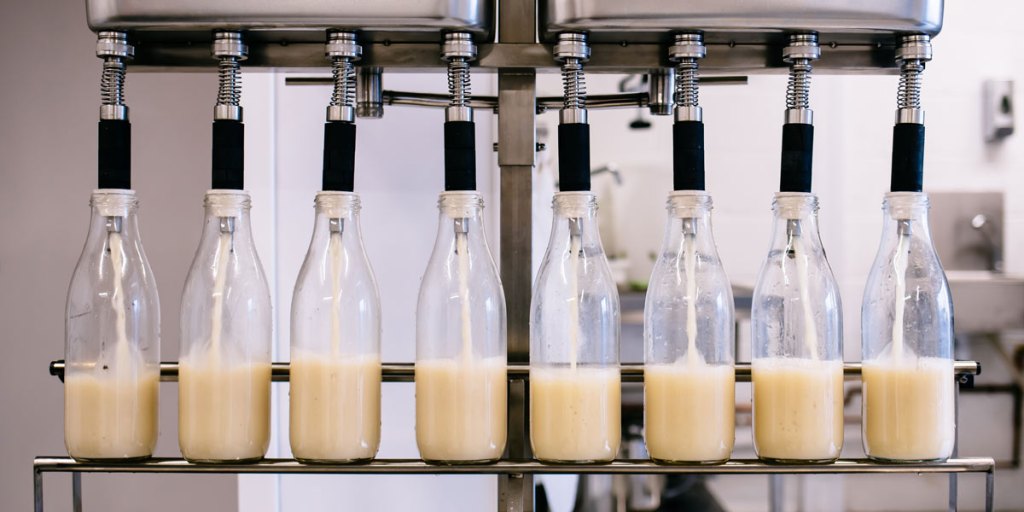
We order ours from Riverford every week and it’s so yummy!
*
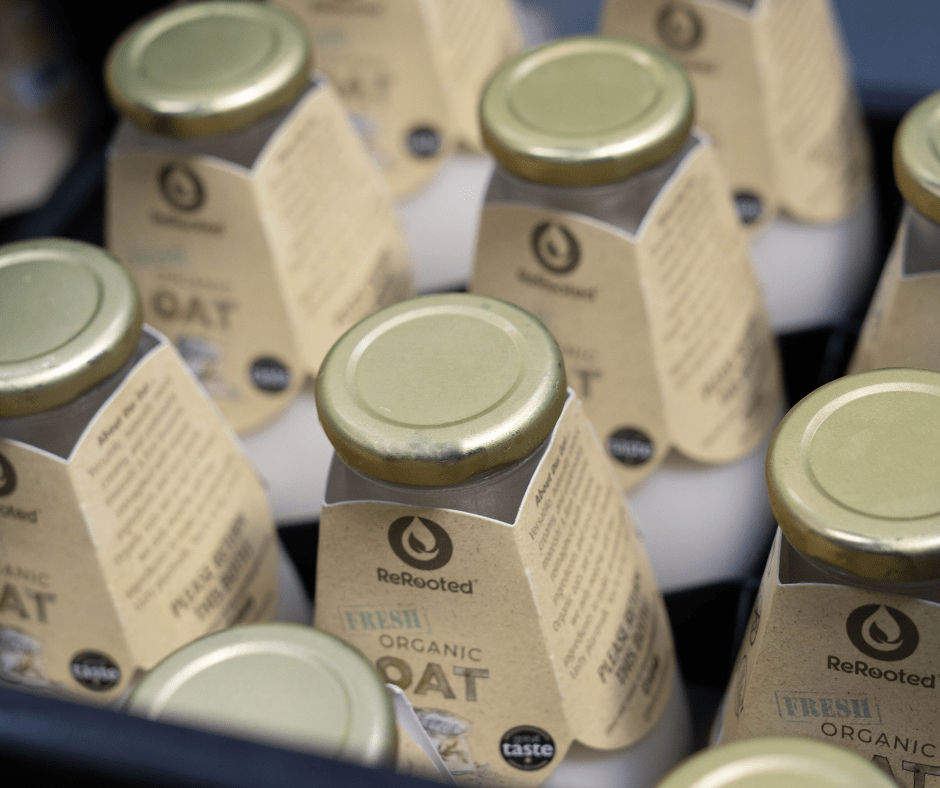
Then when we’ve poured it all on our cereal or into our tea, we return the bottles and they wash and refill them 😀
*
Superbly scrumptious, entirely ethical and completely cruelty-free: milk the way it should be from ReRooted. And it’s not just oat you know – they make all sorts of different plant milks. Take a look! 😀
In the glow of Diwali, I am filled with gratitude to each of you for being on this journey of dharma. As we celebrate the triumph of light over darkness, I feel a deep responsibility to honour that light, not only within ourselves but in all beings. Today, I write to you with a heartfelt invitation to consider a path that brings our actions into harmony with ahimsa—the principle of non-violence that lies at the very heart of dharma. This means us lightening the violence we are causing to the animal kingdom and to nature. Go Dharmic distributes food and aid to people in need all over the world, and it is important that we extend the love we feel for other people to include animals and nature too.
Go Dharmic is not just a humanitarian charity. We are a movement and platform for compassion in action. As many esteemed global charitable organisations focus on treating the symptoms, we apply efforts to advocate for peace and address the systemic disease that causes them in the first place: violence. I was personally shocked and upset to see beef being served at important events like COP or even at some major humanitarian charity events. These are supposed to be the leaders of peace and compassion in the world and yet choose to ignore the harm of violence to animals.
Sanatana Dharma calls us to revere every form of life, to ease suffering, and to live in harmony with all beings. The Mahabharata reminds us,
“Ahimsa is the highest dharma. Ahimsa is the best of all teachings(Mahabharata 13.117.37)” We should live gently upon this Earth, to see ourselves in all creatures, and to recognise the interconnected web that binds us all. It is in this spirit that Go Dharmic is a vegan organisation—not just as a dietary choice, but as a profound expression of our values of compassion, non-harming, and respect for the Earth and all her beings. When we serve and receive meals through our distributions or during disasters, when guests visit one of our retreats or join us at one of our centres, it is important that we serve food that does not include animal products.
Krishna says, “Dharma is love for all beings”. And these words are always in my mind and are central for our work and remind me that each being holds within it the same divine spark and the same essence. By choosing veganism as individuals and as a community, we choose to extend our compassion to animals, respecting their inherent right to live free from harm. Our relationship with animals should be one of guardianship, not exploitation. The practice of ahimsa calls us to end the suffering we impose on sentient beings—beings who, like us, seek to live, love, and avoid suffering. By simply choosing to avoid animal products, we choose not to participate in a system that inflicts pain and fear, but to embody the principle of non-violence in a way that honours all life.
*
The Rigveda speaks to the sanctity of all life, declaring, “May all beings look at me with a friendly eye, and may I do likewise; may all beings look at each other with a friendly eye” (Rigveda 10.191.4). Justice is not limited to human society alone but extends to all beings who share this Earth. When we choose compassion over consumption, we are not only upholding the rights of animals but affirming the justice that should guide all our relationships. Our ethical responsibility includes treating animals with dignity, acknowledging their suffering, and striving for a more just and kind world. Let us not argue about what people did in the past, whether they consumed meat, or dairy or any specific circumstances as examples but let us look at the tremendous evidence of the suffering of animals, violence to our planet and ourselves. If we apply and engage our ethical or dharmic compass with intelligence we will find that veganism is a very practical and simple solution to heal nature and reduce harm to nature whilst still living well.
Modern science has underscored the urgency of these choices. Research on planetary boundaries, particularly by the Stockholm Resilience Centre, has identified critical thresholds in areas like climate change, deforestation, and biodiversity loss. Animal agriculture, including the dairy industry, is one of the primary drivers pushing us beyond safe boundaries, fuelling deforestation, greenhouse gas emissions, and the depletion of our planet’s natural resources. Many will choose to do nothing about it, but the call to ‘Go Dharmic’, is one for us to take responsibility.
In the Mahabharata, there was a wise merchant Tuladhara who encountered the sage Jajali, who had spent years practising severe austerities, renouncing worldly attachments, and engaging in rigorous sacrifices. Jajali, proud of his accomplishments, believed he had attained the highest form of dharma and purity. Seeking validation, he asked Tuladhara about the merit of his practices. In response, Tuladhara shared a profound lesson on ahimsa and the path of least harm.
Tuladhara says:
“Ahimsa paramo dharmah”
“Non-violence is the highest dharma.”
Tuladhara adds that compassion and empathy are the roots of true spirituality, saying:
“One who truly understands dharma acts with kindness, not out of adherence to rules, but from a heartfelt desire to see all beings at peace. For such a person, all beings are part of their own family.”
He underscores that merely following strict austerities, as Jajali had done, does not embody true dharma. Instead, the essence of dharma lies in recognising the interconnectedness of all life and embodying ahimsa in every thought, word, and action.
This dialogue serves as a powerful reminder to us that the essence of dharma is compassion and non-harm, a teaching that has echoed through the centuries and I believe is one of the core teachings of Hinduism, Buddhism, Sikhism and Jainism.
Tuladhara taught Jajali that living in harmony with others, showing compassion to all beings—whether human, animal, or nature—is a truer and higher form of dharma than any sacrifice.
Jajali, who was humbled realised that while he had lived with great austerity, he had missed the essence of dharma: living with compassion and walking a path of gentleness, choosing actions that brought peace rather than harm. Through his story, Tuladhara shows us that the greatest spiritual strength lies not in conquering oneself through rigid discipline or rituals, but in nurturing a heart that is gentle, kind, and mindful of the well-being of all creation.He says:
“One should walk the path that causes the least harm to all beings, for in sparing others, one preserves their own purity and the world’s balance.”
The first half of the year has flown by in a blaze of activity. It is certainly a year of change, with the UK and devolved nations reviewing and implementing new strategies to benefit, preserve, and prosper both people and land.
The UK Government is currently developing a Land Use Framework, a 25-Year Farming Roadmap, and a new Food Strategy. Additionally, the publication of the Climate Change Committee’s Seventh Carbon Budget is a stark reminder of the crucial role of agriculture and land use in halting the UK’s contribution to global warming. Targets have been set in line with the Balanced Pathway to net zero by 2050, necessitating a reduction in sheep and cattle numbers; a rise in the planting rates of new woodland, and a rise in the proportion of upland peat in natural or rewetted condition; and a decline in average meat and dairy consumption.
Our research has shown that these targets are not only achievable but surprisingly welcomed by many farmers. The issue isn’t a lack of willingness, but a lack of supported choice. It is therefore a critical time for organisations such as ours to help guide the narrative and the policy decisions that ensue. It’s been a busy few months and so far, this year we have:
Published our Manifesto and a Policy Brochure which lays out evidence-based recommendations to government in the areas of farmer support and land use change. Our policy brochure has been endorsed by many key organisations and individuals. If you or your organisation are interested in endorsing our policy recommendations then please email molly@stockfreefarming.org
Met with DEFRA’s ‘Agricultural Net Zero Pathways’ policy team in Westminster, who were very supportive of our suggestions for policy change and asked lots of great questions. Now it’s just down to ministers finding the courage to do the right thing!
Arranged a meeting with the Climate Change Committee for June 25th to discuss how our policy recommendations can enable the targets set out in the 7th Carbon Budget.
Our research has shown us that there are three requirements for farmer change: Information, Demonstration, Remuneration. Farmers want to know what other farmers are doing, whether it is working, and how much money they are making. To that end, we have created a promotional video featuring the work of some of our transitioning farmers, employing the amazing talents of Paul Bates from Realm Video. Over the past year we have interviewed three farmers who have received support from Stockfree Farming during their journeys from traditional livestock agriculture to a diverse range of profitable stockfree initiatives.
Most recently, we visited one of our brilliant farmers in Ayrshire. This farmer recently purchased 43 acres of mixed woodland and pasture and will be establishing a hazelnut orchard. He is keen to demonstrate how this area of former sheep grazing can become more productive, simultaneously producing food for human consumption, restoring nature, supporting biodiversity and sequestering carbon. The level of innovation and aspiration that this farmer has is incredibly inspiring, and we know that his story will spark interest amongst other farmers.
Once the final edits have been completed, the film will be shared widely on our website, social media pages, and at the in-person events we will be attending this summer. Watch this space!
*
Last month, Sam spent three weeks volunteering with Peter and Patrick who run Meadowfields Farm in Caithness. Meadowfields is a new stockfree organic certified farm which began selling to the public last year through their self-service veg shed. They grow a vast range of fresh fruits and vegetables at their main 4-acre site near Halkirk. In addition, they also have another 100-acre site nearby, where they’re exploring different options for food growing and habitat restoration.
Situated in Caithness, they’ve encountered numerous challenges to producing fruit and veg, namely a shorter growing season, strong winds and heavy rain. Given these difficulties, we arranged for one of our advisory team members, Mark Dickinson, to come and lend his expertise. With Mark’s extensive experience of successfully producing fruit and veg in similar conditions in Orkney, there were many pearls of wisdom he could share. Mark spent three days with Peter and Patrick, walking around each site and discussing all the different aspects of the farm from ground preparation through to markets.
Much of his advice is now being put into practice, in particular the creation of lazy beds at their main site, which will help crops from becoming too waterlogged; and beginning peatland restoration works for their larger 100-acre site. Following this, Sam has been assisting Peter and Patrick with finding and applying for government funding through the Agri-Environment Climate Scheme (e.g. payments for including wildlife areas and for organic farming) and the Peatland ACTION fund (peatland restoration works).
Peter and Patrick have big plans for Meadowfields such as expanding their fruit and vegetable growing; welcoming more wildlife onto their farm; and making the space more accessible for visitors, volunteers and workers with disabilities and additional needs. We’re eager to continue helping Meadowfields where needed and are excited to see how it develops in the years to come!
Be sure to drop by their self-service veg shed if you’re in the area! You can find them on Google Maps or on Facebook. Expect a case study of their farm to follow on our website in the near future.
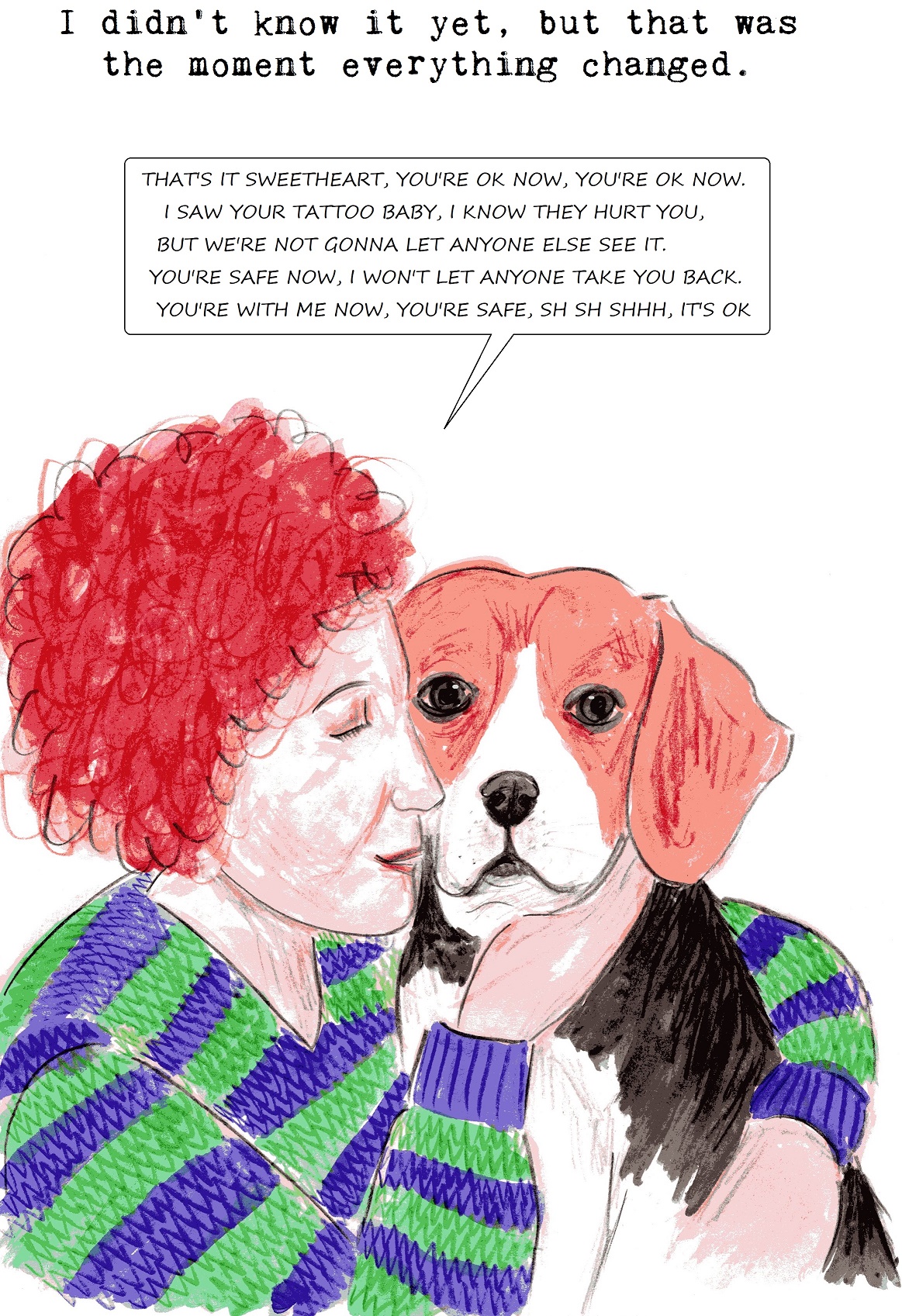
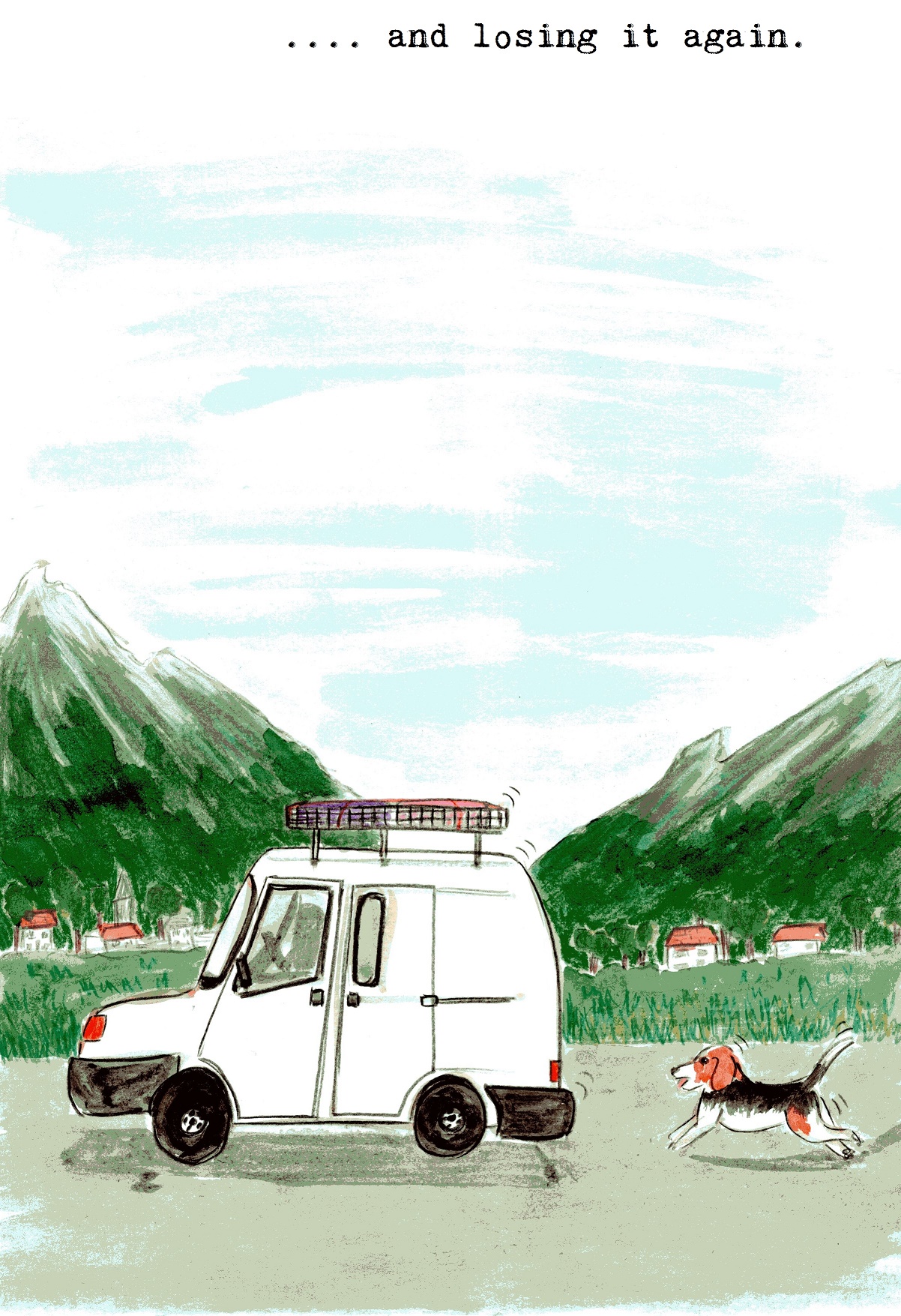
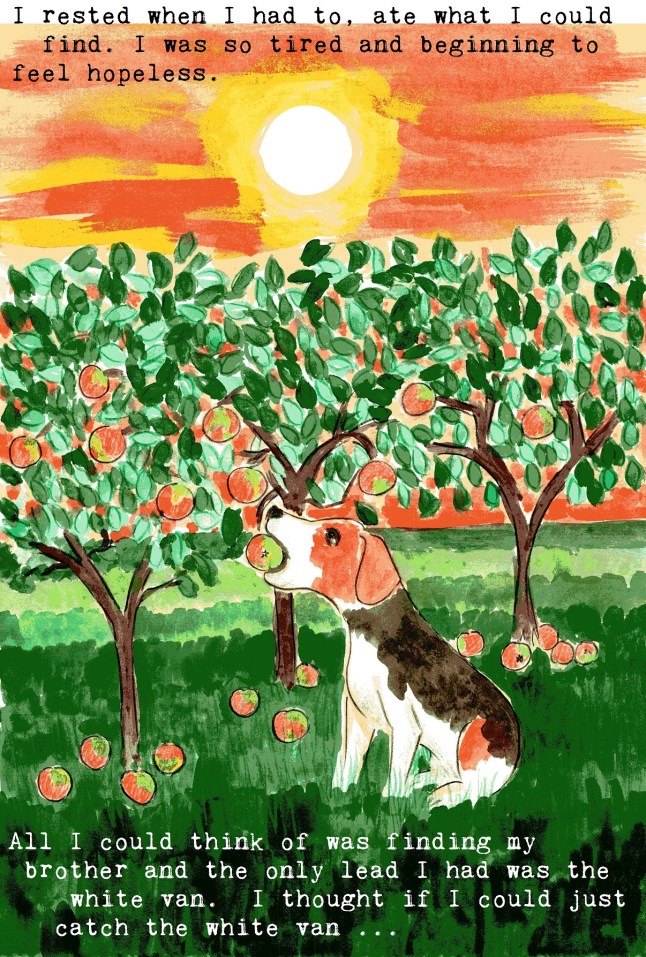
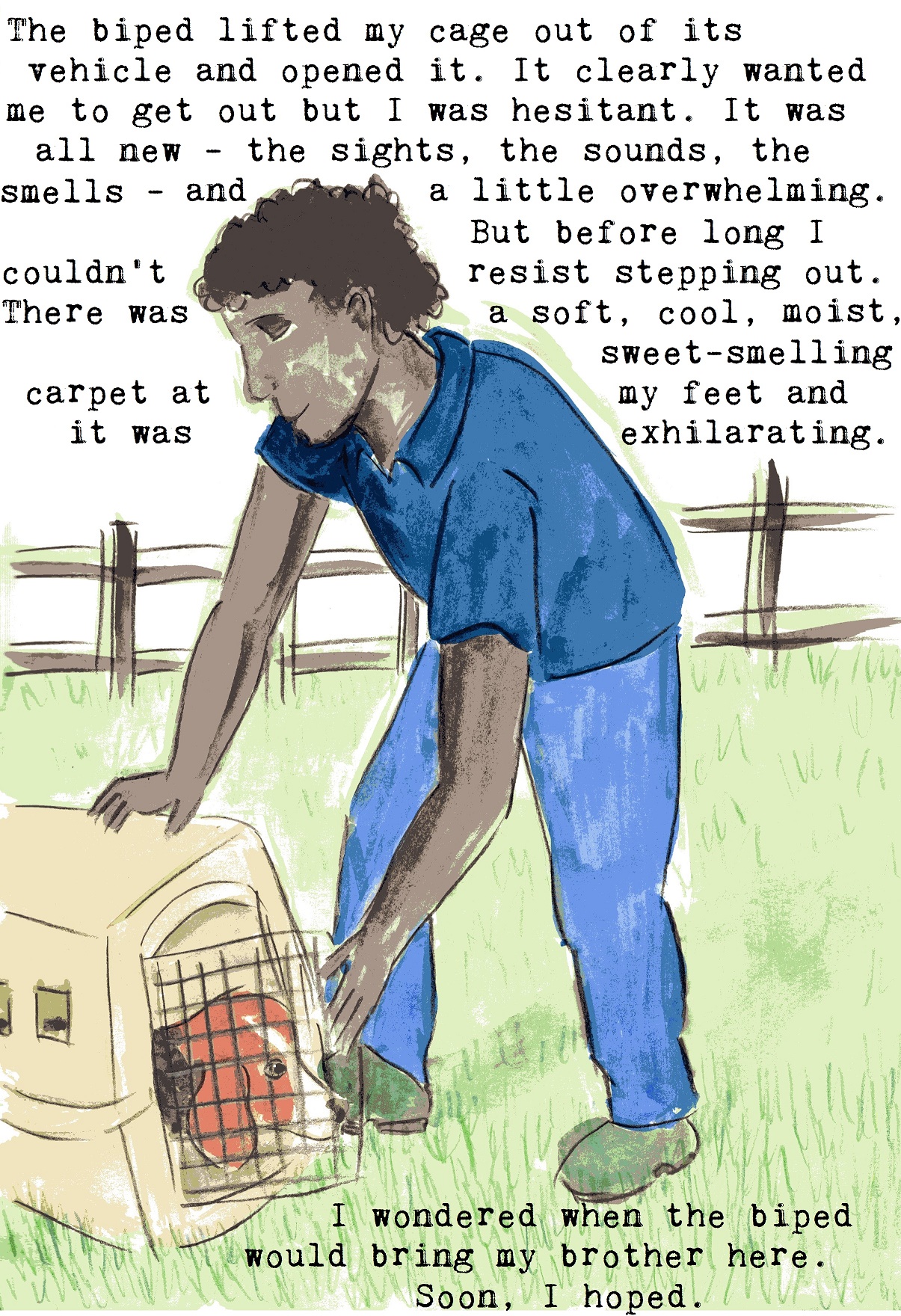
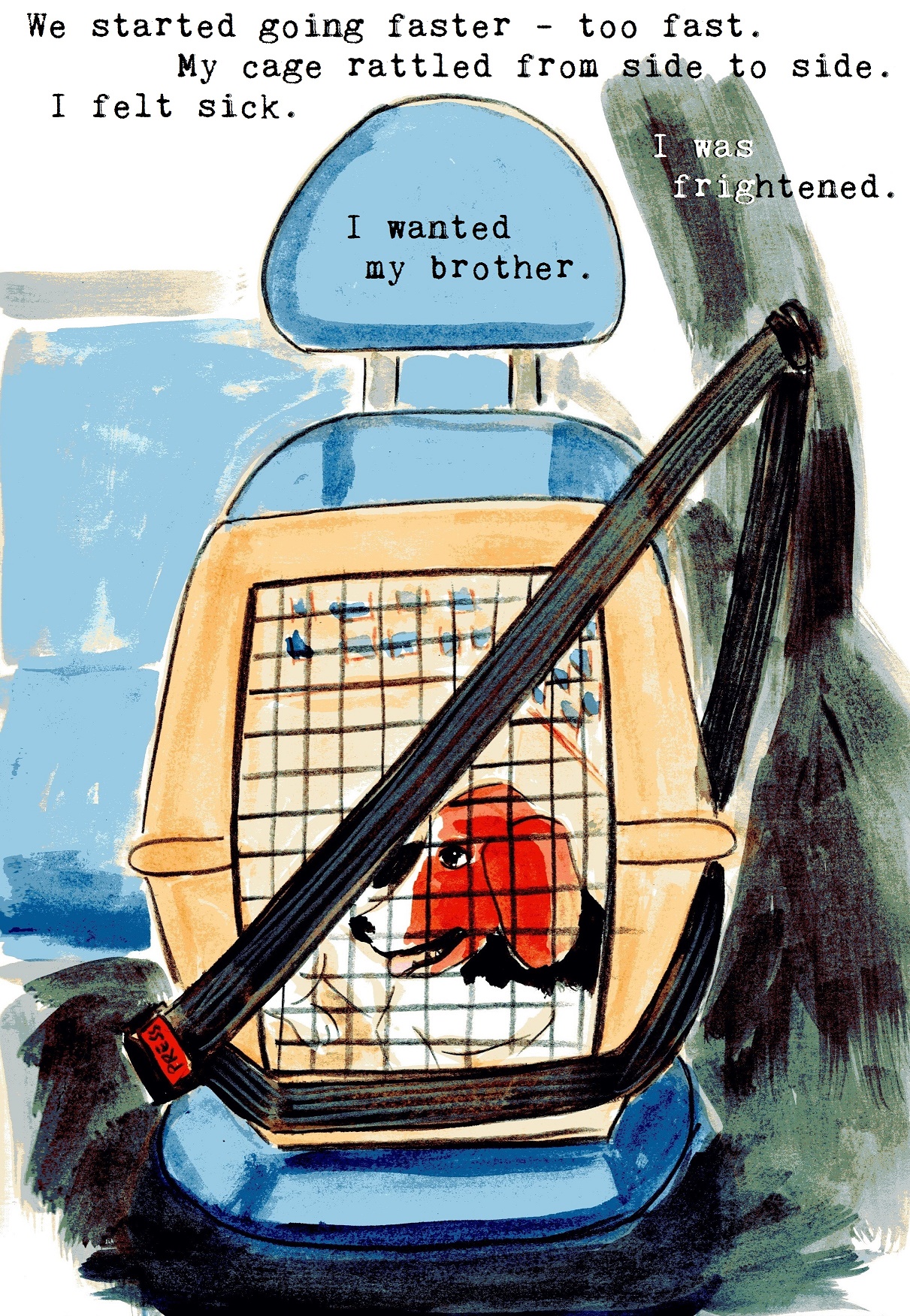
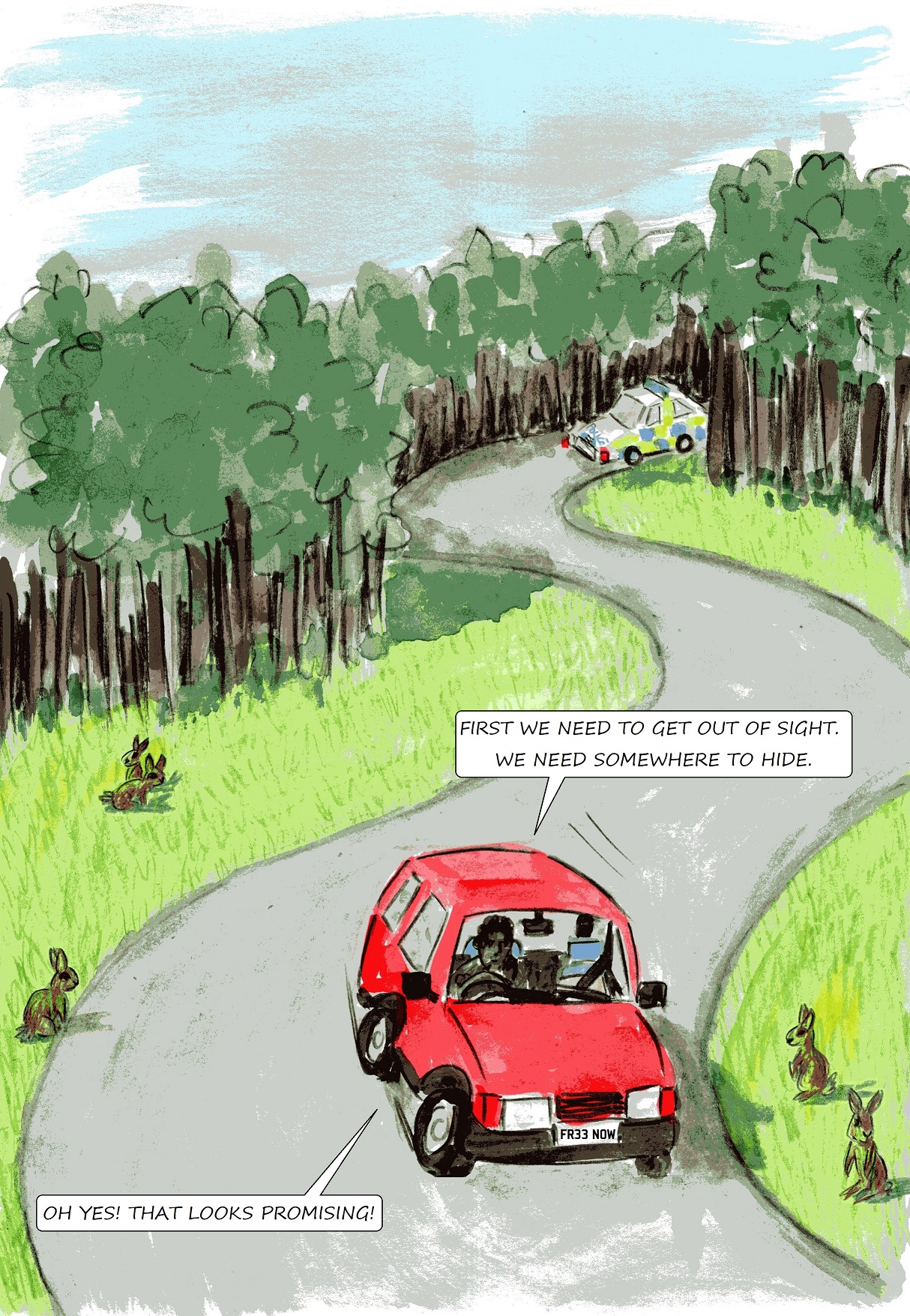
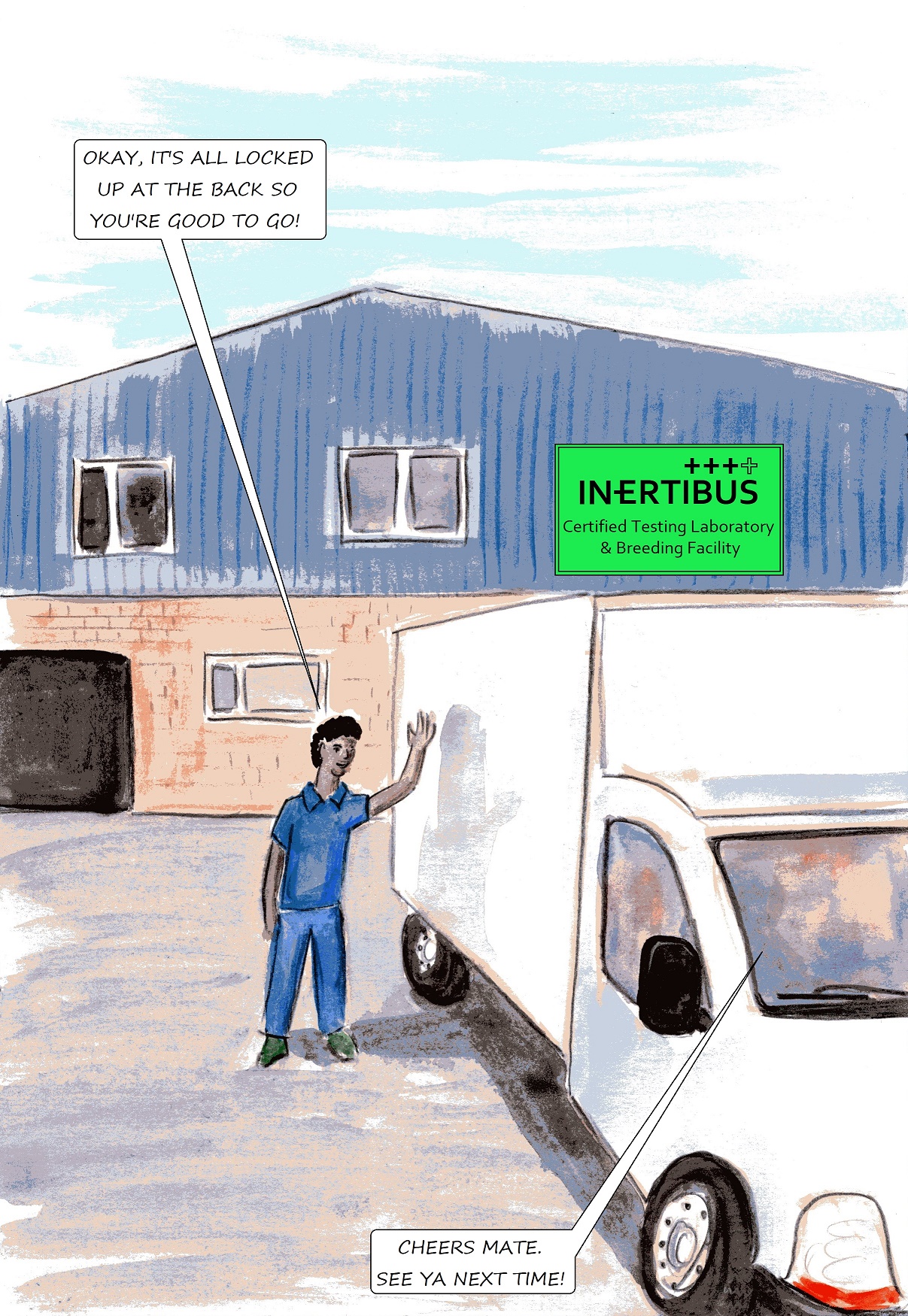
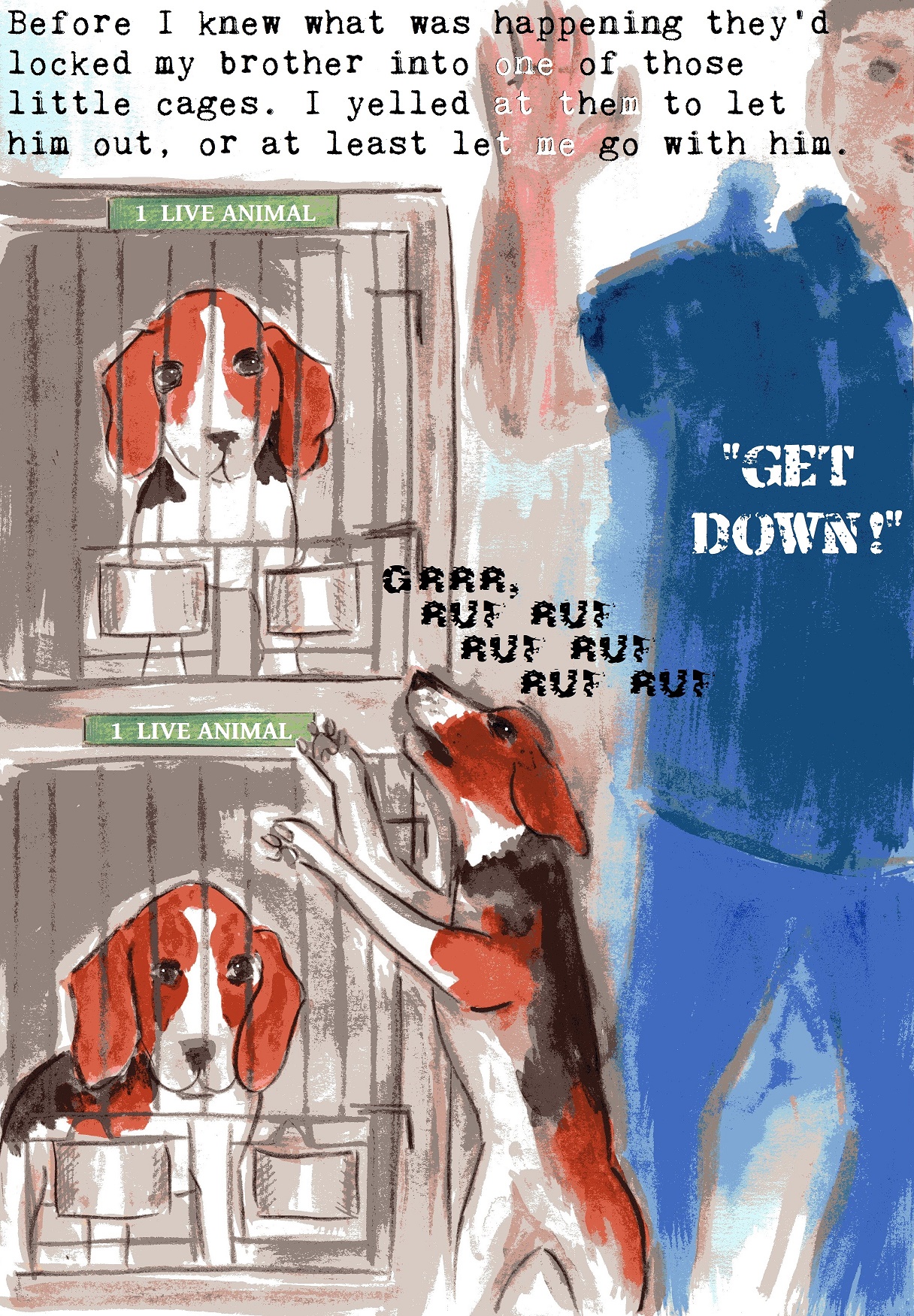
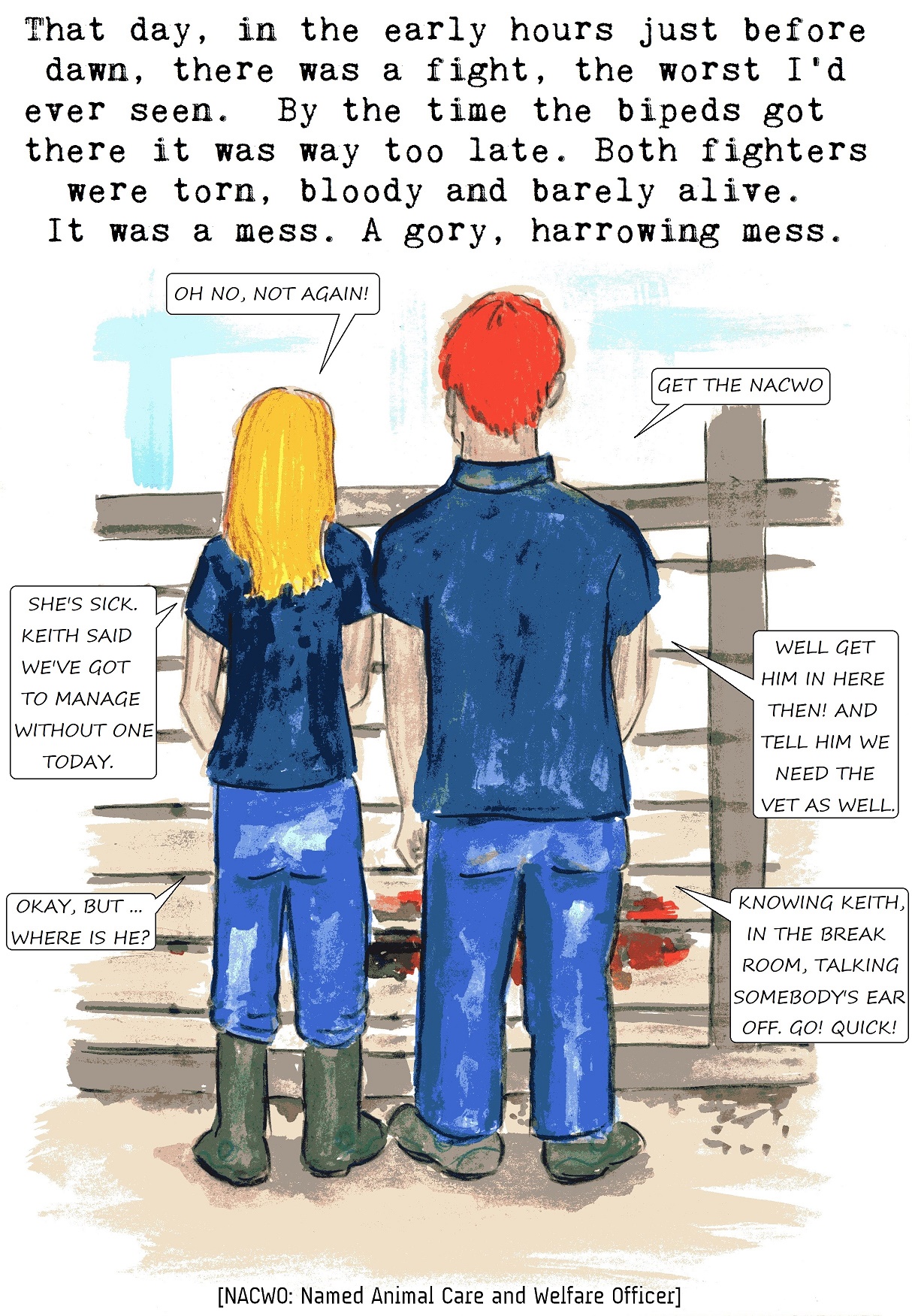
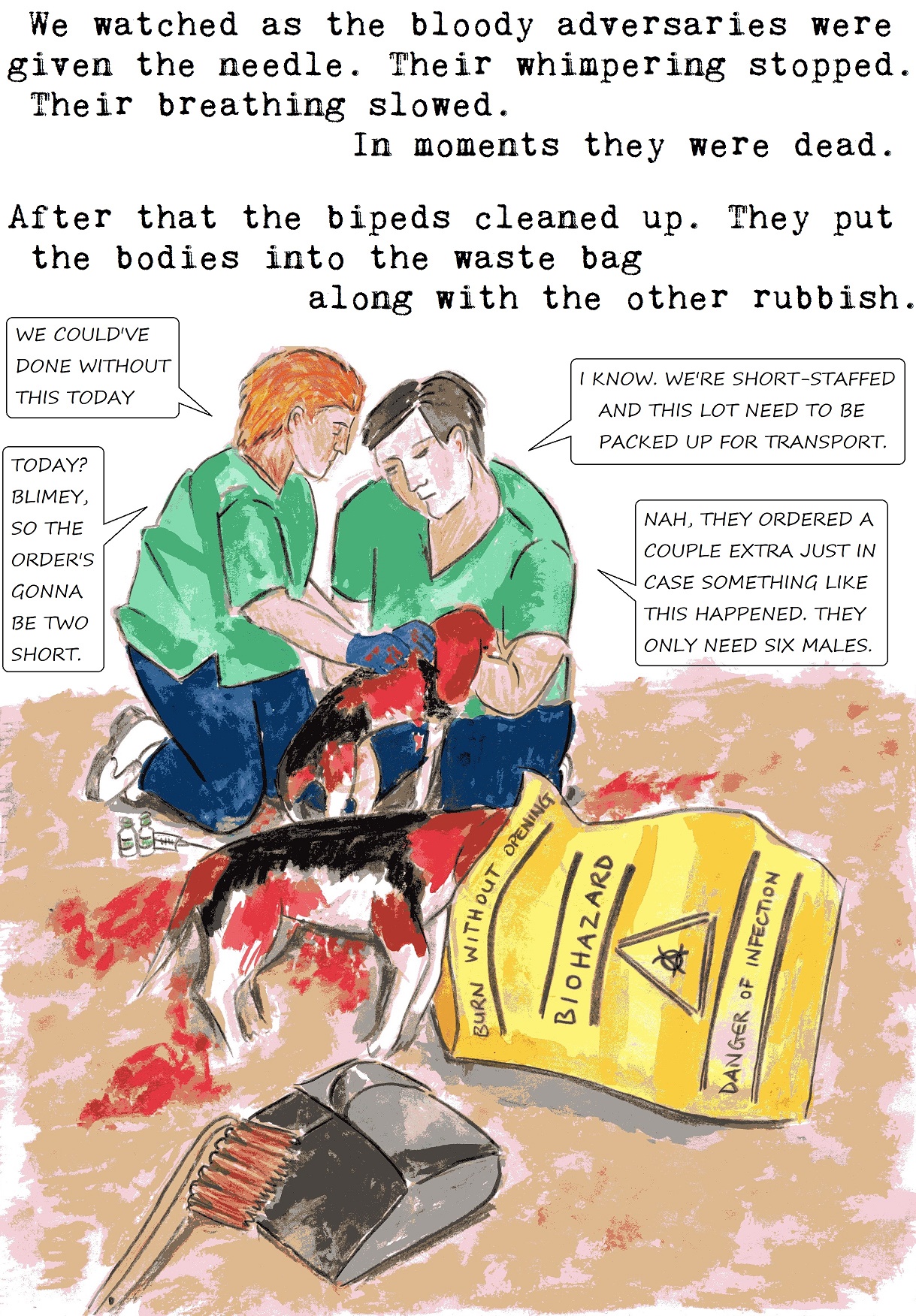
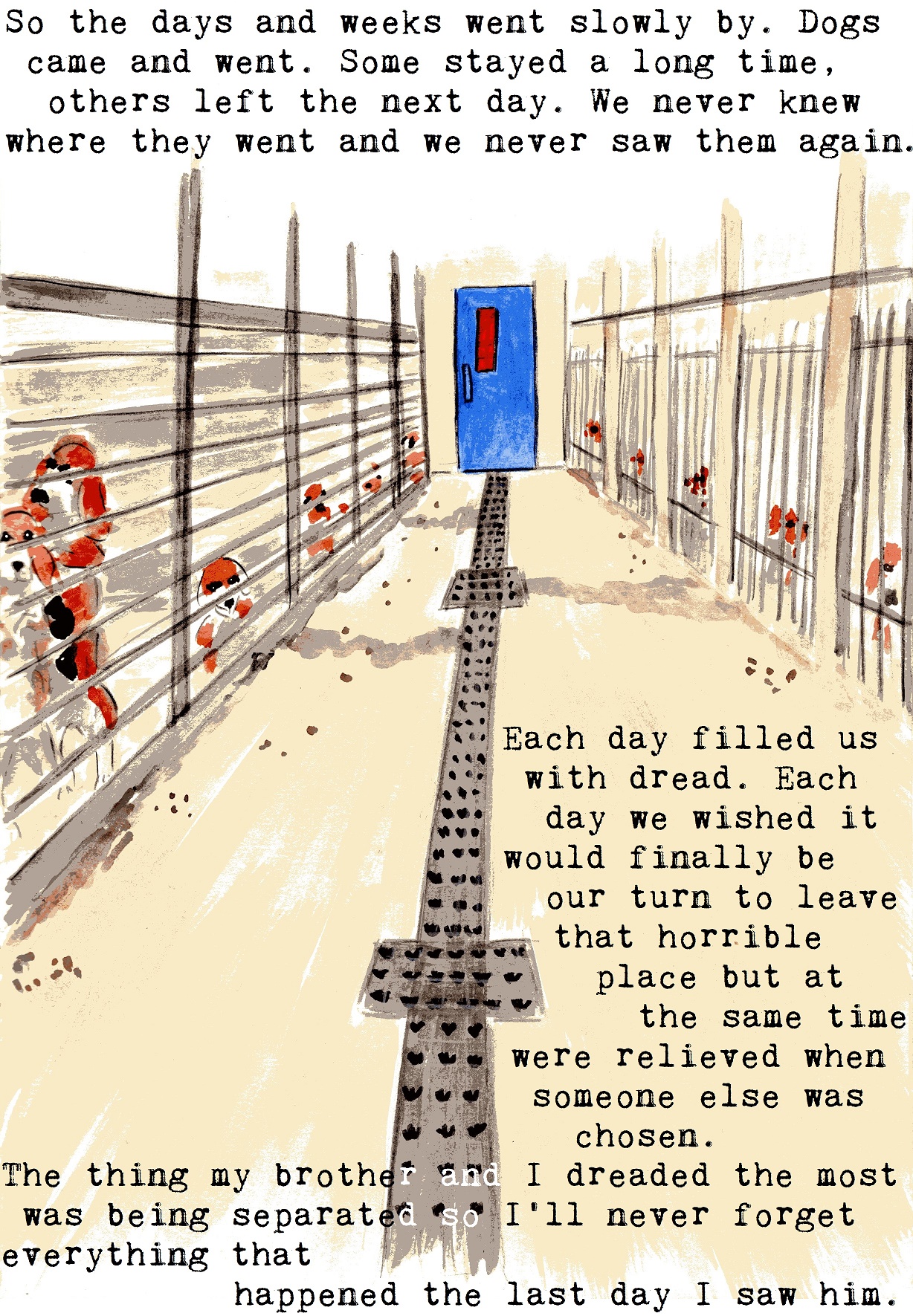
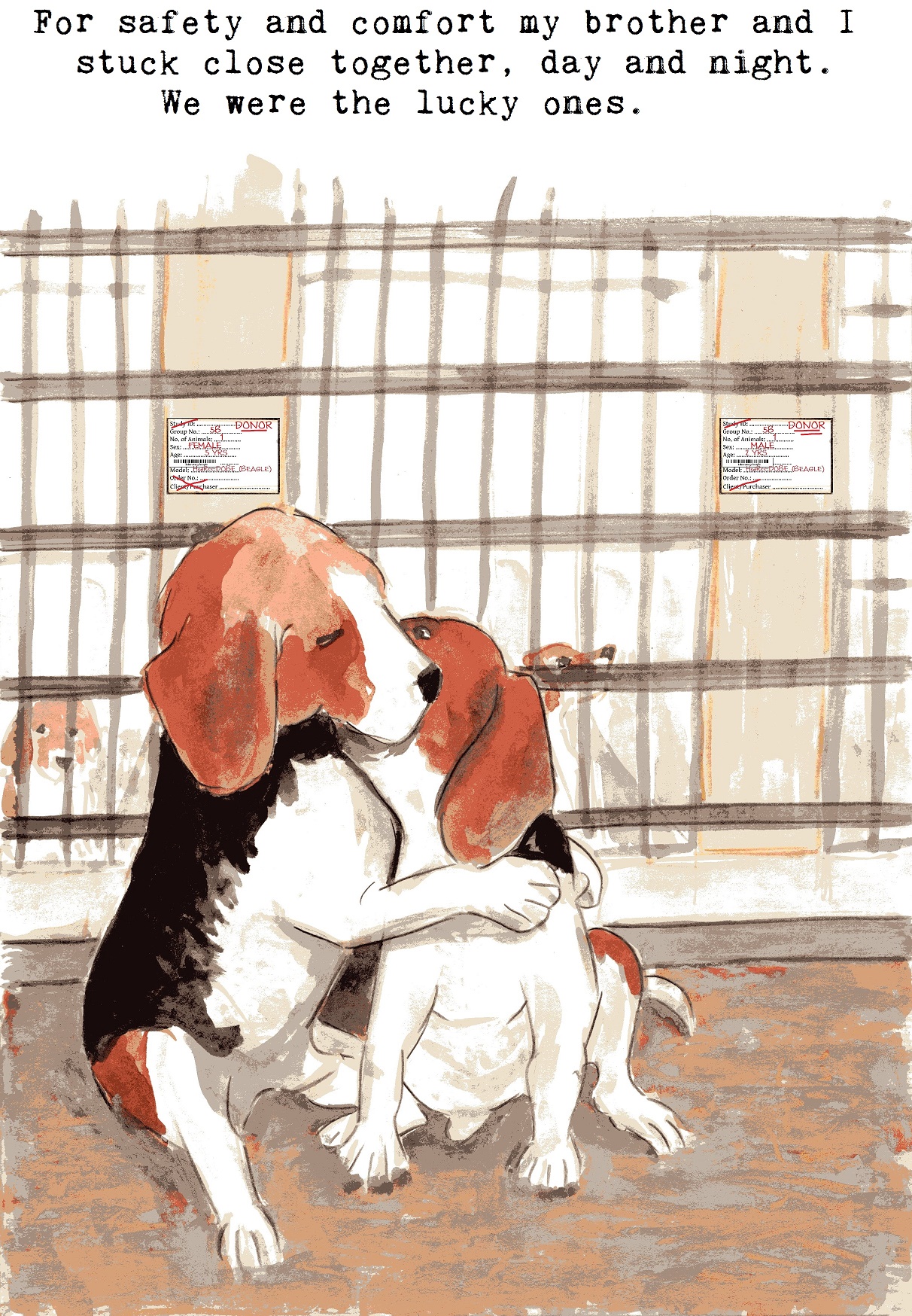
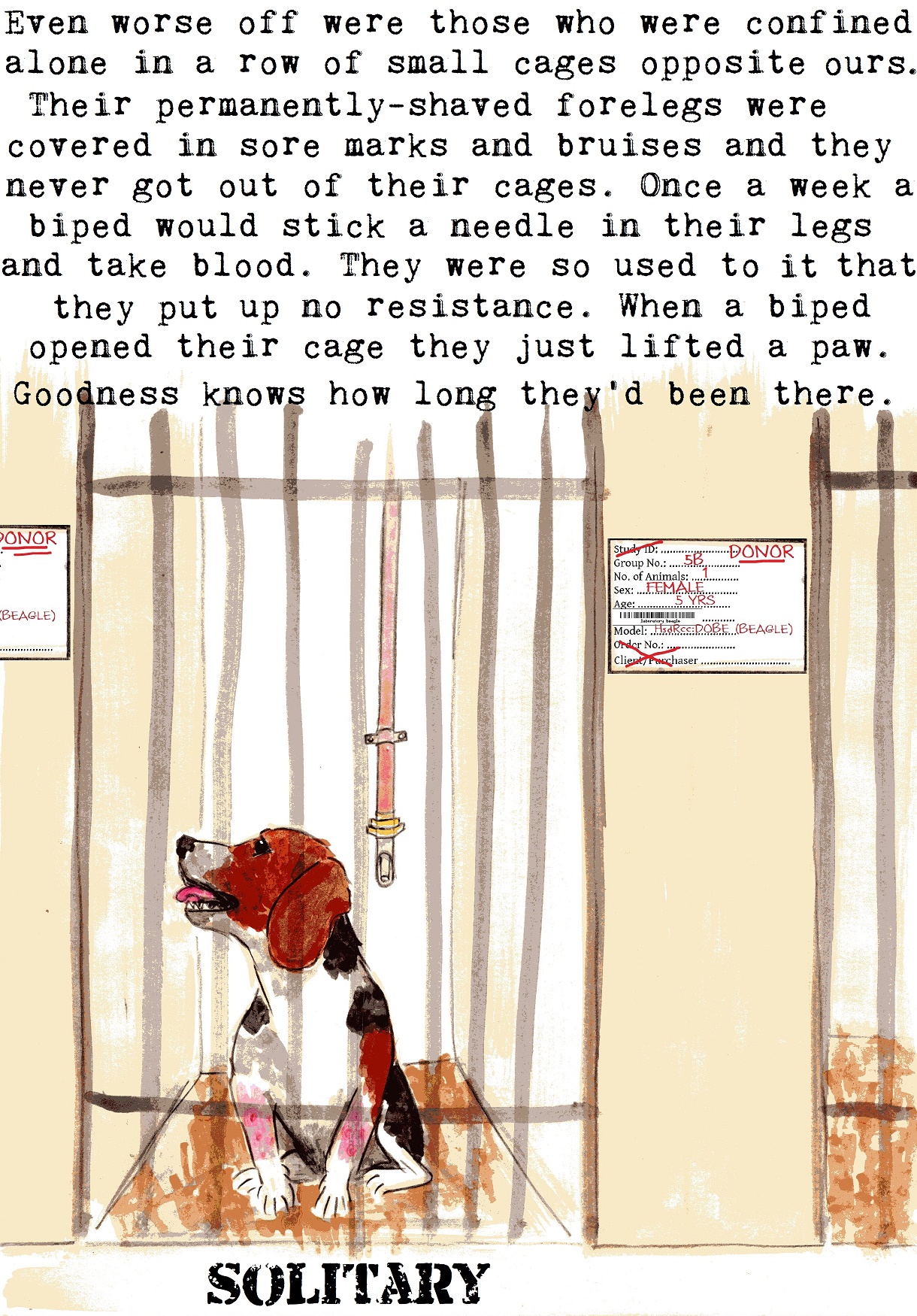
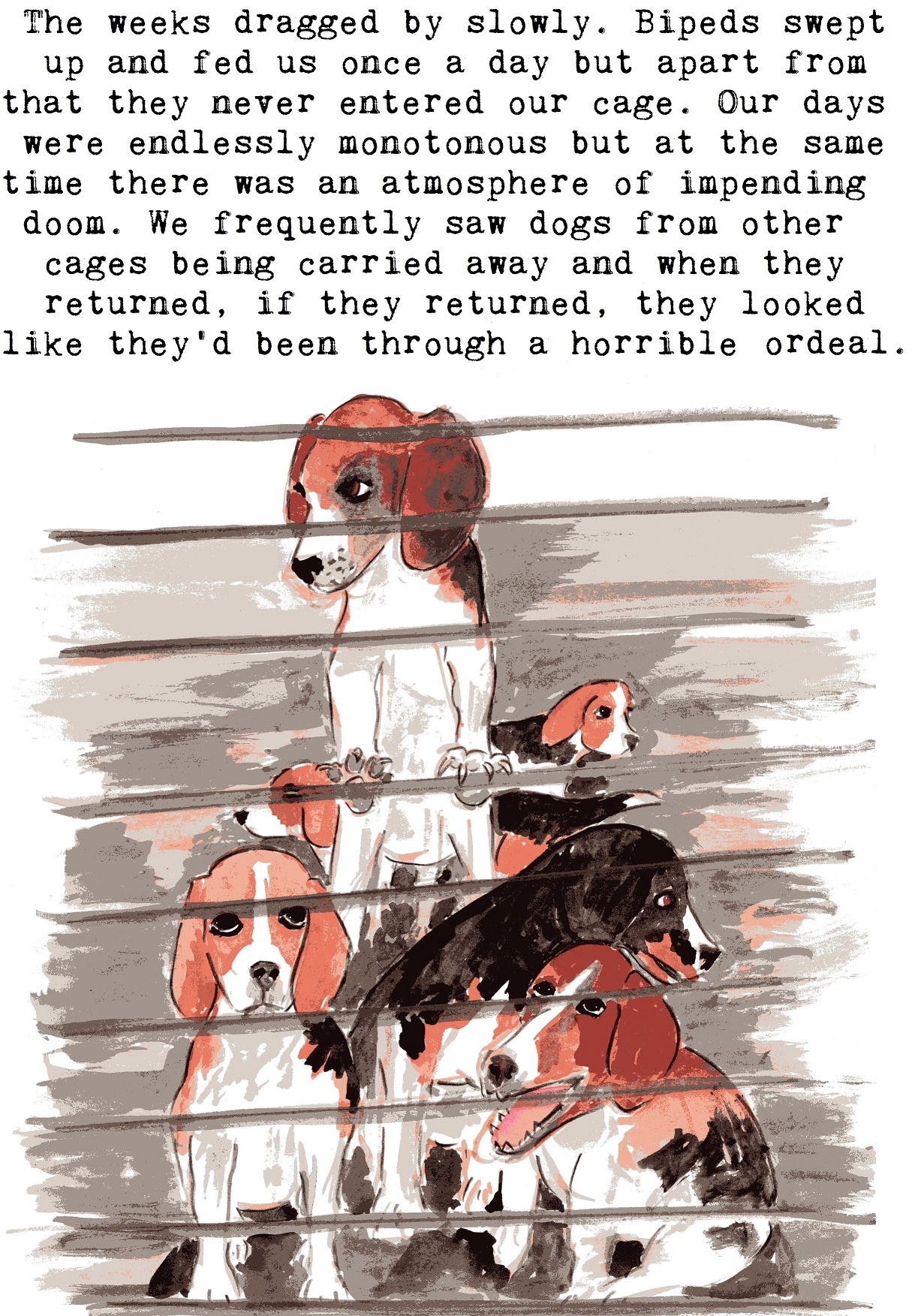
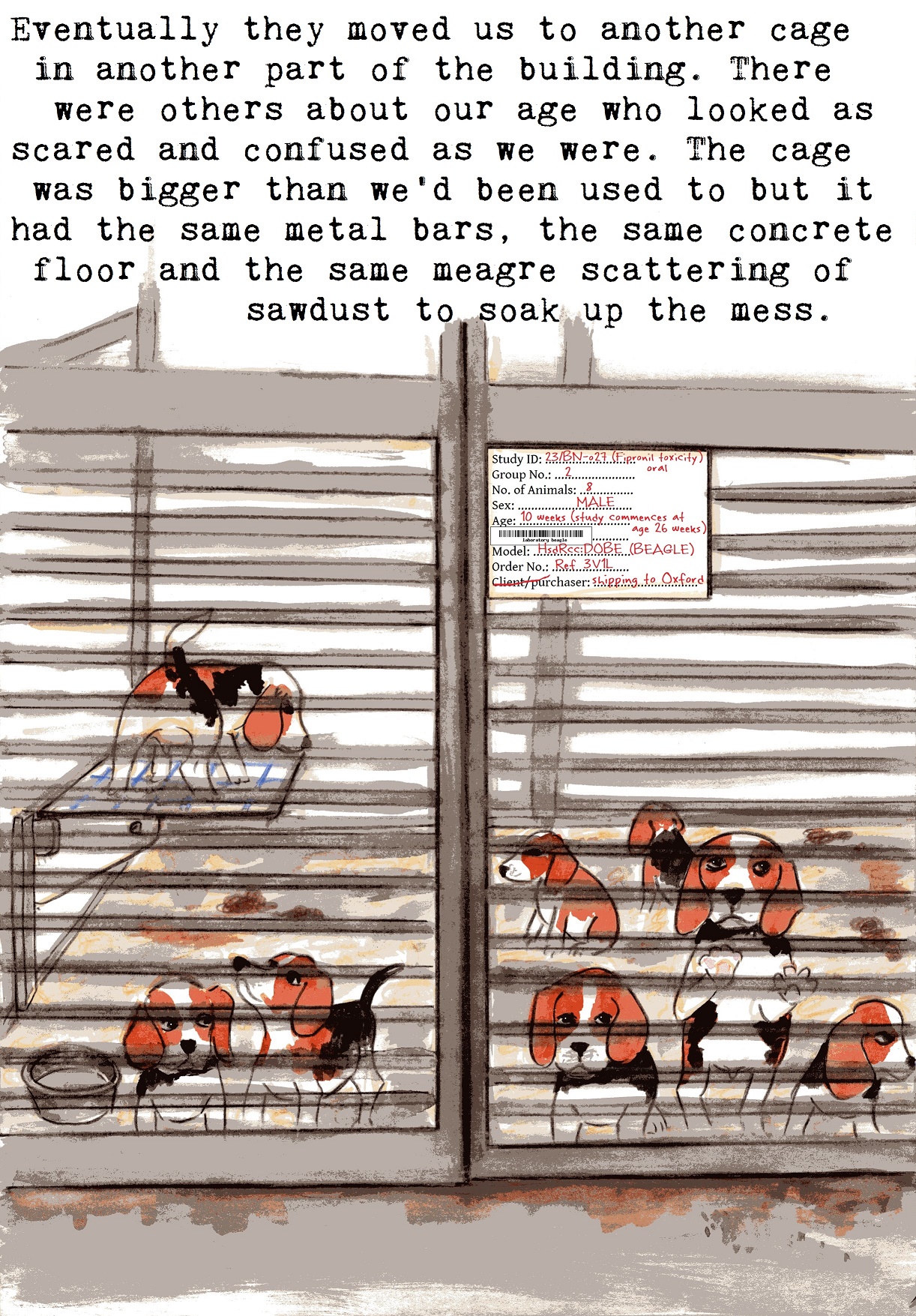
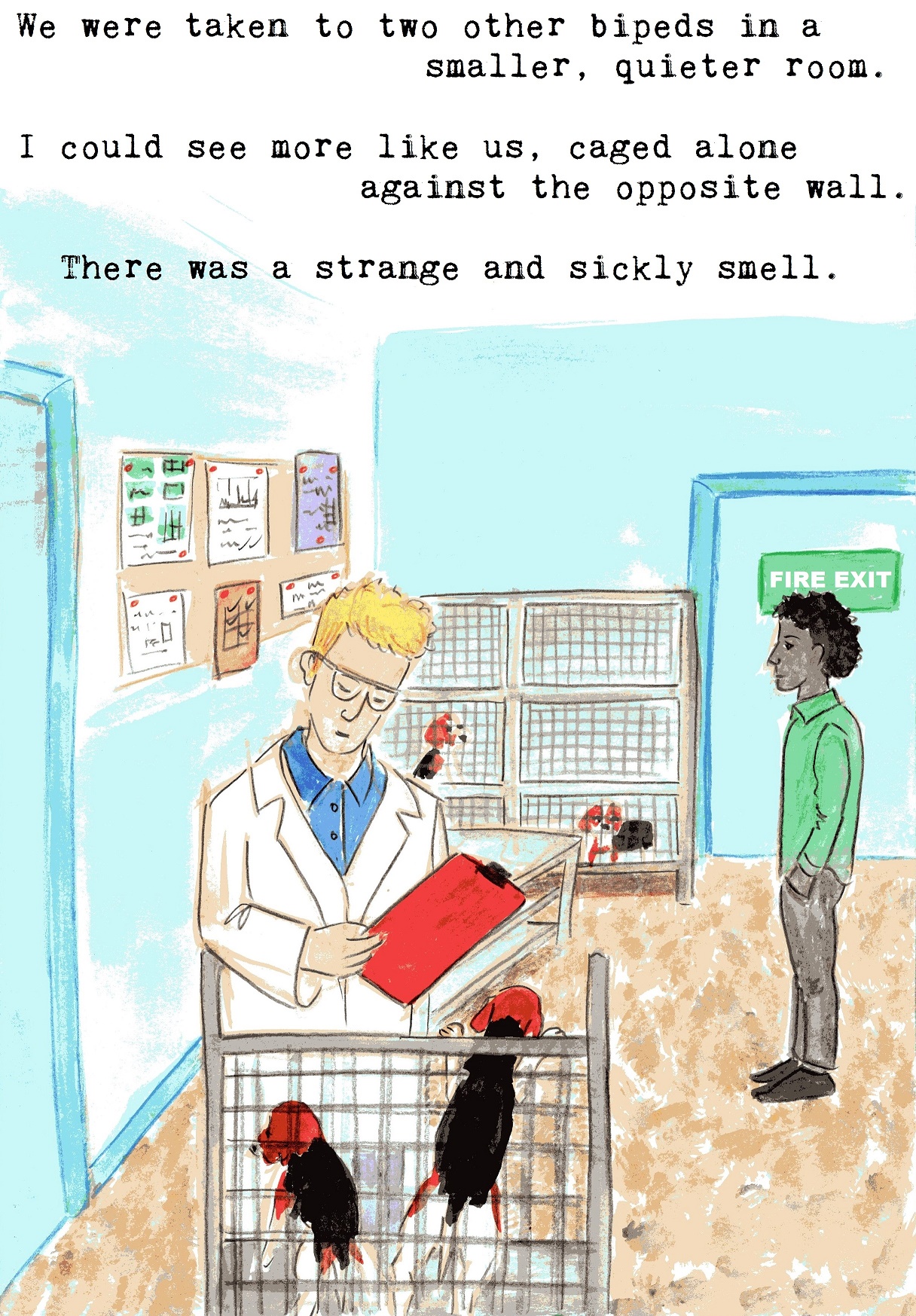
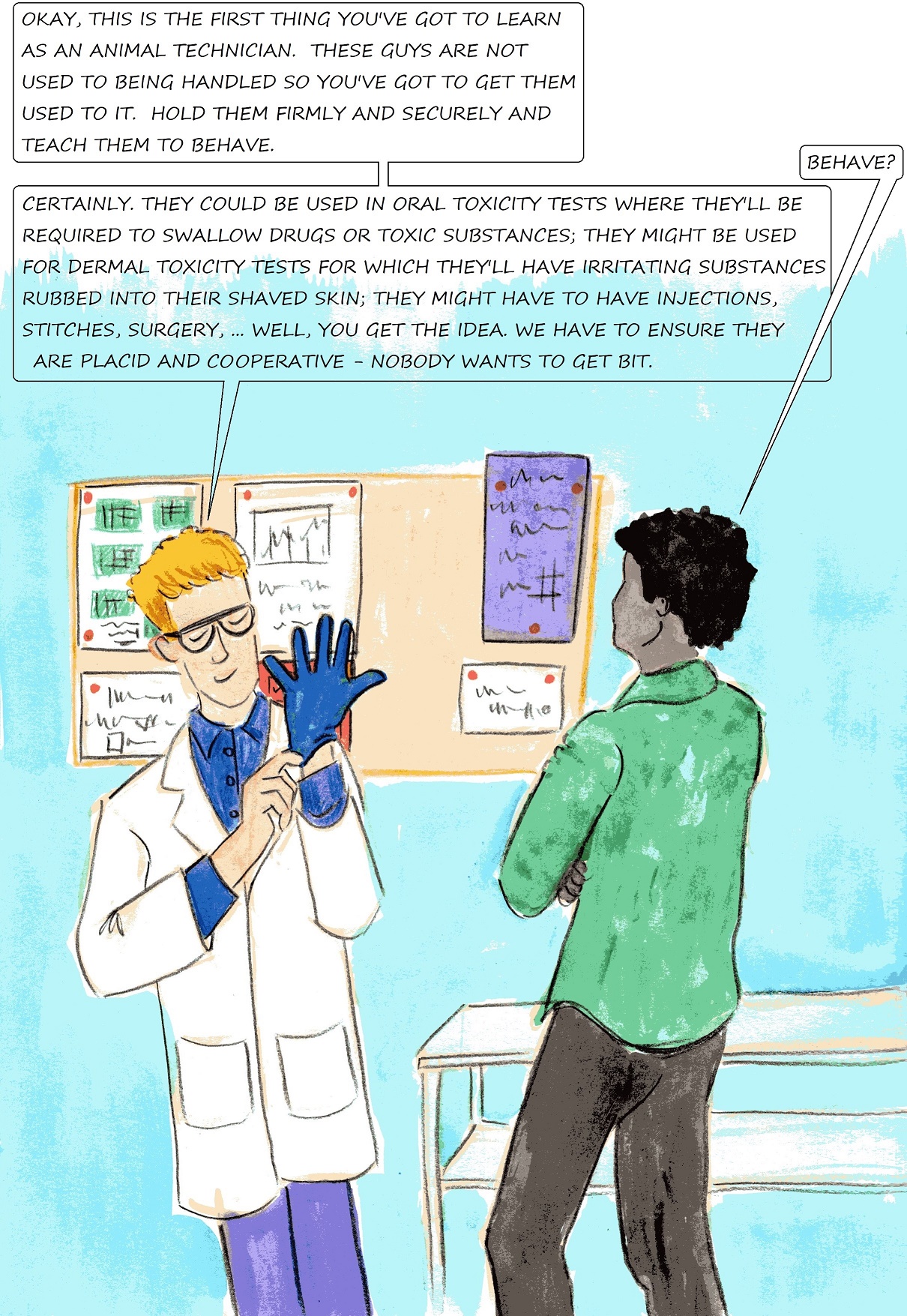
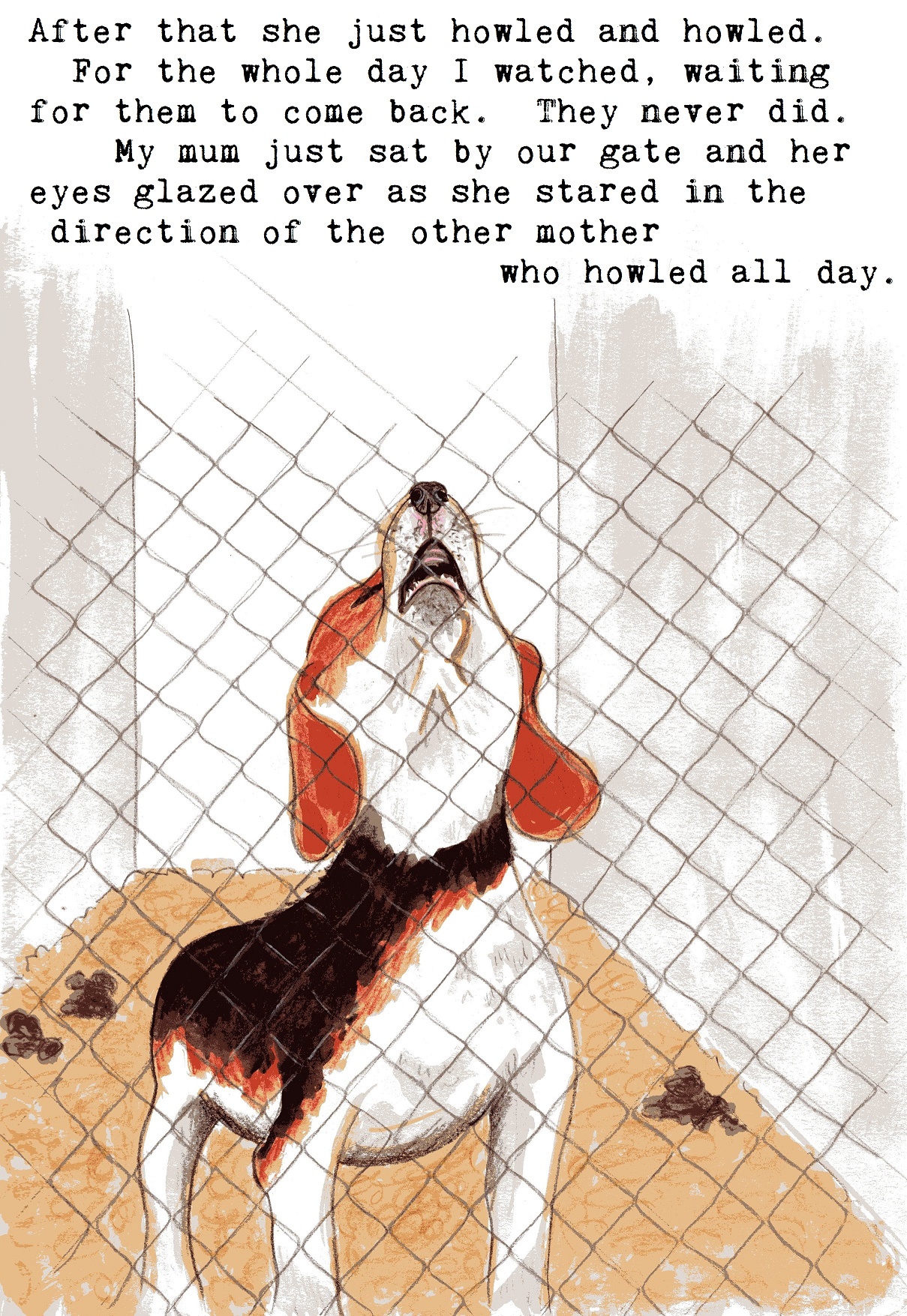
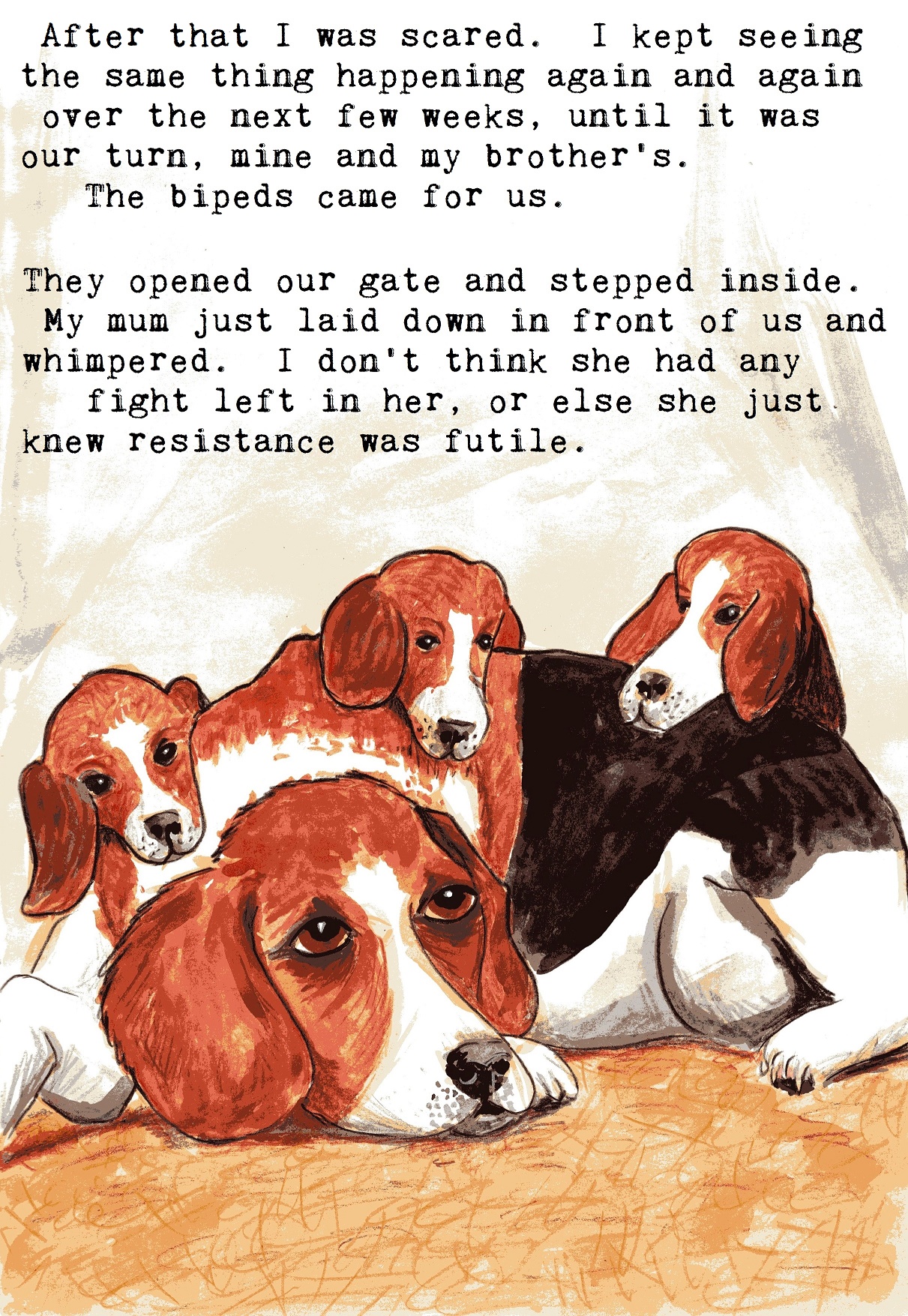
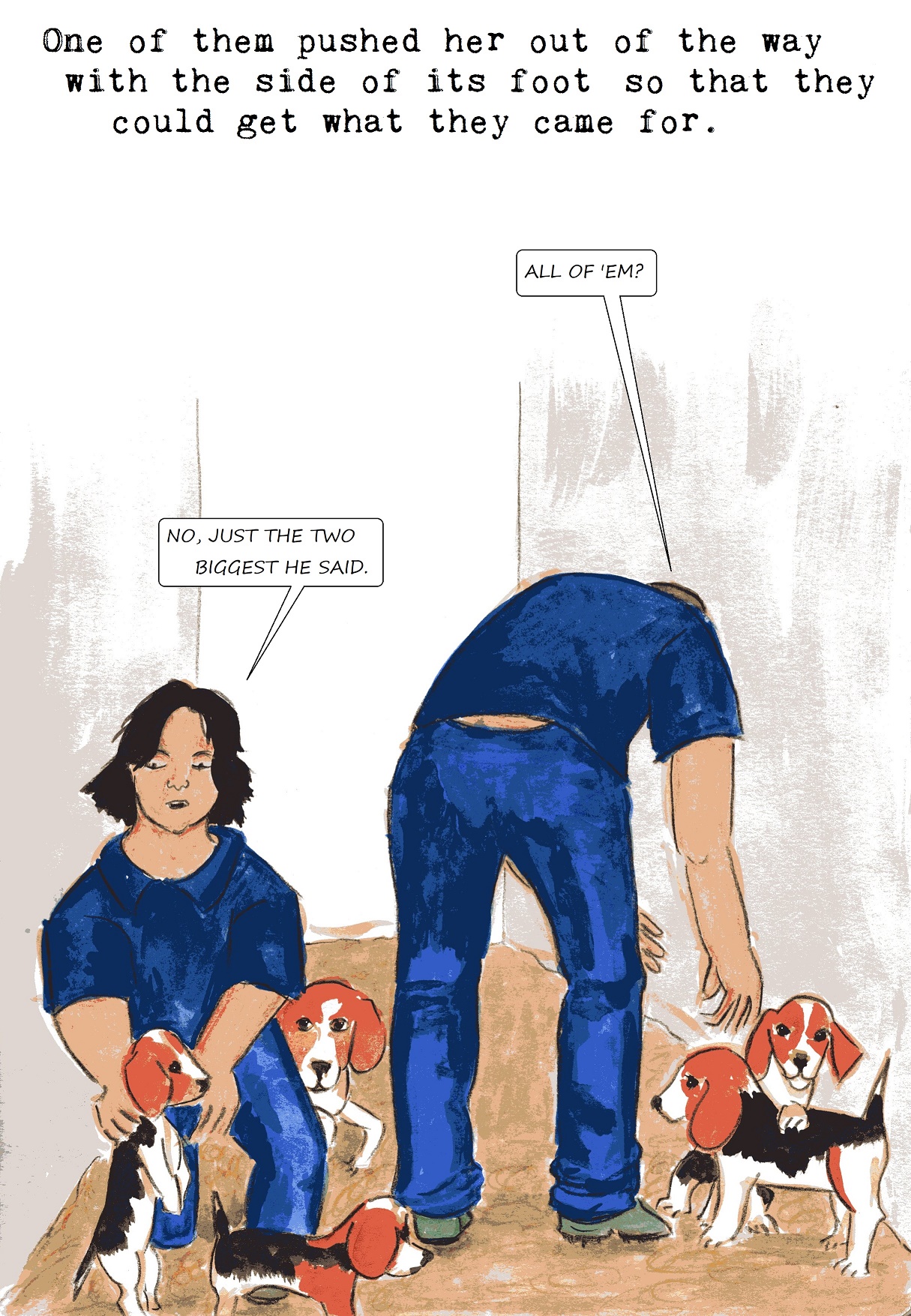
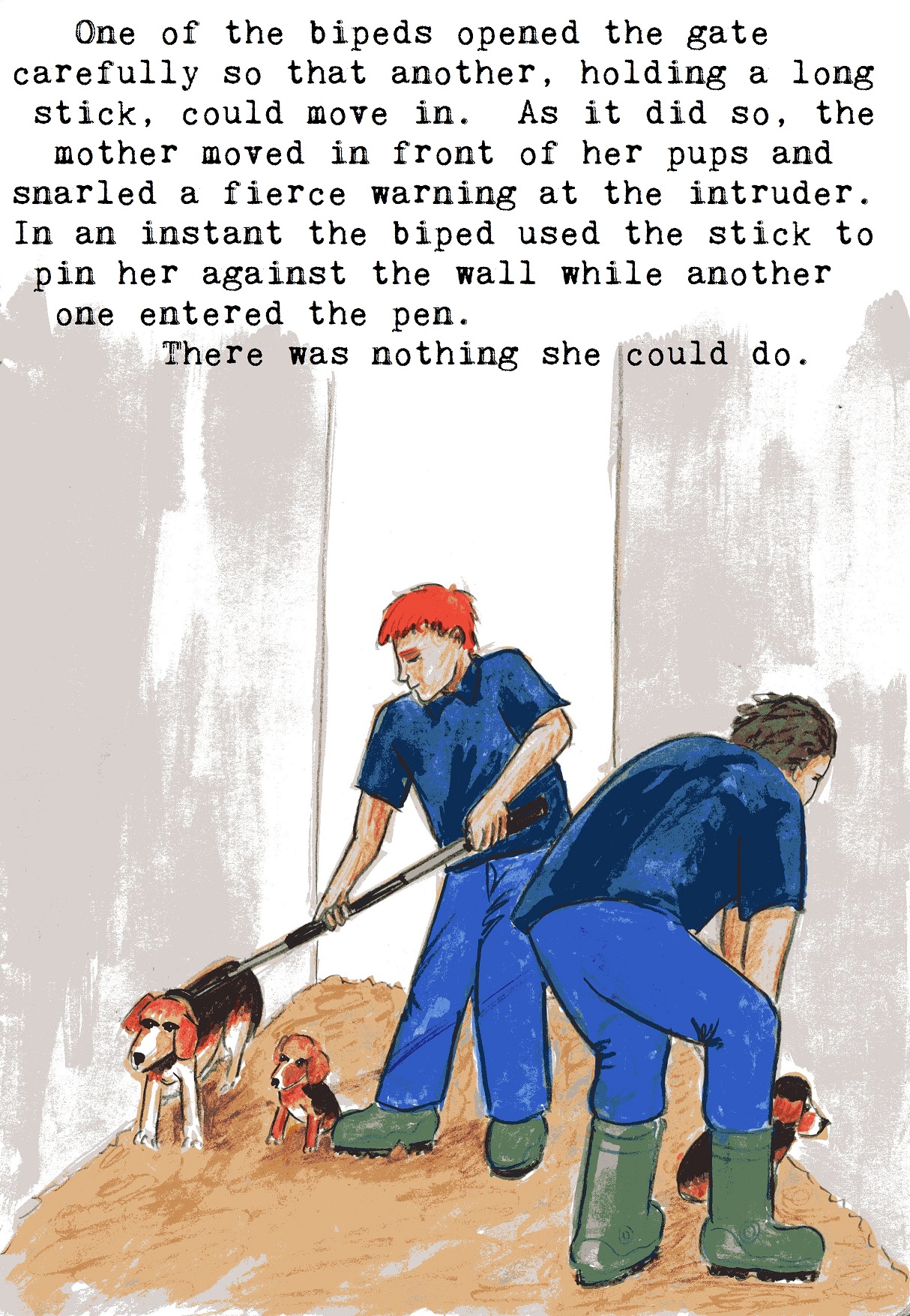
This story is fiction but the conditions described inside the laboratory breeding facility are informed by a former worker’s account. To find out more about the reality of these places and how you can help laboratory animals, go to the story page and scroll to the bottom. Thank you 🙂
Violet’s Vegan Comics – creating engrossing and enlightening vegan-friendly stories since 2012
These numbered posts about the top vegan Christmas presents for kids are not in any deliberate order – they are ALL EQUALLY AWESOME!
Trees Please is different from most of our other books because it contains no stories or rhymes. It is a picture book, scrapbook, notebook, art journal. A big, beautiful, spiral-bound, art-filled book explaining why trees are so important to the planet and everyone who lives on it, as well as what they mean to a few animals in particular. Its pages are filled with bright, colourful, idiosyncratic illustrations and backgrounds created with paint, coloured pencils, ink and collage – some with facts about tree-loving animals, some with space for the reader’s own notes and drawings. There is also a section explaining how to grow your own trees from apple seeds. A joyful picture book, notebook, scrapbook, art journal for children and adults.
But don’t delay – order today! To prevent waste our books are printed on demand, ie not until they’re ordered, so there’s no next day delivery. They will take at least a week, maybe even two, to reach you.
Here is a wonderful educational colouring book: Colour By Nutrients. It is at once a resource for artistic indulgence and an educational tool. Divided into chapters of different vitamins and minerals, the book illustrates which foods contain significant amounts of each.
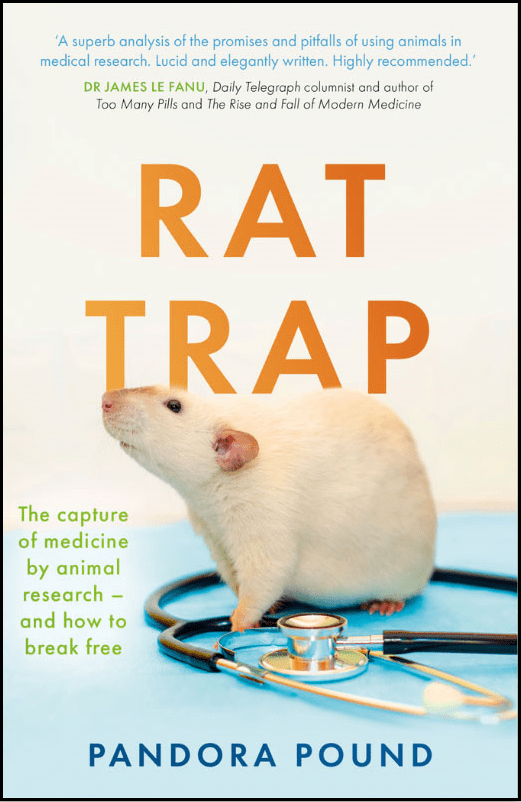
We have been supporters of Safer Medicines for many years so as soon as we saw this book by their Research Director, Dr Pandora Pound, we snapped it up.
It is a very well-written, easy to read book, full of all the information we need to know in our fight against vivisection. It is clearly and eloquently laid out and comes complete with many many citations.
I love the excitement and optimism the book has inspired:
“Rat Trap ends the debate about animal research once and for all. She shows that, far from being a necessary evil, it is one of the most important and urgent scientific issues of our time.
“Animal research harms patients and holds back medical progress. Superior technologies based on human biology could transform medicine if not for the iron grip of animal research.
“Rat Trap is dynamite! It blows the lid off decades of dogma.”
*
While we’re on the subject, the following video from 2019 is well worth half an hour of your time 🙂 (it is just a calm conversation, there are no disturbing images or descriptions).
*
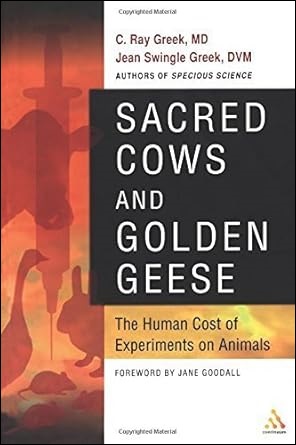
NB The pro-vivisection website Understanding Animal Research, criticised this video in an attempt to discredit Dr Greek (a board-certified anesthesiologist) by calling him a ‘conspiracy theorist’ and ‘science denialist’. So it’s very interesting that what Dr Pound tells us in Rat Trap about her personal experience as a scientist, and her research into this topic, corresponds with Dr Greek’s research and experience, and that of his wife and co-author, Jean Swingle Greek, who is a veterinary surgeon. Their findings were published over twenty years ago in their book Sacred Cows and Golden Geese: The Human Cost of Experiments on Animals.
Highly recommended.
Another brilliant book on the subject which we have read several times and can highly recommend.
It just happens to be National Teddy Bear day so here’s one of ours 😀
*
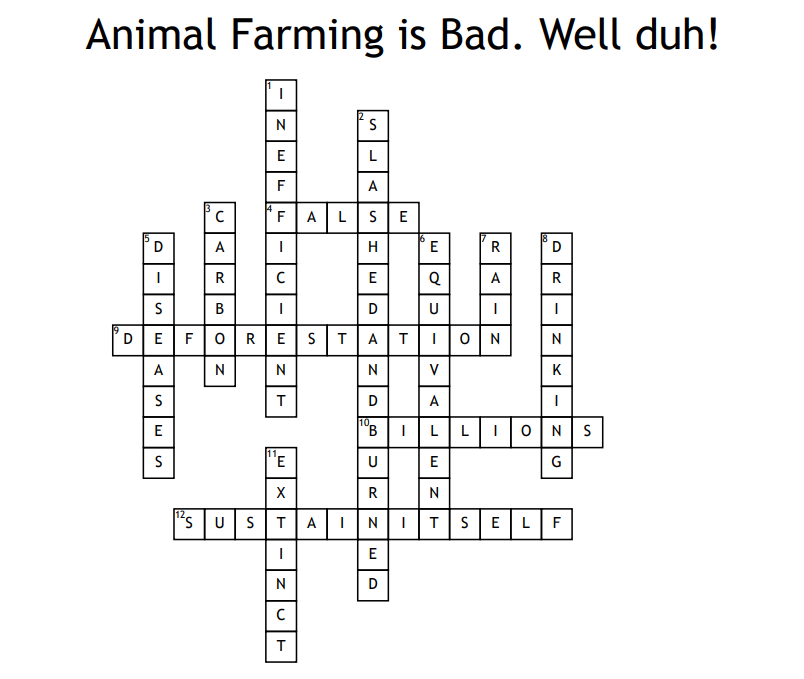
And here are the answers to Friday’s crossword:
This is actually not an exhaustive list of scientifically valid (ie animal-free) methodologies, it’s just that if I’d included anymore it would have made the puzzle really small. I mean, the puzzle would have been bigger in that there would have been more questions and answers, but it would have been on a page the same size so the writing would have been too small. For me anyway 😉
But if you want to find out more about this stuff, click on the teddy bear. That highly-rated book, by the way, is already in our local library. Maybe it’s in yours too 🙂
Stuck on some of the questions? You can find all the information needed to complete this puzzle on the Safer Medicines site: go to https://safermedicines.org/resources/ and click Frequently Asked Questions 🙂
*
*
********* Puzzle created at wordmint.com **********
When Crustacean Compassion began back in 2016, it was with an aim to protect these fragile animals from pain and suffering. They began their campaign to get them included in the animal welfare legislation, and since then over 65,000 AMAZING supporters have joined them and signed their petition calling on the UK government to include decapod crustaceans in the Animal Welfare Act 2006 (England and Wales).
Will a new government mean new protections?
The last UK government legally recognised that decapods could feel pain, and historically included them in the Animal Welfare (Sentience) Act 2022 but… that is where they stopped. So Crustacean Compassion are calling on you again, to tell the new Labour government to act now and protect decapods. With this new government we have an excellent chance of getting decapods the protection they deserve, but we need your help.
This is amazing – diver rescues baby dolphin trapped in the rocks, only to discover that the baby was trying to get help for her mum who was caught in a fishing net.
“Climate change has led to altered rainfall patterns and increased temperatures, resulting in periods of drought and reduced water availability for many donkeys, and cattle in communities where LAWCS works in Guinea. The animals are now suffering from heat stress, food insecurity including fresh water and healthcare issues. LAWCS continues to respond to the needs of working animals in Guinea by educating the population and providing free veterinary care along with foods and fresh water for animals in need.”
*
*
“Promoting animal protection through education and providing plant-based foods for school kids is a holistic approach to instilling values of compassion, kindness, sustainability, and health. By integrating animal welfare education into school curriculums, students can learn about the ethical considerations surrounding animal treatment and the environmental impact of animal agriculture. Additionally, offering plant-based food options in schools not only supports these values but also encourages healthier eating habits and reduces the demand for animal products, thereby contributing to the welfare of animals. This is a dual strategy that educates children about the importance of treating animals with kindness while providing practical choices that align with these values. Every week, LAWCS serves over 300 school children with delicious plant-based foods.”
*
You can go to their website to find out more about LAWCS’ vital work and/or you can download their latest newsletter here:
What does the General Election mean for Crustacean Compassion?
On Wednesday May 22, Prime Minister Rishi Sunak surprised everyone by announcing that a General Election will be held on Thursday 04 July. In doing so, he fired the starting pistol on a six-week campaign where politicians will criss-cross the country vying for your votes.
Animal welfare always ranks high in the list of priorities for voters, and Crustacean Compassion will be working hard to ensure that the voice of decapods is heard throughout. These special animals were recognised as sentient in UK law over two years ago, but since then progress on increasing their legal protections and improving their treatment in the food industry has stalled.
What happens next? Crustacean Compassion has already written to the political party leaders to seek their support and next week will be contacting all the candidates directly to ask them to support these pledges.
But they need your help. Watch out for updates on their social media channels for details on how you can help us reach as many candidates as possible and make sure that decapods have the strongest possible voice in the new parliament.
They’ll also be sharing more information about how you can get involved with this campaign in your local area.
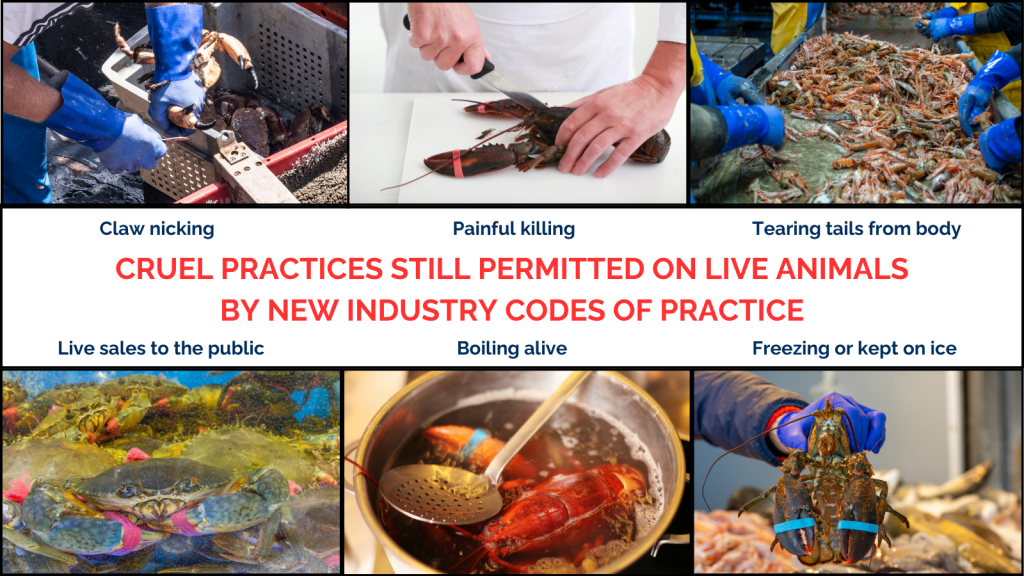
Their new campaign to ban live sales They’ve launched this new petition to show the new government that decent people in the UK support a full ban on the live decapods being sold as food. Every day in the UK animals like crabs, lobsters, prawns and crayfish are sold alive to the untrained public to be killed and cooked at home. This causes EXTREME pain and suffering to these fragile, sentient animals.
There are certain things that we’ve always been able to get without plastic. Yes, it takes a bit more time, a bit more effort, but you find the time and you make the effort because you care. I’m talking bread in a paper bag from the bakery, and loose fruit and veg from the market. But there were some things that have made it very difficult to live completely plastic-free. Not anymore 😀
Okay, this is it, quick and easy – where to get all the plastic-free everyday stuff you need:
Cleaning supplies
Mack! Keep it Mack with vegan, plastic-free sachets (biopods) of soluble detergents to which you add water. Everything you need to clean toilets, sinks, floors, hard surfaces, drains and to get rid of limescale. No need to buy any more plastic bottles BUT save the ones you’ve already got for refilling with these lifesavers! Also these products smell great and they’re easy on your wallet.
Washing up POWDER
Add a heaped teaspoon of this citrus-smelling powder to hot running water et voila! Your dishes will shine in no time without hurting the planet or any of its inhabitants. Available from Planet Detox 🙂
Plastic-Free Margarine
Actually, it’s not margarine, it’s vegan butter! Mergulo Plant-Based Butter that comes in a cardboard box! This is a life-changer! For a long time now I’ve had to simply go without margarine, substituting peanut butter or simply straight on with jam. Which was ok. But not as good as a slice of hot toast with delicious melting fatty goodness!
Made with coconut oil and cashews, this is absolutely scrummy and we found it at Holland & Barrett! Google a supplier near you.
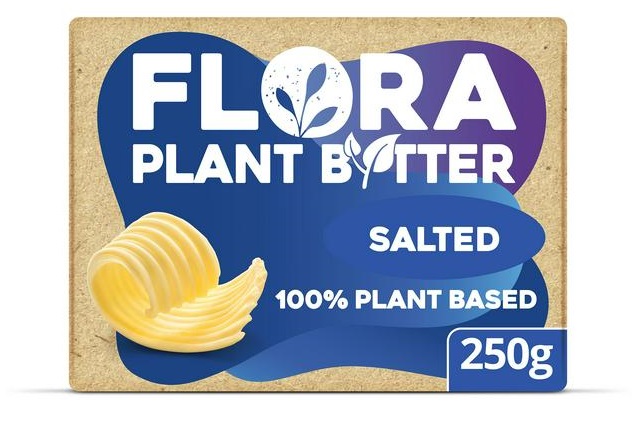
But if you can’t find any Mergulo near you, all is not lost because Flora have come out with not one but two vegan butters: salted and unsalted. Find these at your local supermarket and here’s a tip – the unsalted one is just as delicious as the salted so don’t be afraid to give your heart a break 😀 They’re wrapped in plastic-free biodegradable grease-proof paper.
So get yourself an old-fashioned butter dish – these aren’t spreadable from the fridge 🙂
Dental Hygiene
Simple: Go to Georganics 🙂 a one-stop online store for all your dental needs. Or – if you’d rather shop locally, it’s not too difficult nowadays to get toothpaste tablets in glass jars, and bamboo toothbrushes at supermarkets, health food shops and chemists. But my favourite tooth-tabs (and the cheapest I’ve found actually) are Denttabs which you can get from anythingbutplastic 😀
Rice? Pasta? No problem!
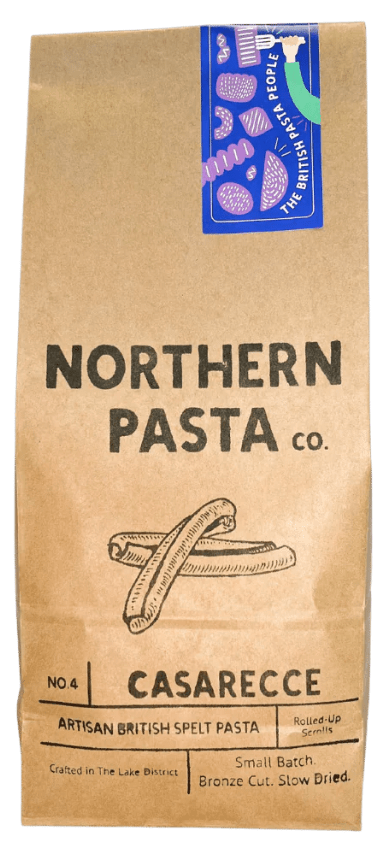
You can get pasta in paper bags from the Northern Pasta Co. – they’ll tell you where you can buy it online and in actual shops.
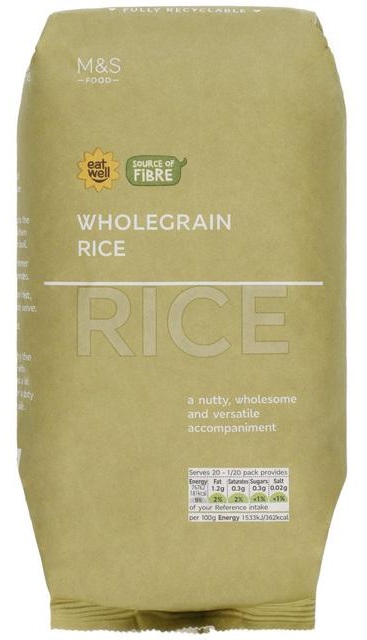
And you can buy rice in paper bags from Marks & Spencer’s!
I’m sure you can find other manufacturers and retailers but these are just two examples I found easily.
And last but absolutely not least – Chocolate!
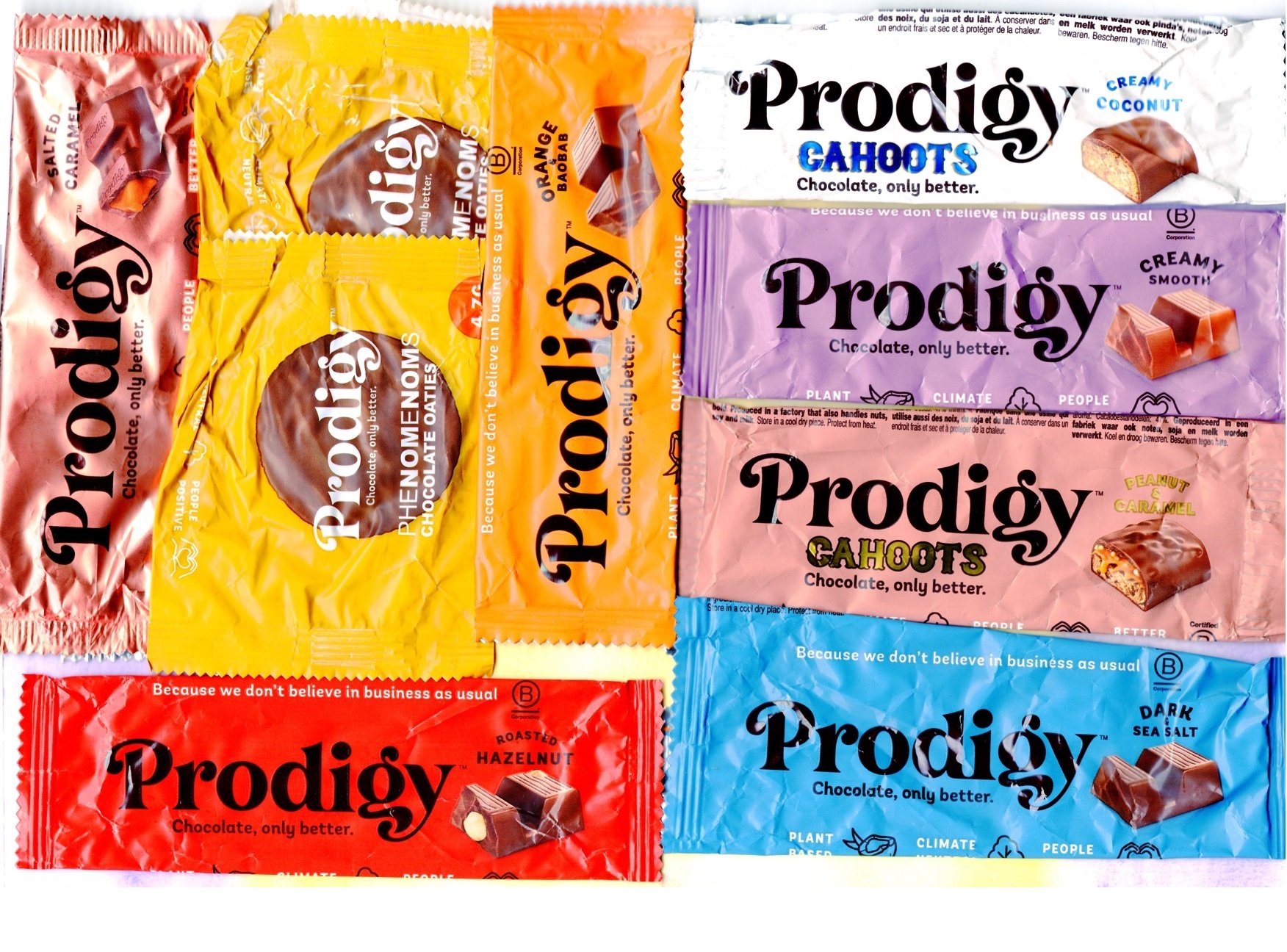
You can’t go wrong with Prodigy, Plamil and Vego for vegan, organic, fair trade delicious chocolate that’s NOT WRAPPED IN PLASTIC. Available in health food shops, some supermarkets and online. Click on the pics! 😀
Just stumbled across this great article from The Guardian website. It’s very inspiring and uplifting so I had to share it with you because I know you’ll love it too. If you don’t have time to read the whole thing right now (it’s not very long actually), here’s a few quotes from Ellen Miles:
“Guerrilla gardening is the practice of planting in public spaces in your neighbourhood” she says on a humid summer afternoon, walking between outlaw flower beds in Hackney, east London.
“And that’s how I define it … because, for me, it’s all about community ownership and belonging, and I think we have a right to cultivate these spaces in the areas we call home – and a responsibility to, as well.
“So-called public spaces have been really privatised, and communities actually don’t get a chance to interact with them often. So I think we do have a right to do that in the places we put down our roots, where we live.
“… for me guerrilla gardening is the Trojan horse into anarchist ideals.
“It’s wholesome, but that’s the thing: [anarchism] is not about violence and hate, it can be wholesome. And it’s fundamentally about bringing people together to shape the places we live. We shouldn’t be prevented from improving our neighbourhoods by powers that don’t really live here or care.”
Photo by David Levene/The Guardian
“Guerrilla gardening is like the ground up, grassroots way to make neighbourhoods greener and connect people to nature, and thenature is a human rightcampaign is the long-term, top-down way to do it,”
“I see it all as fighting for the same kind of thing really: a world where human habitats are more filled with nature than they are deprived of it, and where there’s equitable access to nature.”
“I do think there is an issue in society at the moment with the lack of agency and autonomy for people,” she says. “Guerrilla gardening, even if it is just sowing something in a tree bed, it might not change the world – you might help some bees, you might bring joy to someone walking down the street – but you’re also reminding people, or awakening something that is like ‘Maybe this is how it should be.’
“We know now that we can’t trust the government to do this stuff. We have to take it into our own hands.”
If you haven’t already you’ve got to try Prodigy chocolates! There is no bad here. They are delicious – my favourites are the coconut one and the peanut butter one – they are recommended on the Food Empowerment Project‘s ethical chocolate list and they are PLASTIC-FREE!!!!
Nuf said, right? Help the planet, help the animals (yes, of course they’re vegan), help the cocoa growers, and help yourself! You won’t regret it 😀
So what are you waiting for?! Get yourself a Taster Box, or a Family Bundle, or Value Bundle, or a big box of chocolate biscuits or …. you get the idea with that: there’s a lot to choose from 😀
Prodigy – Chocolate, only better
Oh, I almost forgot – they don’t contain refined sugar either!
Make the world a better place with plastic-free chocolate ❤
ps We’re not getting anything for this you know, so you can trust us. We say it because we mean it 🙂
************
Violet’s Vegan Comics – making funny, exciting and always entertaining vegan-friendly children’s books since 2012.
How many times have so many of us said it – stop littering! End plastic!? So many websites and well known organisations have shown photos and footage of the devastating suffering caused by litter and fishing paraphernalia, for so many years. And, though many good people work hard to campaign, educate and do the actual cleaning up, there is no change in the practice of producing more single-use plastic. The government has made no effort to actually stem the tide of new plastic production. Our plastic waste, collected by people with good intentions, continues to cross the globe for recycling, regardless of the discovery years ago that much of it will end up in the ocean. Why isn’t the government forcing snack companies to stop using plastic? Why isn’t the government setting up recycling facilities in this country so that we can deal safely deal with our own waste? What hope is there for wildlife if they don’t?
“Steve Jobs once said the most powerful person in the world is the storyteller. Abraham Lincoln credited Harriet Stowe when she wrote Uncle Tom’s Cabin – this powerful story inspired millions to rise up and fight against slavery,” said Jim Caviezel. “I think we can make Sound of Freedom the Uncle Tom’s Cabin of 21st century slavery.”
I was very apprehensive when I went to see the film last night but I know that, as with slaughterhouses and animal abuse, unless people open their eyes to things they don’t want to look at, nothing will change. This is a powerful film that every decent person must see. Brilliantly written and acted, Sound of Freedom will keep you gripped from beginning to end. I was riveted. The entire two hours and ten minutes went by in what seemed like a fraction of that time. If there is to be an end to slavery and sex trafficking (a multi-billion dollar industry) we all have to face it head on.
This film was actually made five years ago but it has faced every possible road-block to getting it in the theatres because, as we might realise from the fact that this abominable trade has not been shut down, there must be some extremely powerful people involved in or profiting from it.
Please go and see it so that you can share its message – watch to the end of the credits for a powerful plea from Jim Caviezel who says that there are more humans kept in slavery than at any other time in history, including when slavery was legal, and millions of them are children.
Even if you can’t afford a cinema ticket, you can claim a free ticket from the Angel film studios who have persuaded those who can afford it to buy a ticket for someone else by paying it forward. Go to angel.com/freedom
Please don’t look the other way. Watch Sound of Freedom.
“We cannot wait for governments – we must act immediately – and moving to a plant-based diet is the most impactful thing any individual can do”
Dr Richard Nicholson, Councillor for Haywards Heath
In July 2022, Haywards Heath Town Council became the first town in Europe to endorse the Plant Based Treaty, this was later followed by the City of Edinburgh Council in January 2023.
Dr Richard Nicholson, Councillor for Haywards Heath says, “The South East of England has endured the highest ever summer temperatures in history and people’s properties have been destroyed by fire and flood. We cannot wait for governments – we must all act immediately – and moving to a plant-based diet is the most impactful thing any individual can do to help address the grave situation we face. I’d encourage all Town, District, County and Metro councils to sign the Plant Based Treaty immediately.”
A coalition of groups is urging town and city councillors up and down the country to support sustainable diets by signing the Plant Based Treaty.
You can read the Plant Based Treaty in full here but, in a nutshell, it is a promise from the towns and cities who sign, not to build new or expand existing animal farms; to promote the benefits of plant-based diets in hospitals and schools; to teach farmers how to transition from animal to arable farming; and to redirect subsidies to fruits and vegetables growers so that everyone has access to healthy food.
Twenty cities have so far endorsed the Plant Based Treaty – in India, Turkey, the USA, and the UK – have you written to your town council? It’s easy to do. The nice people at the Plant Based Treaty have written the letter for you (which you are free to personalise) and have already worked out who the councillors are for each town so all you have to do is add your name 😀
It’s that time of year again and, for those who haven’t read it before, here begins our Christmas Story: Big Blue Sky. I will share a little of it every day this week, but if you want to read it all at once, here it is 😀
*
*
*
*
*
*
Story continues tomorrow ❤
************************
Violet’s Vegan Comics – creating funny, enlightening and sometimes action-packed vegan children’s books for readers of all ages since 2012.
I was so moved by a post I read this week that I wanted to share it with you. Since there was no reblog button I am copying and pasting, so please go over to Marie’s site to LIKE and comment on the original post, it’s such a … what word am I looking for? I am lost for words. All I will say is that I’m so grateful to Marie for sharing her experience and lighting a fire under me. The following are all Marie’s words (and photos):
On Tuesday last week, in the pouring rain, I headed to Manchester for a peaceful vigil outside a slaughterhouse. I have never been to one before, and honestly, I never believed it would be something I could manage. But recently I’ve felt ready to step forwards much more with my animal activism.
The slaughterhouse is in Ashton-under-Lyne and activists there have been peacefully protesting for years. Animal Saves are done in cities and towns all over the world. After some time the activists here have developed a good relationship with the security guard who allows the trucks to stop for a few minutes before going in.
I pulled up right in front of the group to ask for directions of where best to park and saw a slaughter truck at the gate. I had been feeling strong but immediately felt myself break. After I parked up I walked to meet the small group. The last slaughter truck had gone in. Annoyed at myself I didn’t even manage a hello before becoming upset. Thankfully this didn’t seem unusual behaviour and everyone welcomed me with open arms.
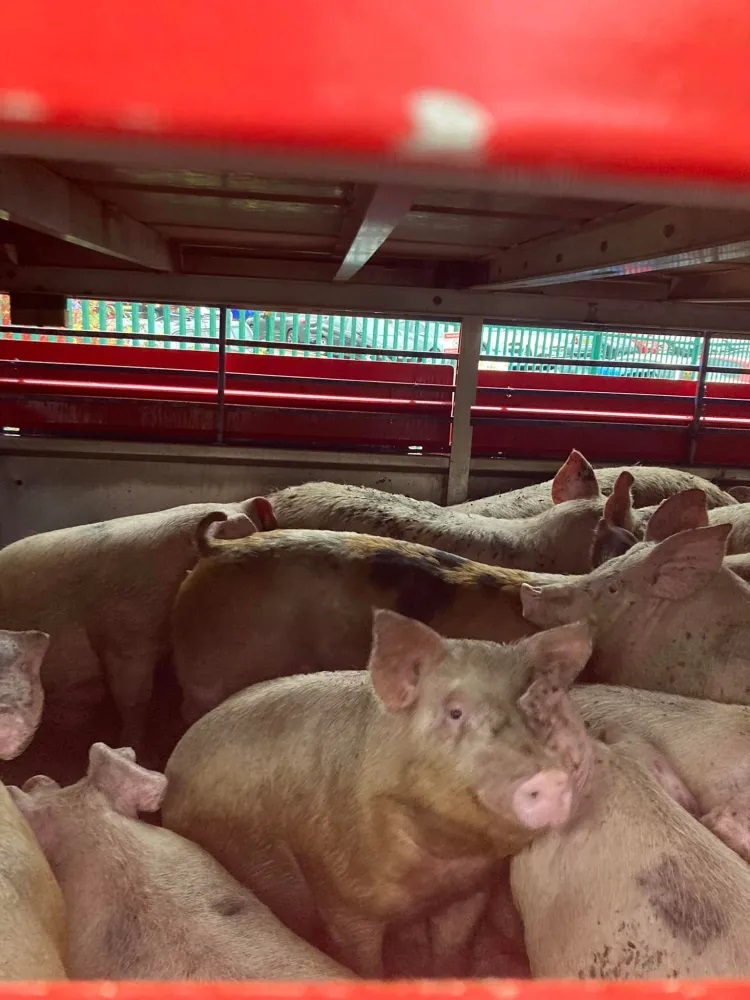
Another slaughter truck pulled in. The driver stopped at the gate. The activists moved forwards to the truck. Many had bought stools to stand on as the open section is quite high. Someone kindly offered me theirs. I stood on it and looked into the truck. It was crammed with young pigs. The heat and the smell was intense – I know they could have been in that truck for hours without food or water. They were very quiet and barely moved. I didn’t want to look in their eyes but I made myself. I could only see fear and it was beyond intolerable to see an animal that frightened. The driver beeped his horn. We all stepped back. The truck drove into the slaughterhouse. Just before we did I managed to stroke one of their ears with one finger peeking through the bars and tell them it would all be over soon.
This process repeated itself I think 7 more times in the 2 hours I was there. I can’t say it got any easier. The other activists told me about themselves, everyone introduced themselves to me, someone bought a bunch of vegan snacks. I politely nibbled mine, I couldn’t stomach it. I was struck by their friendliness though. Occasionally while you were chatting you could hear screaming in the background. I declined to go closer to the area where the animals are killed to be a witness to the screaming. But maybe I will be ready for that another time.
It may seem like quite a pointless thing to be doing for some of you reading. As of course you can’t stop what is happening to those animals you lock eyes with. You just have to step back when the driver beeps his horn and let the animals go in. The answer to why is to simply bear witness to an injustice, to document it and to share it. With the hope that this may help more and more people connect with farmed animals and consider to not be a part of their exploitation. This blog post explains what you are trying to achieve way better than I am as well as providing self care to activists and is well worth a read – https://www.dominionmovement.com/self-care
For myself – although I know what happens to animals in animal agriculture and am horrified by that – seeing part of the process was another level of knowledge. It was obviously extremely tragic and upsetting. But I know now that I can be extremely upset and act at the same time. I feel like the least I can do is look into their eyes and acknowledge and witness what is being done to them, even if I can’t stop it.
I am still processing that day, thinking about the pigs I met, the ears I stroked and the backs I rubbed. I hope they’re at peace now. I’m grateful for the kindness of the other activists, how gladly they welcomed me. Many cars beeped their horns and waved as they drove by seeing the signs – it feels like all hope is not lost.
The Physicians Committee for Responsible Medicine (PCRM) has been working for years to end the use of animals in “terminal” training exercises at veterinary schools—in which students perform procedures on otherwise healthy animals, who are then killed. Today they are happy to report that one of the nation’s highest-ranked vet schools, Colorado State University, has officially ended the use of terminal labs!
The PCRM first became involved in this issue in February 2020, when a CSU vet student contacted them. The student was shocked to learn that the curriculum included courses in which students would perform invasive surgical procedures on sheep, pigs, and horses. At the end of the training exercises, the animals were killed.
After receiving documents from CSU through the state’s open records law, the PCRM reached out to the dean of the veterinary school and were happy to hear that they were “also committed to the goal of eliminating terminal procedures.”
Over the last two years, the PCRM have worked closely with CSU leaders, alumni, students, and faculty at other veterinary schools to provide useful information and support as the university has made this transition. CSU leaders deserve immense credit for this change: To replace terminal labs, they have increased student exposure to surgical skills that are foundational to veterinary medicine, provided greater opportunities for repetition and practice, and expanded student access to real-world surgical experiences involving animals in need of procedures. This will make CSU graduates not only more compassionate but also more skilled.
CSU’s decision follows the elimination of terminal dog labs by Tuskegee University and Auburn University in 2021, which came about following work by the Physicians Committee. We hope this trend will send a clear message to vet schools elsewhere that terminal training labs can and should be replaced.
The Physicians’ Committee give special thanks to their Remembering Rodney Society members for this victory. Like the countless dogs, cats, pigs, and other animals used in terminal labs, Rodney was a sweet and loving dog who suffered through multiple painful veterinary training procedures before being killed. Members of the Remembering Rodney Society keep his spirit alive by providing the monthly support that allows the Physicians Committee to save animals day after day. You can help them save the “Rodneys” who still suffer in research, testing, and training programs by joining the society today.
***
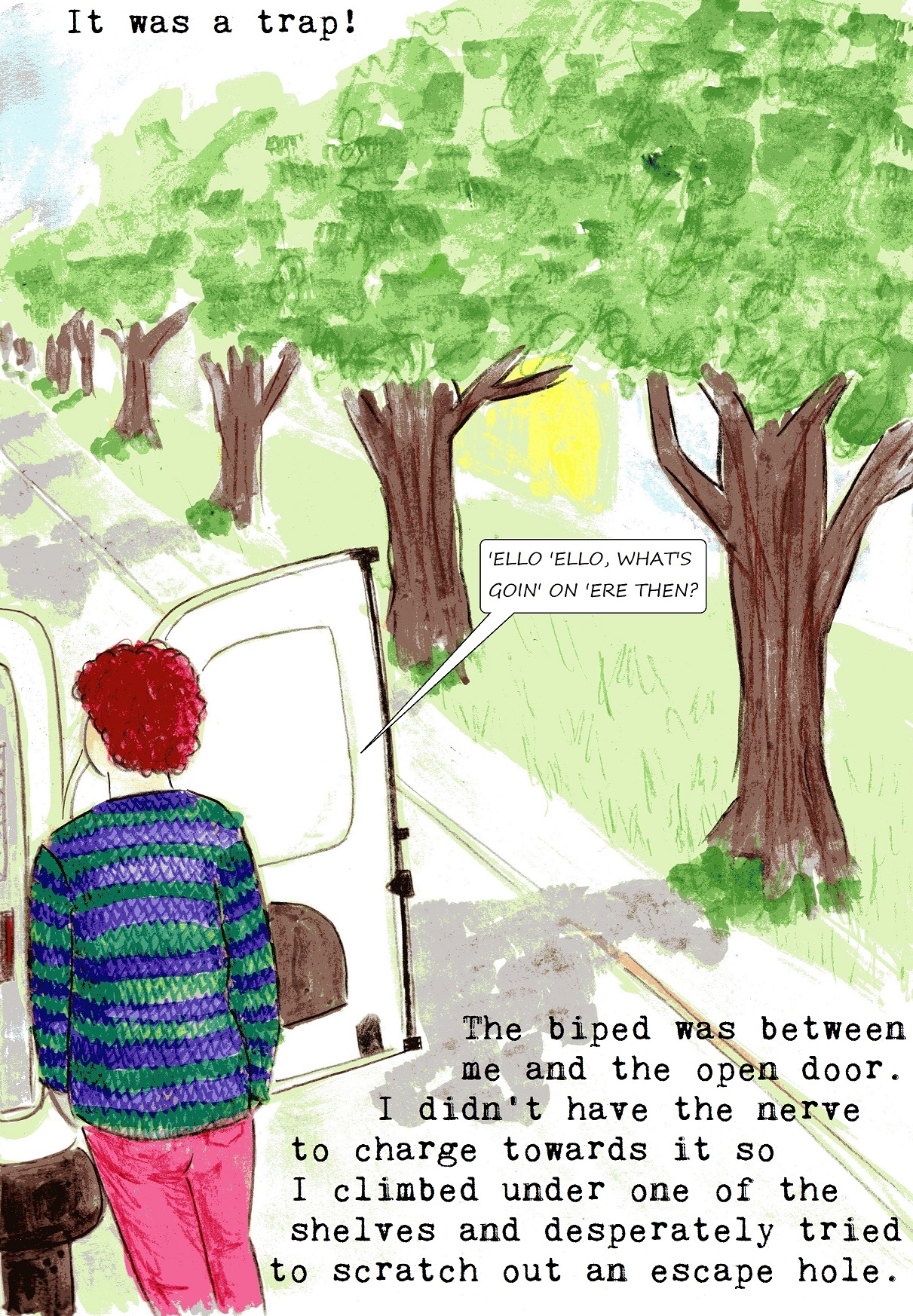
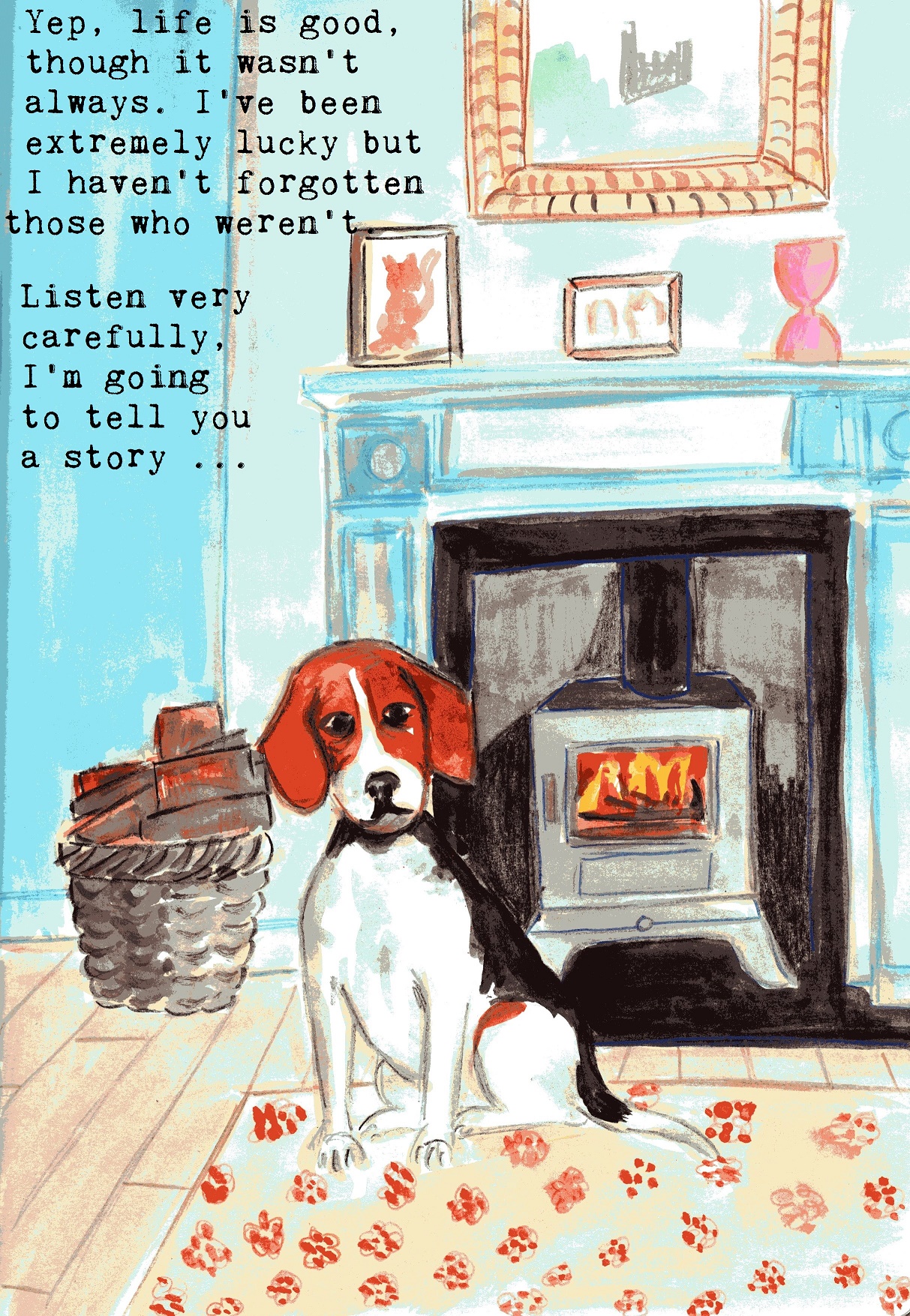
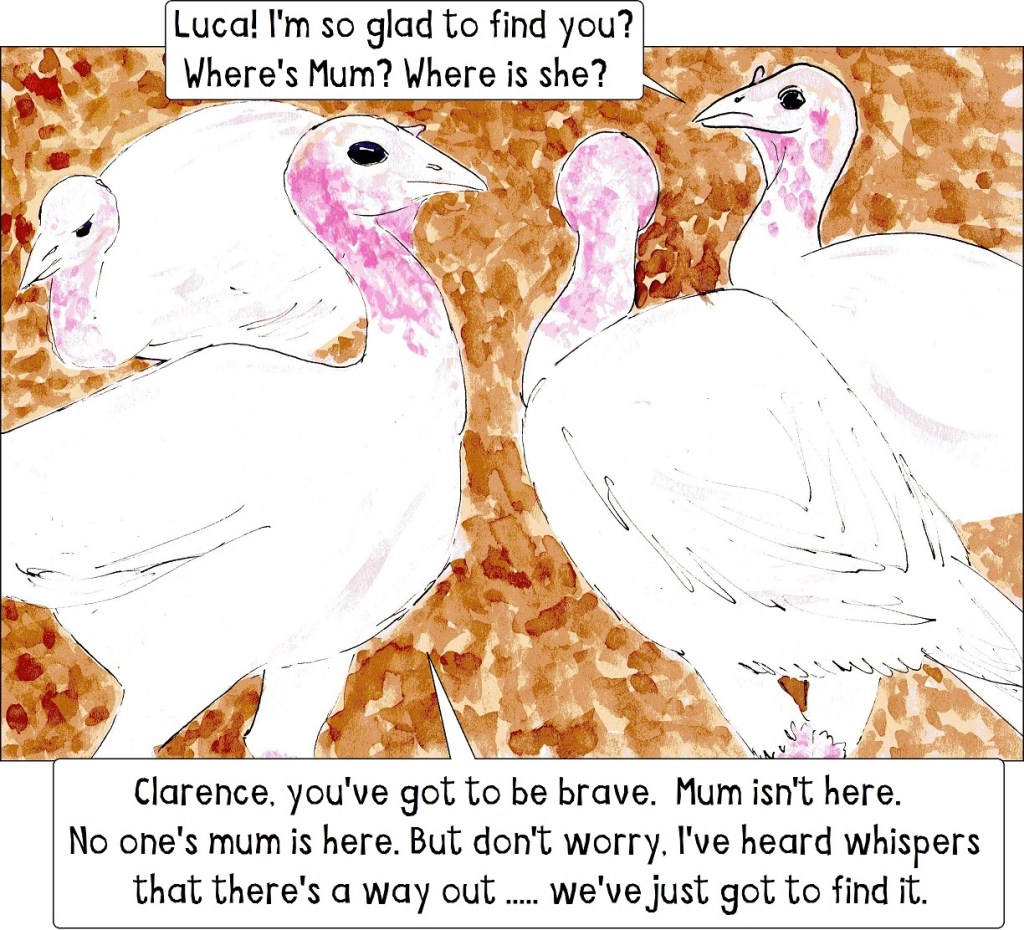
Want to know more? Read about Hugo’s lucky escape from a laboratory breeding facility in Let the dogs out, a graphic novel (with a happy ending) on our stories for teens and up page.
*************************
Violet’s Vegan Comics creating funny, enlightening and sometimes action-packed vegan children’s books for readers of all ages, since 2012.
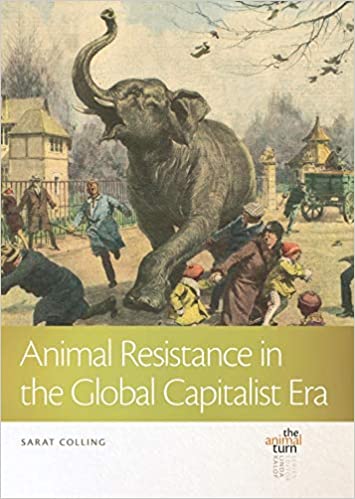
Animal Resistance in the Global Capitalist Era is an academic text book filled with examples of animal resistance. These individuals’ stories will profoundly touch the reader’s heart and prove that the billions of people* kept by mainstream society as slaves, and murdered when they are no longer useful, are as desperate to escape their bonds as any of us would be in their situation.
* I define the word people as anyone with an individual personality.
This is a fantastic book, though hard to read at times. It is an invaluable resource for writing letters which demand change to the government bodies and animal welfare establishment who remain stubbornly, and criminally, resistant to it.
The stories shared in this book of individuals who escaped their cages and, in some cases, went back later and risked their lives to release others, are stories that will be with me forever. I see them in the eyes of the adolescent calves in the field, torn from their mothers and looking for comfort. I see them in the eyes of the sheep, steadfastly guarding her lamb, insisting that I do not approach. And every time I see a film with Clint Eastwood in, I remember Buddha, the orangutan.
“When the orangutan, who had once co-starred with Clint Eastwood, stopped working on
a Hollywood set in 1980, he was repeatedly clubbed by his trainer. The crew witnessed Buddha
being beaten with a hard cane, yet he was still forced onto the set and expected to perform. One
day, when Buddha helped himself to some doughnuts on set, his trainer beat him to death with
an axe handle. These last moments were in his cage. The film left Buddha out of the credits.
Buddha deserved better than these atrocities during his life and his final moments.”
Animal Resistance in the Global Capitalist Era by Sarat Colling, page 68
*
This book demonstrates why most humans are so blind to the institutionalised exploitation and extreme cruelty to other animals. Animal exploitation industries not only hide their violence, but also somehow manage to cash in on their hypnotised customers’ affection for the ones who get away.
“When a pig’s escape from a slaughterhouse made headlines in the city of Red Deer, Alberta, his infamy was not only used to promote tourism, but also to symbolize the “importance” of animal agriculture in the city. In the summer of 1990, at the time known only by his captors as “KH27,” Francis made his exit from the C/A Meats slaughterhouse. As Francis was being forced towards the kill floor, he turned and fled. He jumped a fence nearly four feet high, snuck through the processing area, and pushed through the back door. He then took off running towards the parklands of Red Deer River Valley.
“For several months, Francis lived alone in the forest, sheltering in dens and foraging for grass. He was also known to emerge from the forest to rummage through neighborhood garbage cans. As a descendant of the European wild boar, he had the ability to thrive in the wild. Once free, his resourceful nature shone through. Like his ancestors, who could live in harmony with nature for twenty years, Francis possessed the ability to reason, sense danger, understand his environment, adapt to change, and travel long distances when necessary. When the media caught on to his escape in late October, after he was regularly sighted in park areas and bike trails, Francis became a household name.
“Citing concern about Francis’s ability to survive the cold weather, the slaughterhouse sent a hunter to track him. Yet, Francis was cunning; he eluded capture by never returning to the den that the farmer had discovered. One time the man came close, but Francis took off again, despite having been hit with a tranquilizer dart. On November 29, the hunter located Francis again and shot him with three tranquilizer darts. Unfortunately, one of them injured his bowel. Francis died two days later. C/A Meats, which slaughters countless pigs, had likely been more concerned about liability due to potential injury to humans (or property) than Francis’s ability to survive in the cold.
“After his death, Francis was memorialized as one of the seven bronze statues in the Red Deer Downtown Business Association’s Ghosts project, which pays homage to individuals, actions, and events that have shaped Red Deer. The sad irony of this story is that, after his death, the city used Francis’s bid for freedom to promote tourism and animal agribusiness. Relying on cognitive dissonance, the Downtown Business Association stated in the write-up about the statue: ‘Francis reminds us that hog production and processing are important parts of the Red Deer economy.’ Thus, the statue was a Potemkin gesture: it performed a deceptive function as propaganda that capitalized on the citizens’ love for animals and the escaped pig, while trying to profit from Francis’s notoriety. Neglecting the suffering of pigs killed for their flesh, the industry that caused and profited from Francis’s misery appropriated his struggle.”
Animal Resistance in the Global Capitalist Era, by Sarat Colling, page 95-97
***
This book is not cheap. Sadly at the moment it’s only available in hardback at £47.24, although there is a Kindle version available for £26.53, but I strongly recommend you ask your local library to buy a copy. Everybody should read this book. Everybody needs to understand the individuals whose stories are shared here so that, in the future, they will understand the billions of animals who were born to fill their plates, and know how abhorrent it is that this horrific trade is allowed to continue in our global capitalist system.
Will you continue to congratulate the emperor on his magnificent garments, or will you join us and tell him he’s naked?





















































 Violet's Vegan Comics