Most enlightened people have become that way only after working hard to un-learn “facts” that they were taught as children, such as ‘humans are omnivores’. That’s why it is so wonderful to find an early learning book which tells the truth.
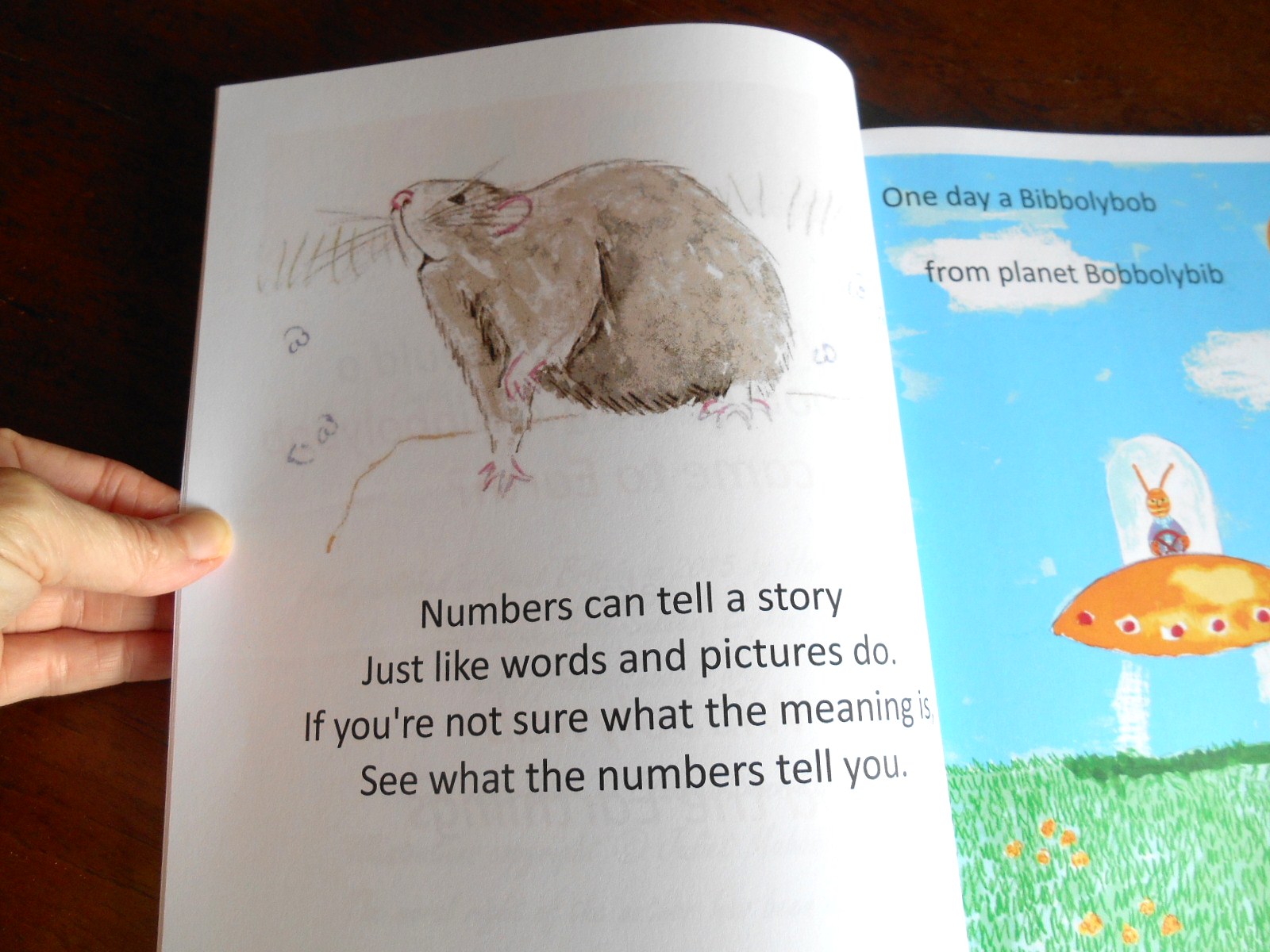
How many friends could a Bibbolybob make if a Bibbolybob came to Earth? (aka Wibbolywub and the Earthlings ) is one such book by Edward Benn, illustrated by Juliet Mahoney.
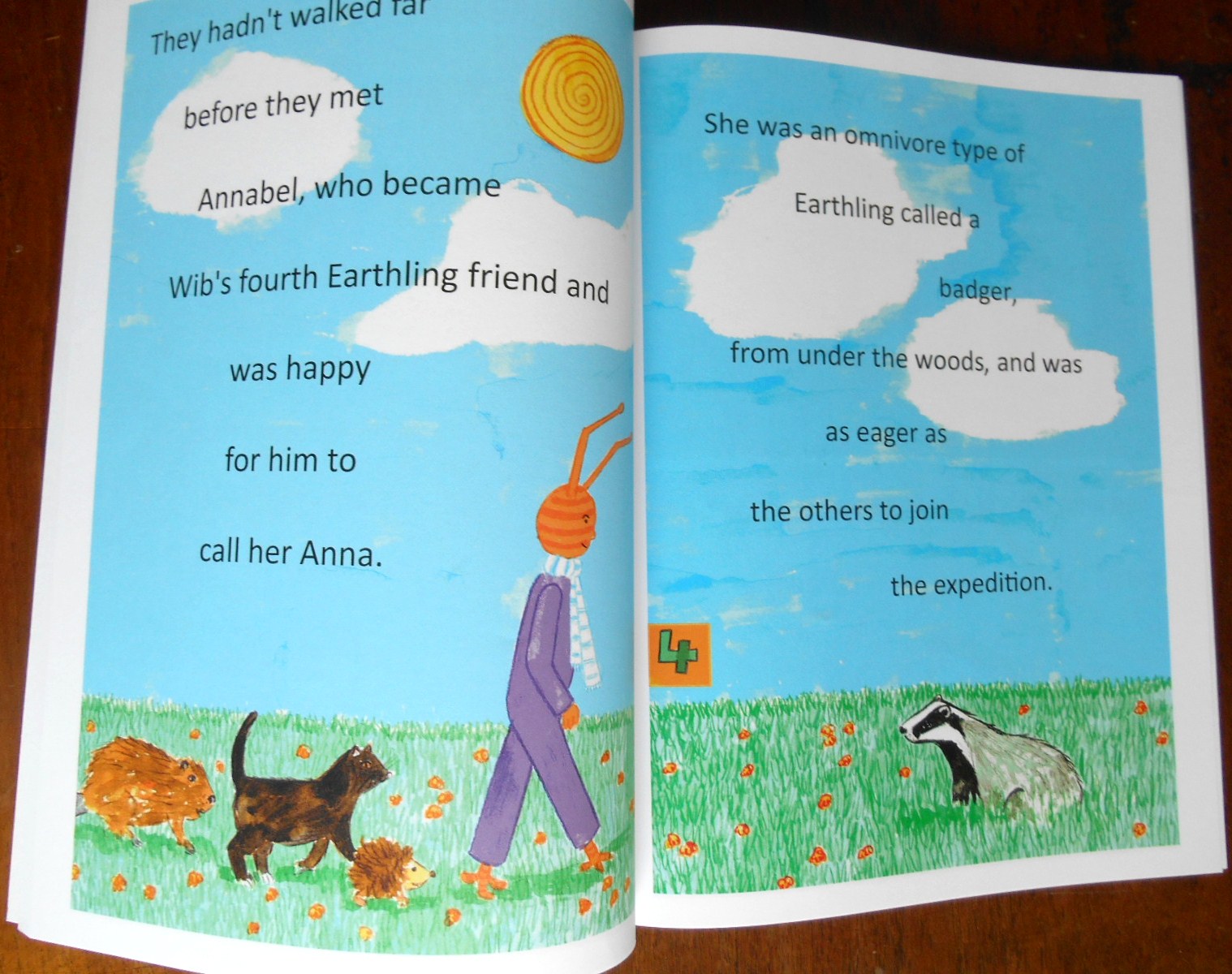
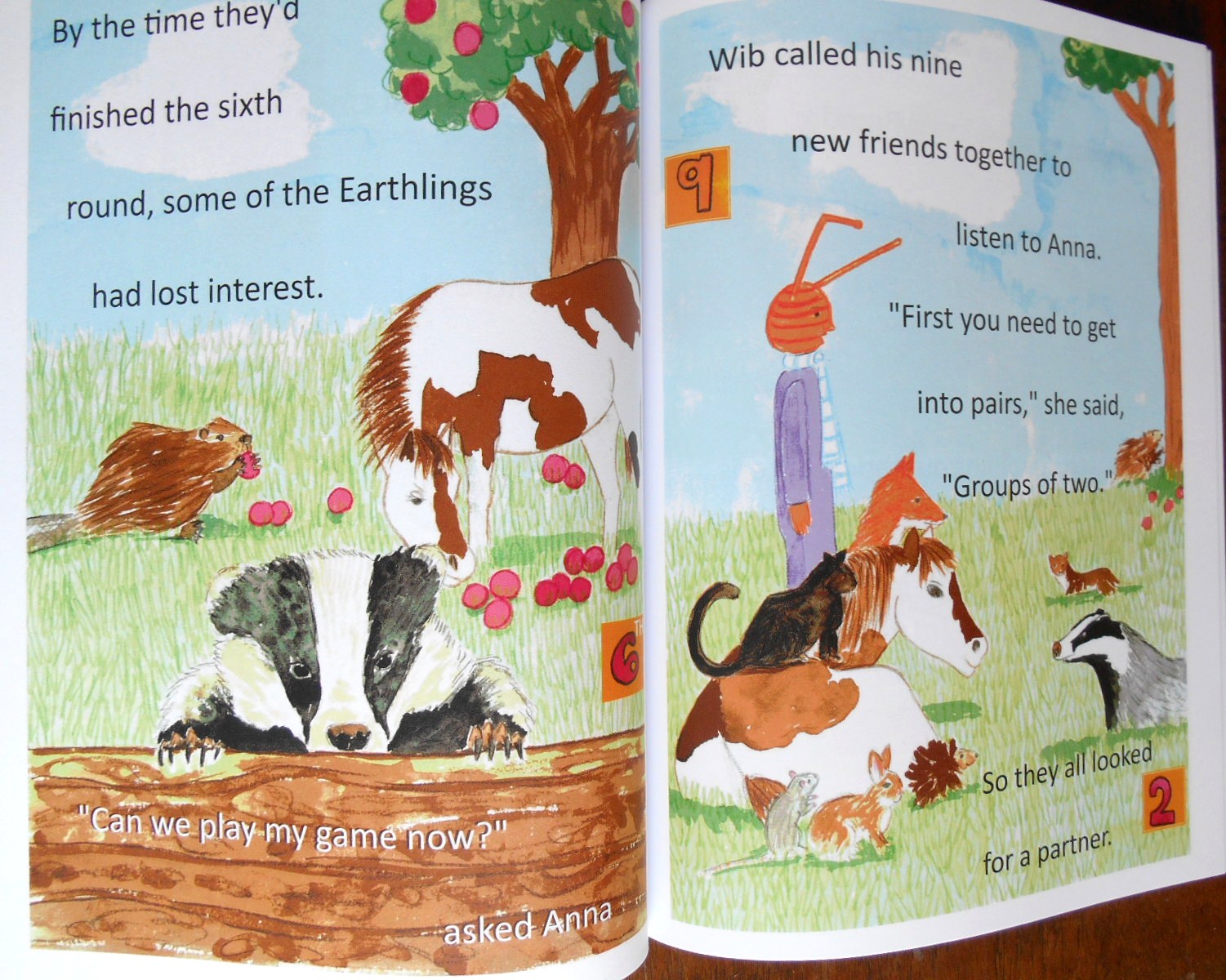
This book is first and foremost an engaging story, full of bright, colourful illustrations, about an alien visitor to Earth who is eager to make friends. It is secondly a lovely, friendly way to introduce the numbers 1 to 10 to young children. Numbers (digits) appear throughout the illustrations as Wibbolywub counts his friends and the readers can count with him. Once he has made ten friends, they play a few counting and measuring games which show how much fun numbers can be.
And thirdly it is an honest and straight-forward illustration of the simple truth that omnivores, carnivores and herbivores have recognisable anatomical attributes appropriate for their particular diet and, as an alien with no previous knowledge of Earthlings would clearly deduce, humans are herbivores.
There is even a fun post script at the end, in the form of a peak inside Wibbolywub’s notebook, which contains three of the charts (those with numbers in) from Dr Milton Mills’ The Comparative Anatomy of Eating – the work which inspired the story.
A lovely big book with a lovely big story that would delight any child and sit proudly on any bookshelf.
Steven the Vegan – a picture book by Dan Bodenstein and Ron Robrahn about Steven’s school trip to a farm sanctuary and the questions it naturally inspires from his classmates 😀
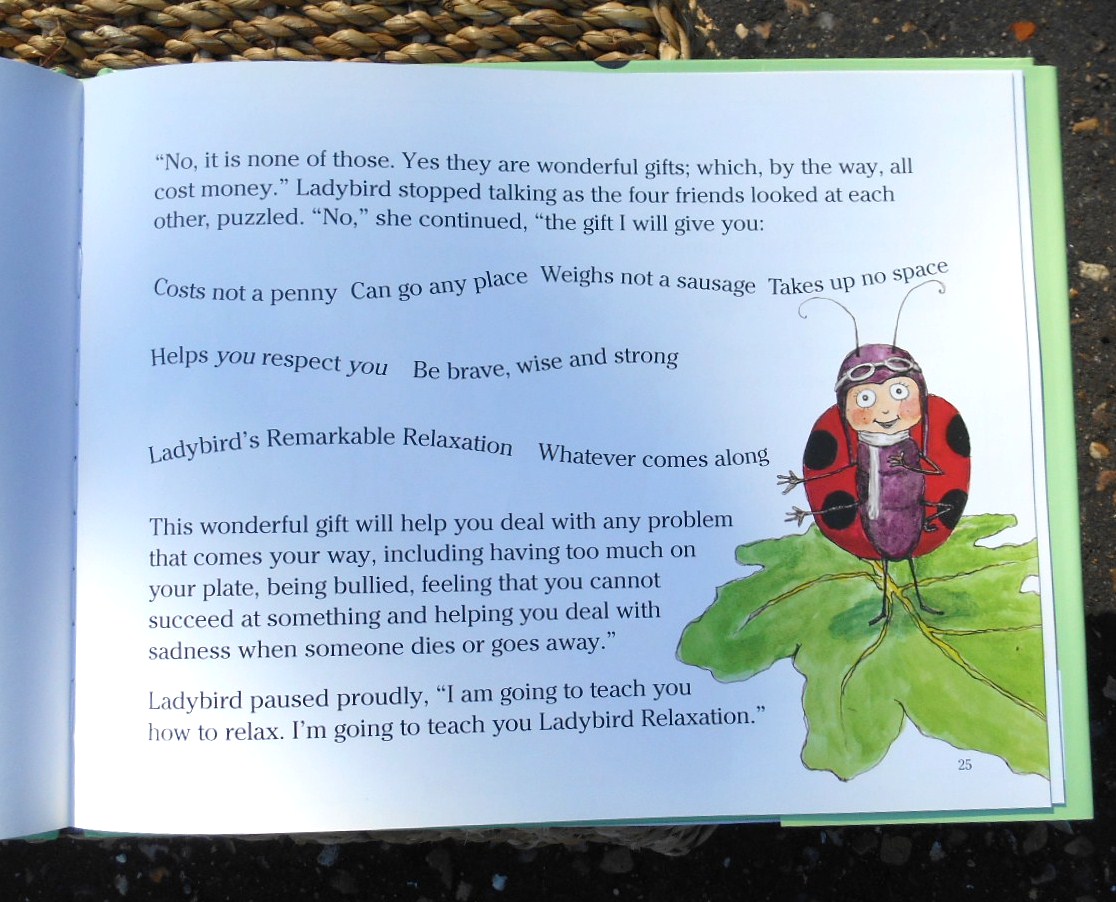
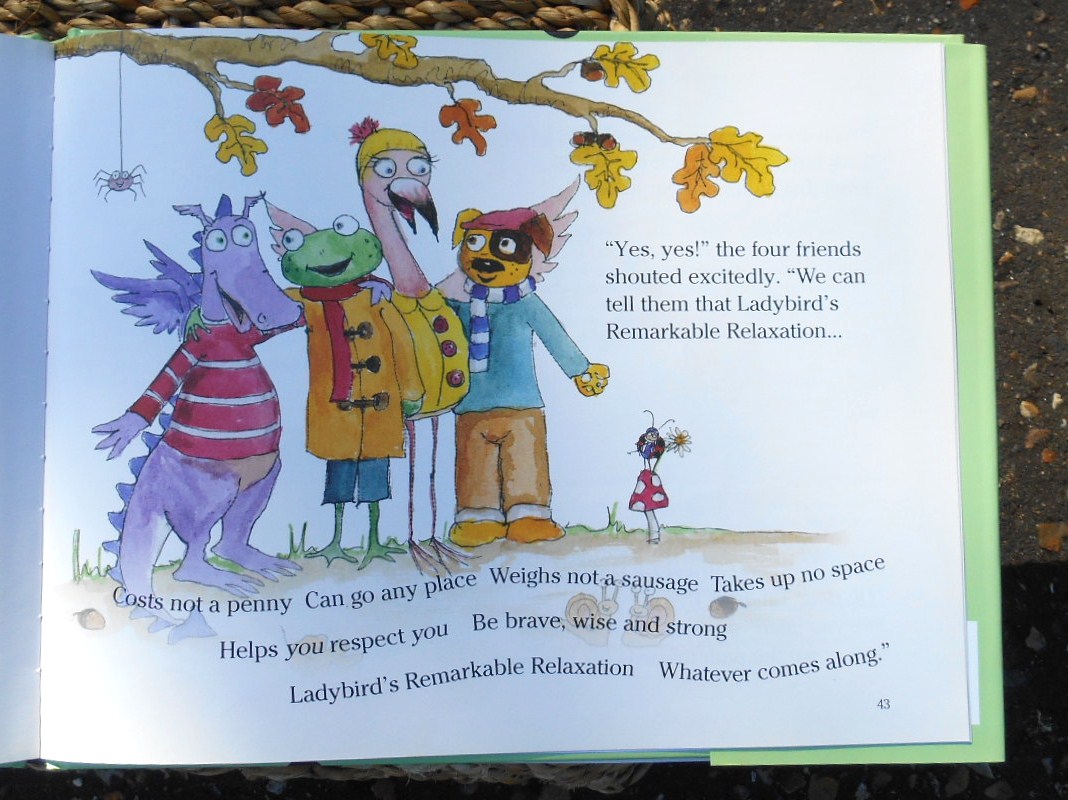
Here is another lovely yoga book for children from Michael Chissick and Sarah Peacock. This one is designed to be used by teachers and parents to help children use yoga relaxation to cope with stress, grief, bullying and lack of confidence.
The book begins with guidance for teachers and parents, explaining the aims of the book, how children can benefit from and enjoy Ladybird Relaxation and giving advice on how to teach it to children. Then the story begins.
Ladybird’s friends are all stressed or unhappy about different things – stress from a heavy workload, bereavement, bullying and feeling they’re rubbish at something. Ladybird sympathises and tells them she is going to give them a special gift that will help them all.
Beautifully illustrated, it is a joy to read and makes you feel more relaxed as you turn the pages 🙂
The final part of the book explains how to teach Ladybird Relaxation including a script to read while using a ladybird puppet or little bell (outlined in the guidance at the beginning) to symbolise the ladybird landing on different children as they relax on their mats with eyes closed.
It sounds really therapeutic and I can’t wait to try it myself.
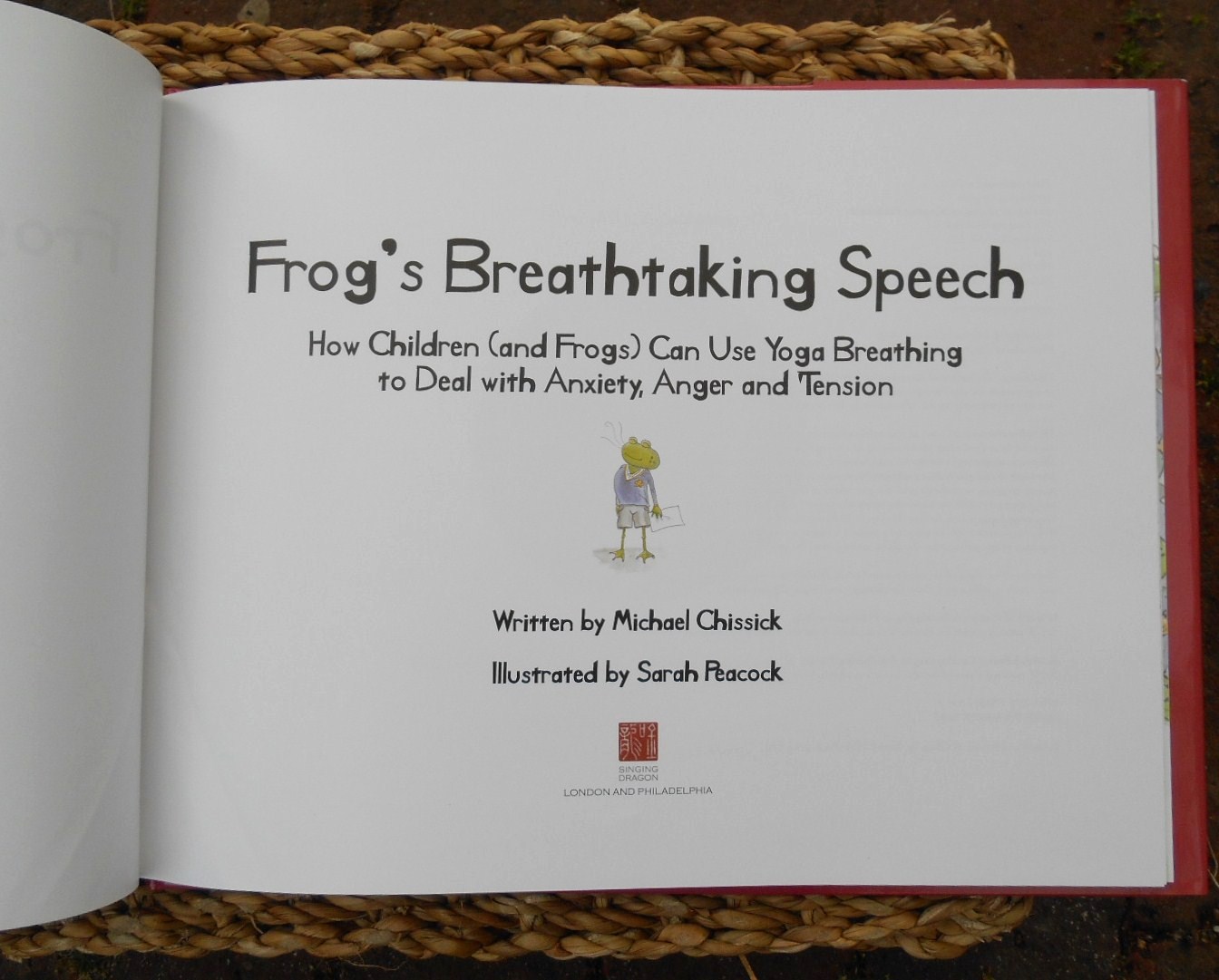
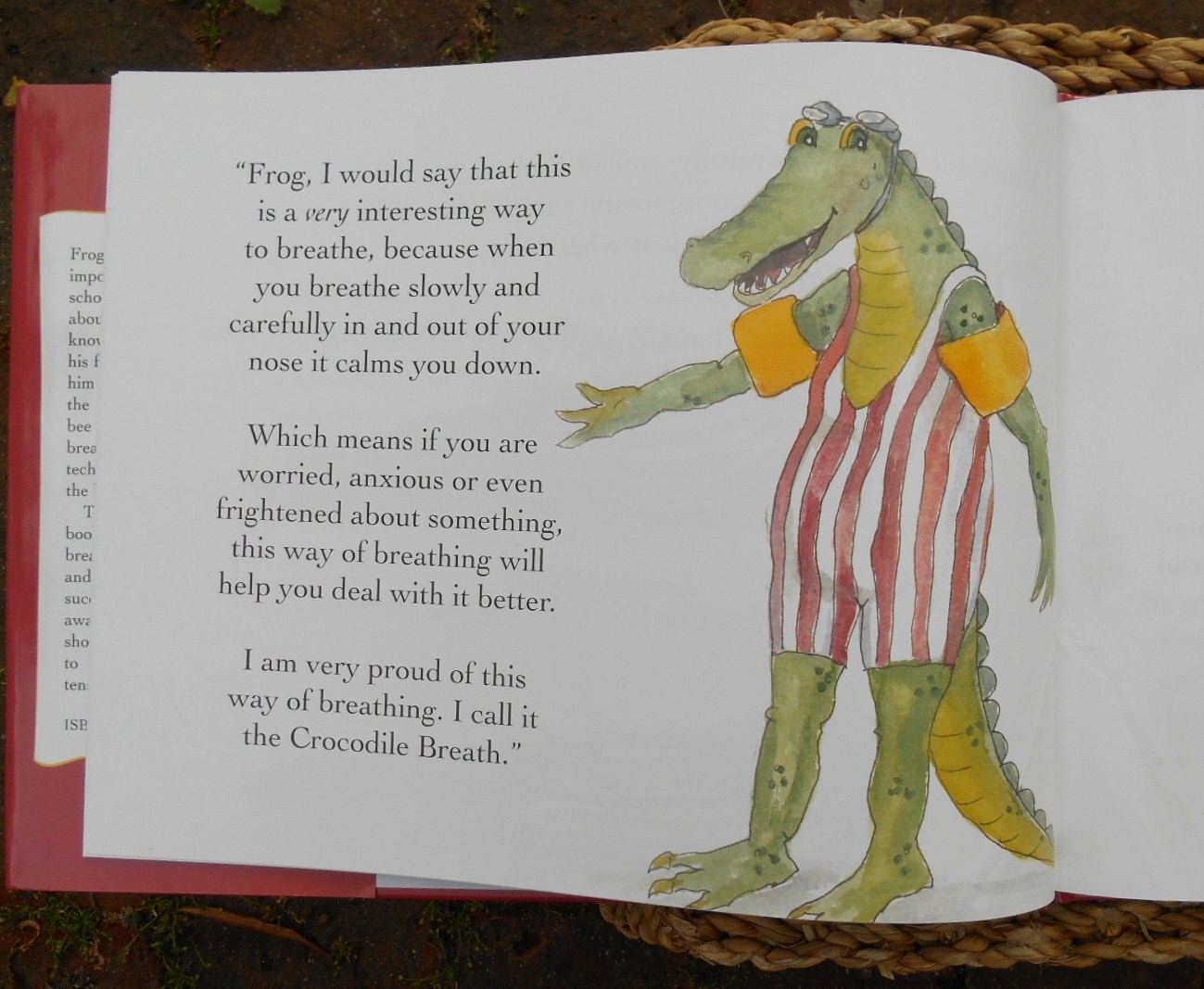
Frog’s Breathtaking Speech is a gorgeous book for children – and teachers, and parents – to help them cope with tension and stress.
Michael Chissick is a children’s yoga teacher and Sarah Peacock is a primary school teacher and they have both found the frog’s story very useful when helping children to relax.
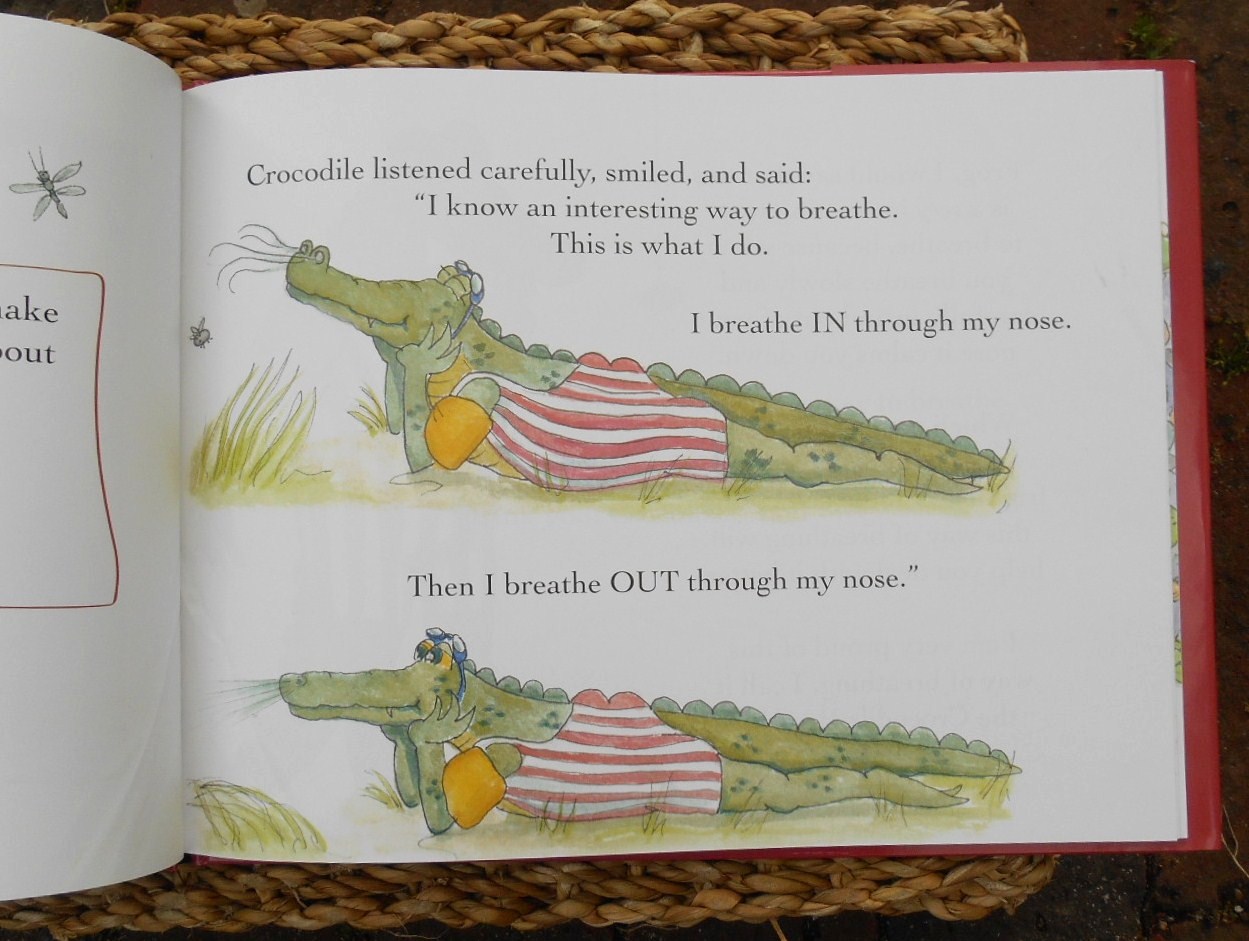
This beautifully illustrated story is about a frog who is very sad because he is worried about a speech he has to give at school the next day. When he explains this to his friends, they all tell him about their own special ways of breathing which release tension and anger and enable them to feel happy and relaxed.
At the beginning of the book there is guidance for teachers on how best to use these techniques to help children and at the end there are simple instructions, accompanied by lovely illustrations, about the yoga postures which accompany each type of breathing.










 Violet's Vegan Comics