The first half of the year has flown by in a blaze of activity. It is certainly a year of change, with the UK and devolved nations reviewing and implementing new strategies to benefit, preserve, and prosper both people and land.
The UK Government is currently developing a Land Use Framework, a 25-Year Farming Roadmap, and a new Food Strategy. Additionally, the publication of the Climate Change Committee’s Seventh Carbon Budget is a stark reminder of the crucial role of agriculture and land use in halting the UK’s contribution to global warming. Targets have been set in line with the Balanced Pathway to net zero by 2050, necessitating a reduction in sheep and cattle numbers; a rise in the planting rates of new woodland, and a rise in the proportion of upland peat in natural or rewetted condition; and a decline in average meat and dairy consumption.
Our research has shown that these targets are not only achievable but surprisingly welcomed by many farmers. The issue isn’t a lack of willingness, but a lack of supported choice. It is therefore a critical time for organisations such as ours to help guide the narrative and the policy decisions that ensue. It’s been a busy few months and so far, this year we have:
Published our Manifesto and a Policy Brochure which lays out evidence-based recommendations to government in the areas of farmer support and land use change. Our policy brochure has been endorsed by many key organisations and individuals. If you or your organisation are interested in endorsing our policy recommendations then please email molly@stockfreefarming.org
Met with DEFRA’s ‘Agricultural Net Zero Pathways’ policy team in Westminster, who were very supportive of our suggestions for policy change and asked lots of great questions. Now it’s just down to ministers finding the courage to do the right thing!
Arranged a meeting with the Climate Change Committee for June 25th to discuss how our policy recommendations can enable the targets set out in the 7th Carbon Budget.
Our research has shown us that there are three requirements for farmer change: Information, Demonstration, Remuneration. Farmers want to know what other farmers are doing, whether it is working, and how much money they are making. To that end, we have created a promotional video featuring the work of some of our transitioning farmers, employing the amazing talents of Paul Bates from Realm Video. Over the past year we have interviewed three farmers who have received support from Stockfree Farming during their journeys from traditional livestock agriculture to a diverse range of profitable stockfree initiatives.
Most recently, we visited one of our brilliant farmers in Ayrshire. This farmer recently purchased 43 acres of mixed woodland and pasture and will be establishing a hazelnut orchard. He is keen to demonstrate how this area of former sheep grazing can become more productive, simultaneously producing food for human consumption, restoring nature, supporting biodiversity and sequestering carbon. The level of innovation and aspiration that this farmer has is incredibly inspiring, and we know that his story will spark interest amongst other farmers.
Once the final edits have been completed, the film will be shared widely on our website, social media pages, and at the in-person events we will be attending this summer. Watch this space!
*
Last month, Sam spent three weeks volunteering with Peter and Patrick who run Meadowfields Farm in Caithness. Meadowfields is a new stockfree organic certified farm which began selling to the public last year through their self-service veg shed. They grow a vast range of fresh fruits and vegetables at their main 4-acre site near Halkirk. In addition, they also have another 100-acre site nearby, where they’re exploring different options for food growing and habitat restoration.
Situated in Caithness, they’ve encountered numerous challenges to producing fruit and veg, namely a shorter growing season, strong winds and heavy rain. Given these difficulties, we arranged for one of our advisory team members, Mark Dickinson, to come and lend his expertise. With Mark’s extensive experience of successfully producing fruit and veg in similar conditions in Orkney, there were many pearls of wisdom he could share. Mark spent three days with Peter and Patrick, walking around each site and discussing all the different aspects of the farm from ground preparation through to markets.
Much of his advice is now being put into practice, in particular the creation of lazy beds at their main site, which will help crops from becoming too waterlogged; and beginning peatland restoration works for their larger 100-acre site. Following this, Sam has been assisting Peter and Patrick with finding and applying for government funding through the Agri-Environment Climate Scheme (e.g. payments for including wildlife areas and for organic farming) and the Peatland ACTION fund (peatland restoration works).
Peter and Patrick have big plans for Meadowfields such as expanding their fruit and vegetable growing; welcoming more wildlife onto their farm; and making the space more accessible for visitors, volunteers and workers with disabilities and additional needs. We’re eager to continue helping Meadowfields where needed and are excited to see how it develops in the years to come!
Be sure to drop by their self-service veg shed if you’re in the area! You can find them on Google Maps or on Facebook. Expect a case study of their farm to follow on our website in the near future.
Just stumbled across this great article from The Guardian website. It’s very inspiring and uplifting so I had to share it with you because I know you’ll love it too. If you don’t have time to read the whole thing right now (it’s not very long actually), here’s a few quotes from Ellen Miles:
“Guerrilla gardening is the practice of planting in public spaces in your neighbourhood” she says on a humid summer afternoon, walking between outlaw flower beds in Hackney, east London.
“And that’s how I define it … because, for me, it’s all about community ownership and belonging, and I think we have a right to cultivate these spaces in the areas we call home – and a responsibility to, as well.
“So-called public spaces have been really privatised, and communities actually don’t get a chance to interact with them often. So I think we do have a right to do that in the places we put down our roots, where we live.
“… for me guerrilla gardening is the Trojan horse into anarchist ideals.
“It’s wholesome, but that’s the thing: [anarchism] is not about violence and hate, it can be wholesome. And it’s fundamentally about bringing people together to shape the places we live. We shouldn’t be prevented from improving our neighbourhoods by powers that don’t really live here or care.”
Photo by David Levene/The Guardian
“Guerrilla gardening is like the ground up, grassroots way to make neighbourhoods greener and connect people to nature, and thenature is a human rightcampaign is the long-term, top-down way to do it,”
“I see it all as fighting for the same kind of thing really: a world where human habitats are more filled with nature than they are deprived of it, and where there’s equitable access to nature.”
“I do think there is an issue in society at the moment with the lack of agency and autonomy for people,” she says. “Guerrilla gardening, even if it is just sowing something in a tree bed, it might not change the world – you might help some bees, you might bring joy to someone walking down the street – but you’re also reminding people, or awakening something that is like ‘Maybe this is how it should be.’
“We know now that we can’t trust the government to do this stuff. We have to take it into our own hands.”
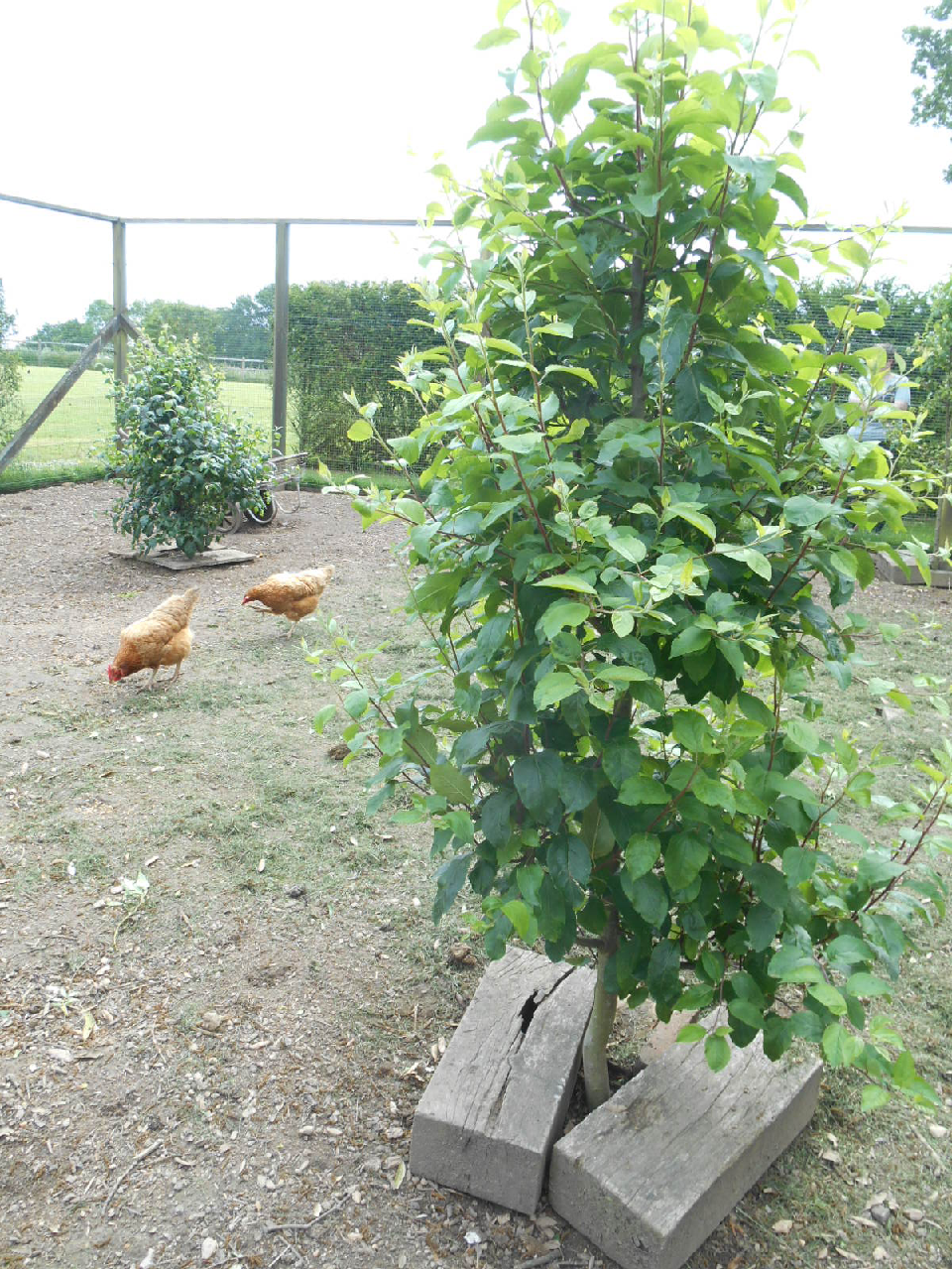
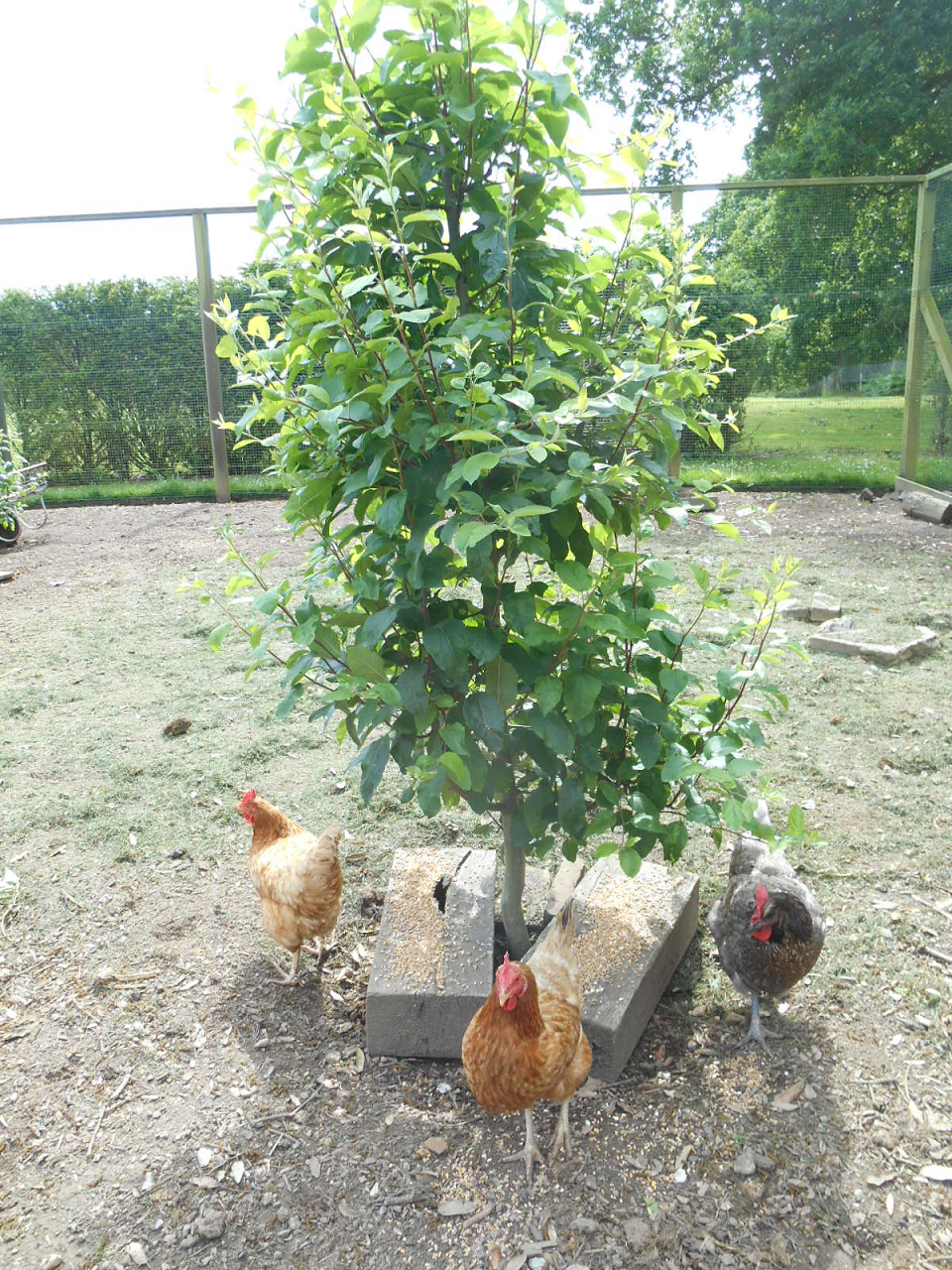
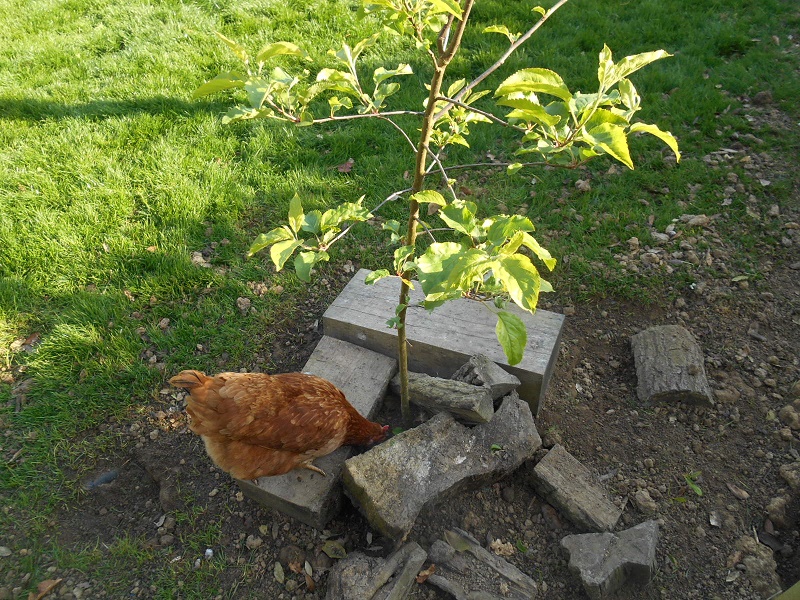
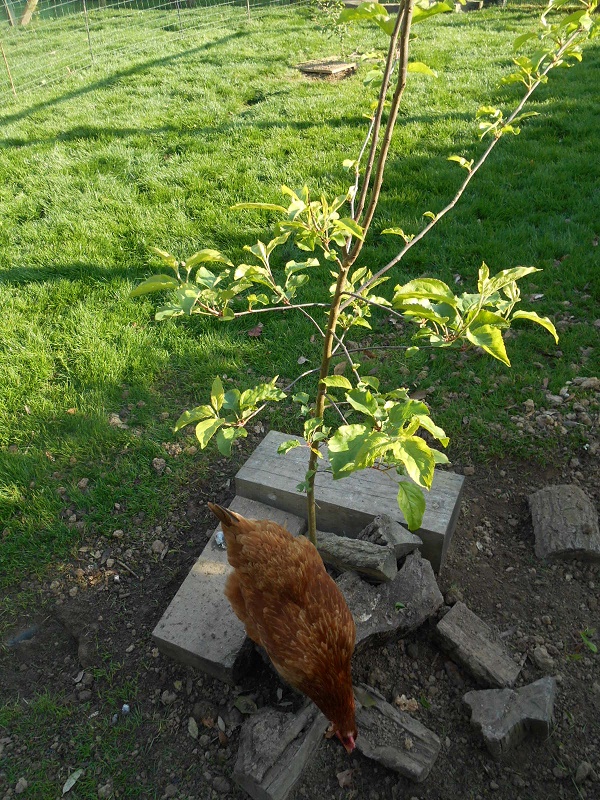
Remember we planted some sprouted apple seeds nearly five and a half years ago? I can’t believe it’s been over five years! Anyway, look at them now! In our last update, three years ago, they were still in pots, but not long after that we planted them in the chickens’ area of the garden where my husband works. We thought they’d make the chickens’ patch more interesting and give them some shade in the summer. They grew at different rates, maybe because they’re different types of apples but also because a couple of them have been plagued with ants farming aphids on them. The little one at the back of the photo (above) was in a really bad way last year because it was smothered in greenfly so I soaked some soapnuts in a bottle of water and doused them liberally with it and this year it’s really bounced back. Doesn’t seem a very vegan thing to do though does it? But I want to protect the trees. This year the ants are still there and the greenfly are back, though not in such great numbers yet. I was hoping some ladybirds might help out if I left things alone but so far I’ve only seen one so I’m not really sure the best course of action.
Any natural suggestions would be greatly appreciated 🙂
This one is the strongest this year – isn’t it marvellous? A nice bit of shade for the chicks and, five years in, we’re half way to getting some apples. Greenfly permitting 😉
Growing your own trees – it’s a rollercoaster of joy and apprehension! ❤
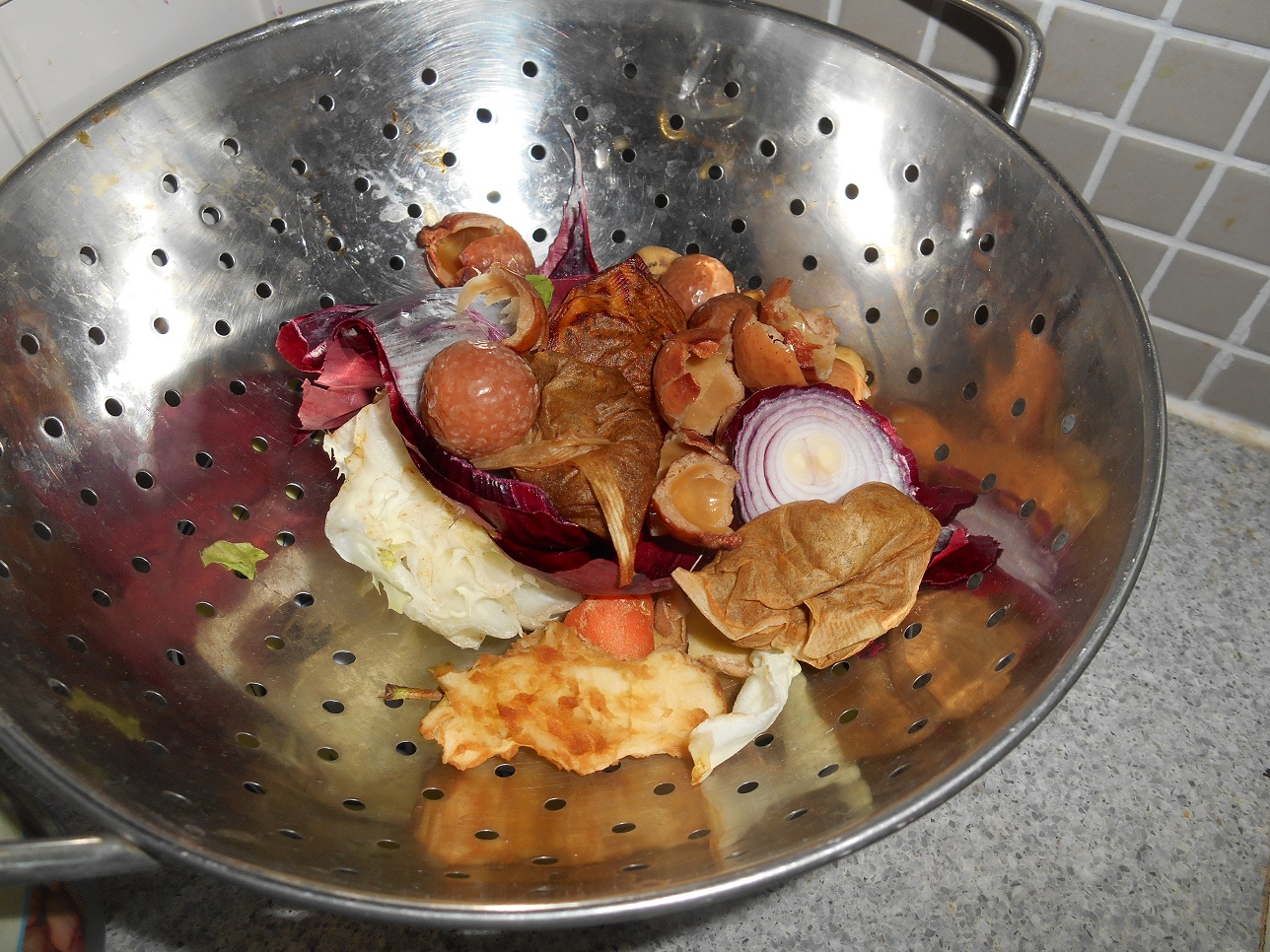
Save all your raw fruit and vegetable peelings, apple cores, tea bags, soapnut shells, etc etc
and take them outside to your compost bin (any container will do but make sure it’s got drainage holes in the bottom)
Toss your ‘green waste’ in there, (ie raw fruit & veg waste)
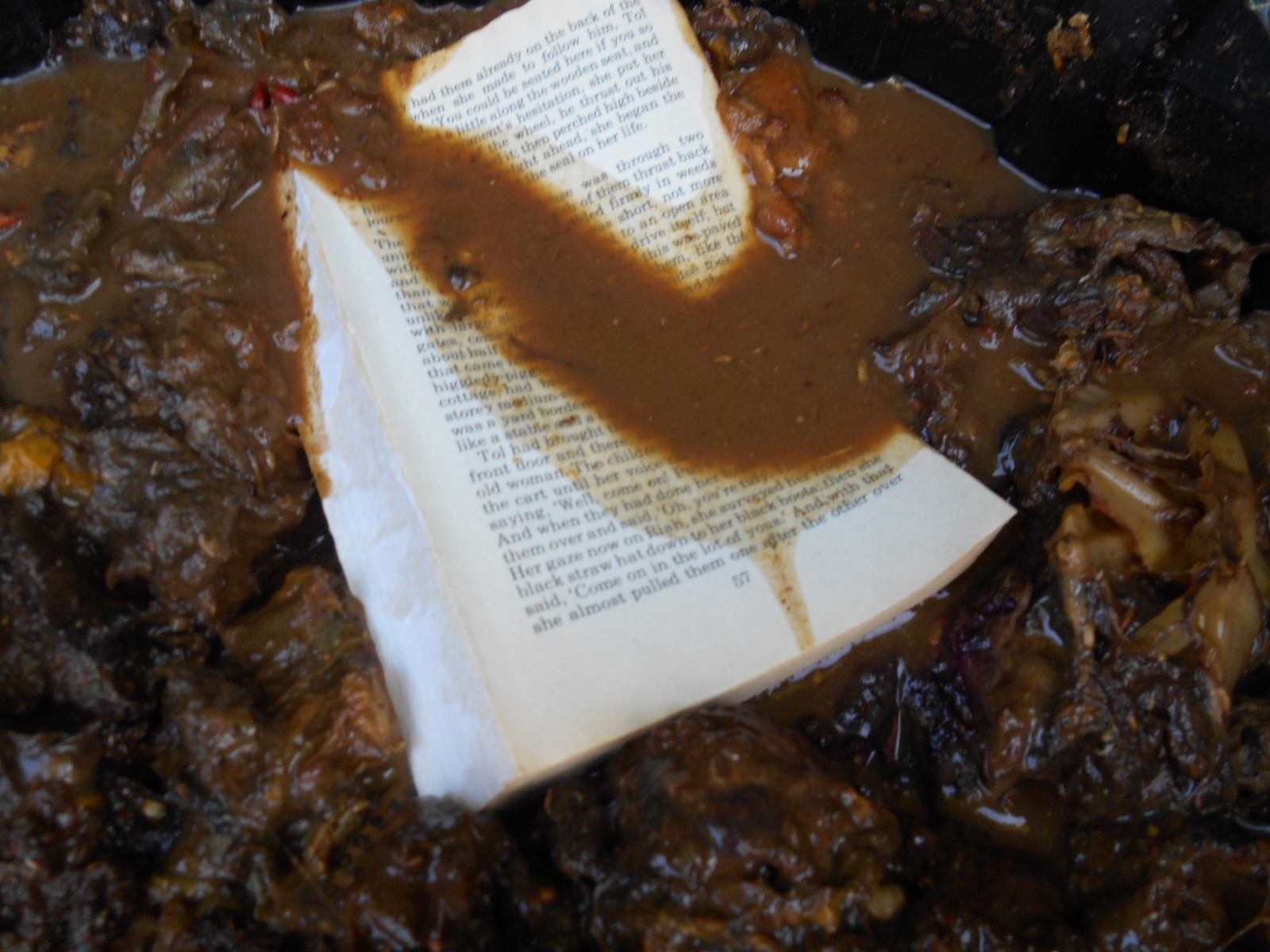
but also add some ‘brown waste’ (such as brown paper, black and white printed paper like newspapers or old paperback pages (no colour print), dead leaves) every so often otherwise you’ll end up with a wet soggy, stinky mess. You want about 2 parts ‘green’ to 1 part ‘brown’ according to the science 🙂
Then eventually it will rot down to something moist and earthy, just teaming with baby earthworms (I don’t know where they came from) and ready to host your new plants. Don’t ask me how long this took, I didn’t time it, but it was probably about a year. We just eventually thought it looked composty and tipped it out of the bin and there you have it. Click here if you want advice from experts 😀
Now you can pot it …
… sow some seeds in it, …
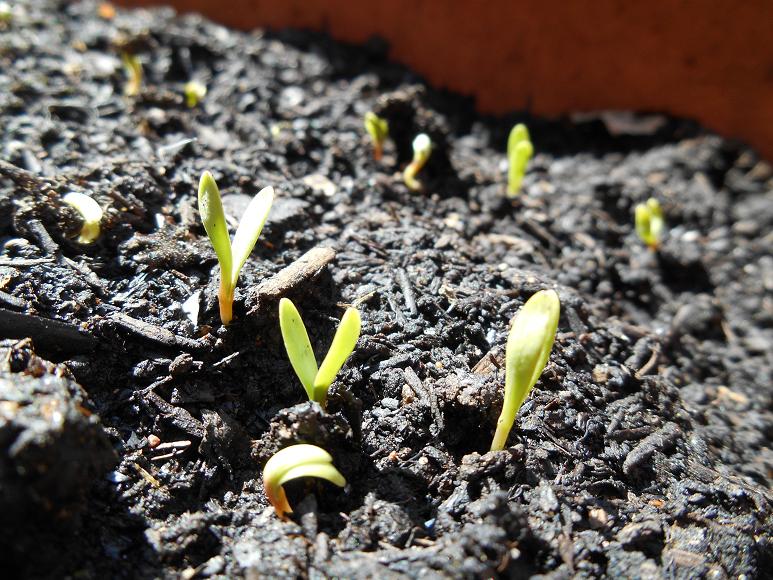
… and in a few days (this is less than 2 weeks later) your old vegetables will be providing you with new vegetables 🙂
and they grew (well some of them died, but some of them grew)
And we checked in on them in 2015 and again in 2016 and they just kept on growing!
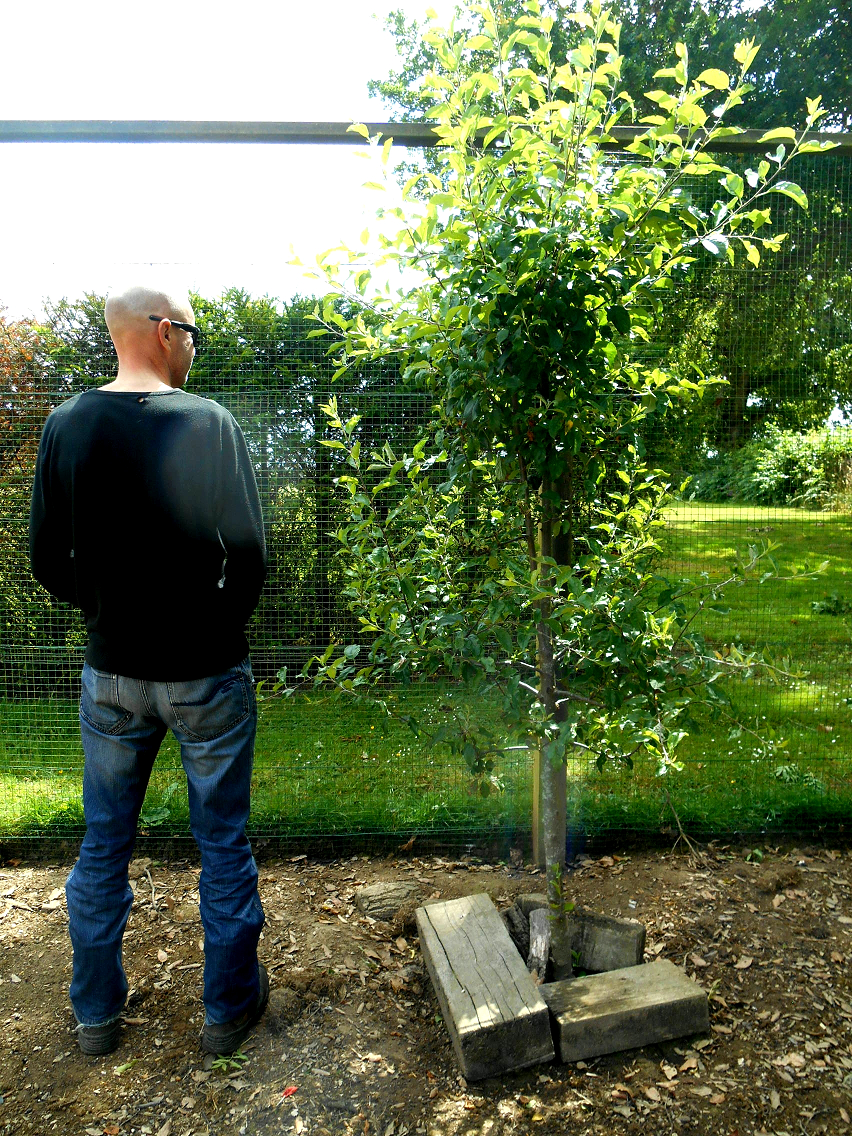
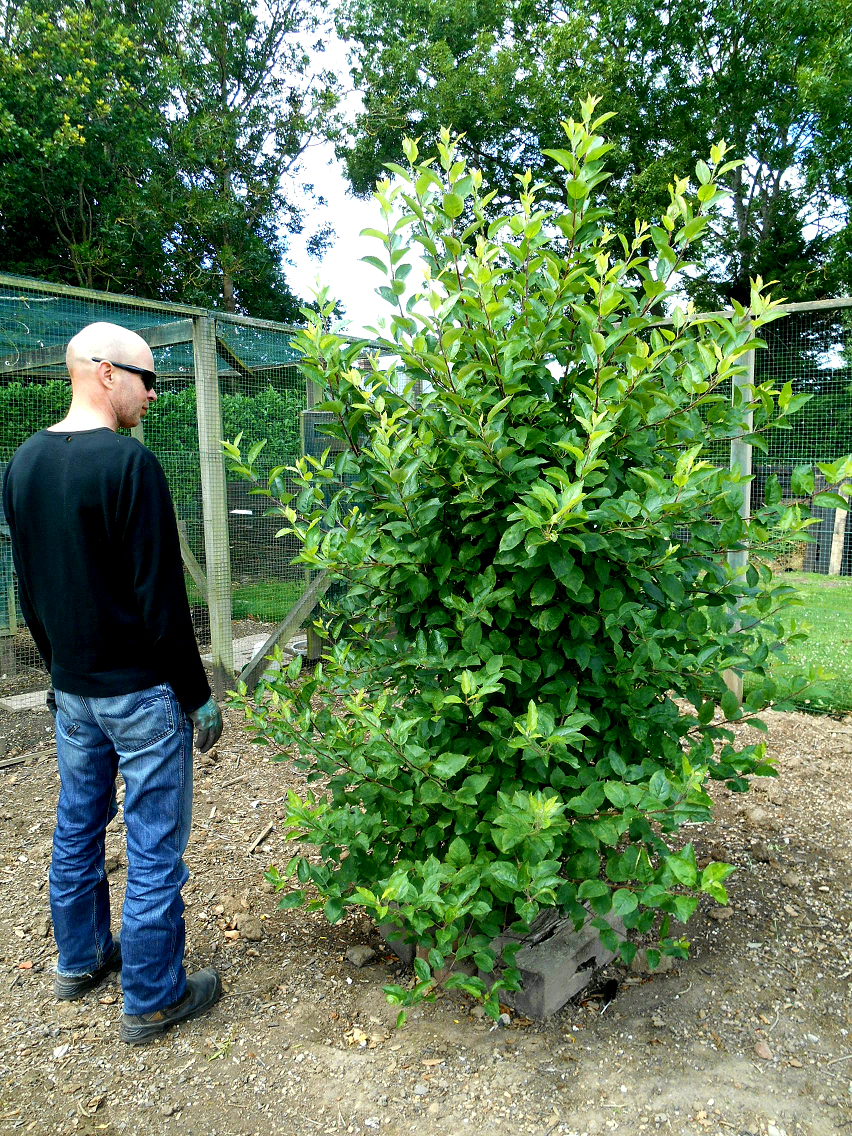
So we planted them outside in the ground. We thought the chickens might like them for shade when they’re bigger, but while they’re still young we put some wood around them to keep the girls from scratching the earth off their roots. There’s four in here (I wonder if you’ll be able to spot them all), and two of them are taller than me! The 8 to 10 years wikihow said we’d have to wait for fruit seemed like a long time, but it’s been 3 years already and time’s just flying 😀
NB this is not my garden 🙂 but luckily we were able to plant them here. So, if you don’t have anywhere of your own to plant them, look for a suitable spot on public property where they won’t get hacked down by farm machinery and then everyone can enjoy them. Check out the Scottish Forest Gardener to see how he successfully plants trees on council property 🙂
Plant trees! You know it makes sense 😉
Update 2024:
These trees are now ten years old so they might blossom and fruit this year but sadly we had to move away from that garden three years ago so we’ll never know for sure. But check out the last pictures we’ve got of these trees here [in 2020] and you can see how big they’d grown as I photographed them with a six foot man standing next to them 😀
Well, we’ve kept on with it, sprouting seed after seed, growing seedling after seedling, and we have quite a few in different sized pots around the garden. Some of them didn’t make it, sadly, but that’s the way it goes, and we just keep on going. (I say ‘we’ but really it’s Miranda who does all the work. I help with watering 😉 )
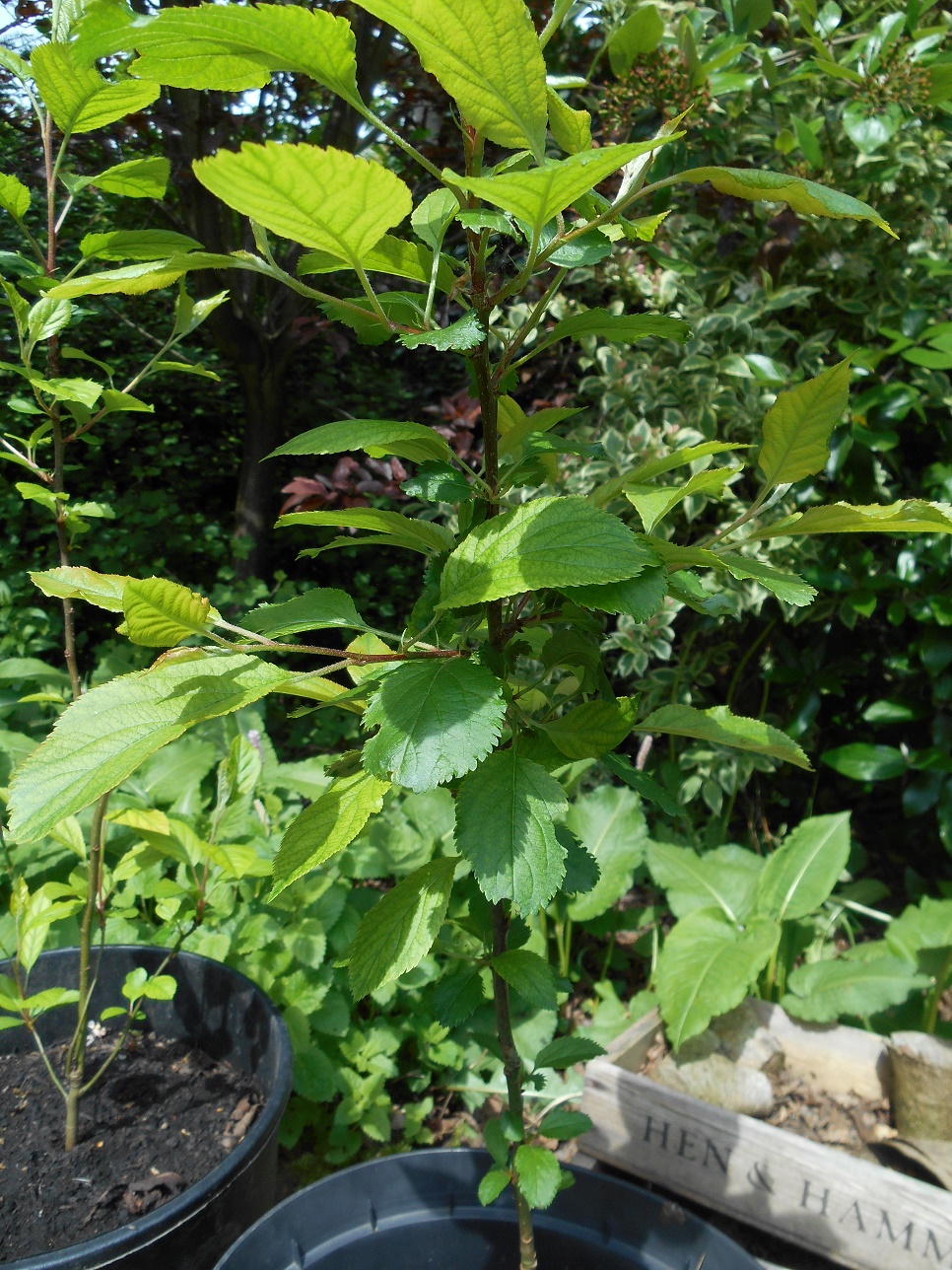
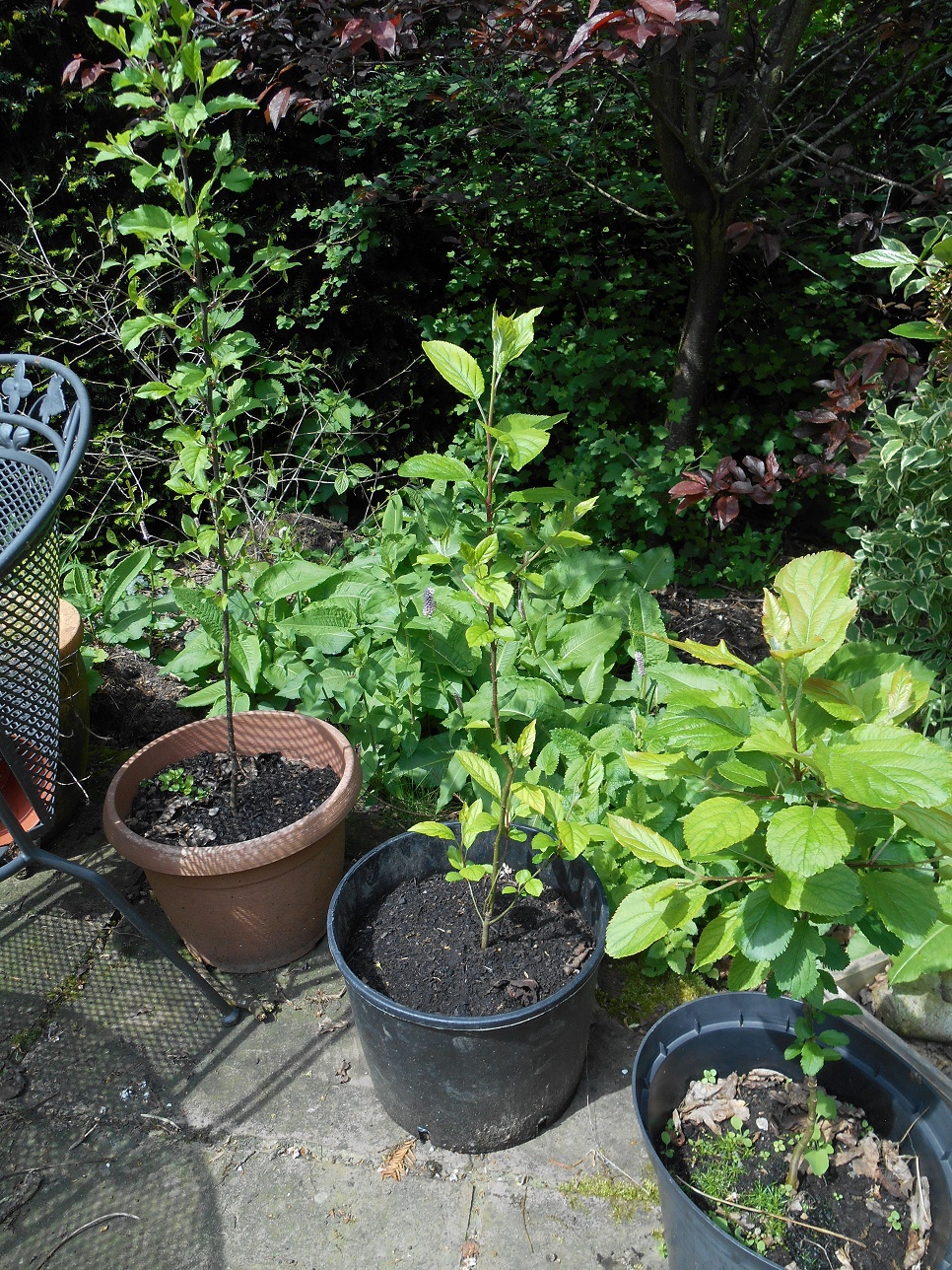
If you look over here you will see what our oldest ones looked like a year ago – nice strong, woody stems, but still tiny.
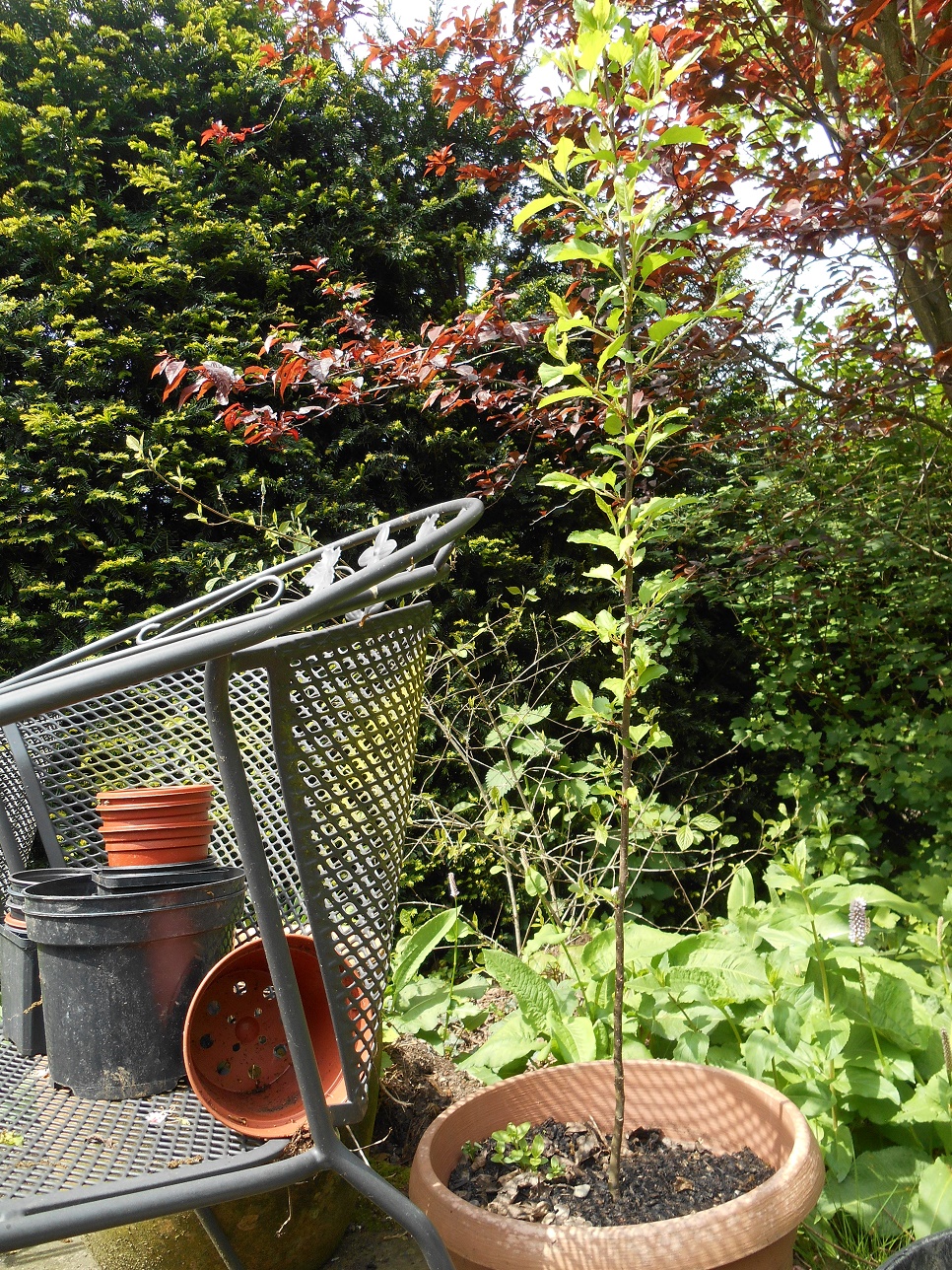
But now the tallest one is about four feet tall! I’ve photographed it next to a garden chair to give you some idea of scale:
How fantastic is that?!!!
It seems like no time since we sprouted those first seeds.
We have planted a few in the wild and intend to keep doing that, inconspicuously near public footpaths, in the hope of providing free food for the future, but most of them are still in pots for now.
We love our little trees 😀
If you want to do this yourself, go to the original post to see how 🙂
If you fancy growing your own delicious organic fruits and vegetables but you don’t have a garden, why not apply for an allotment? Click here to find out how.
It’s true that there are sometimes long waiting lists but not always. We were very lucky that our village was just setting up new allotments and we were able to get one within a few months of moving there. And there are still a few plots available now.
So go on, find out what’s available in your area – the National Allotment Society will give you all the info you need – and do something that’ll get you out in the fresh air and sunshine for a good dose of vitamin D and some healthy exercise, while at the same time providing you with quality, organic vegetables that are good for you and the earth 😀
Remember we decided to grow our own apple trees from seed?
Travel back in time to February 2014 to see how our apple trees began 🙂
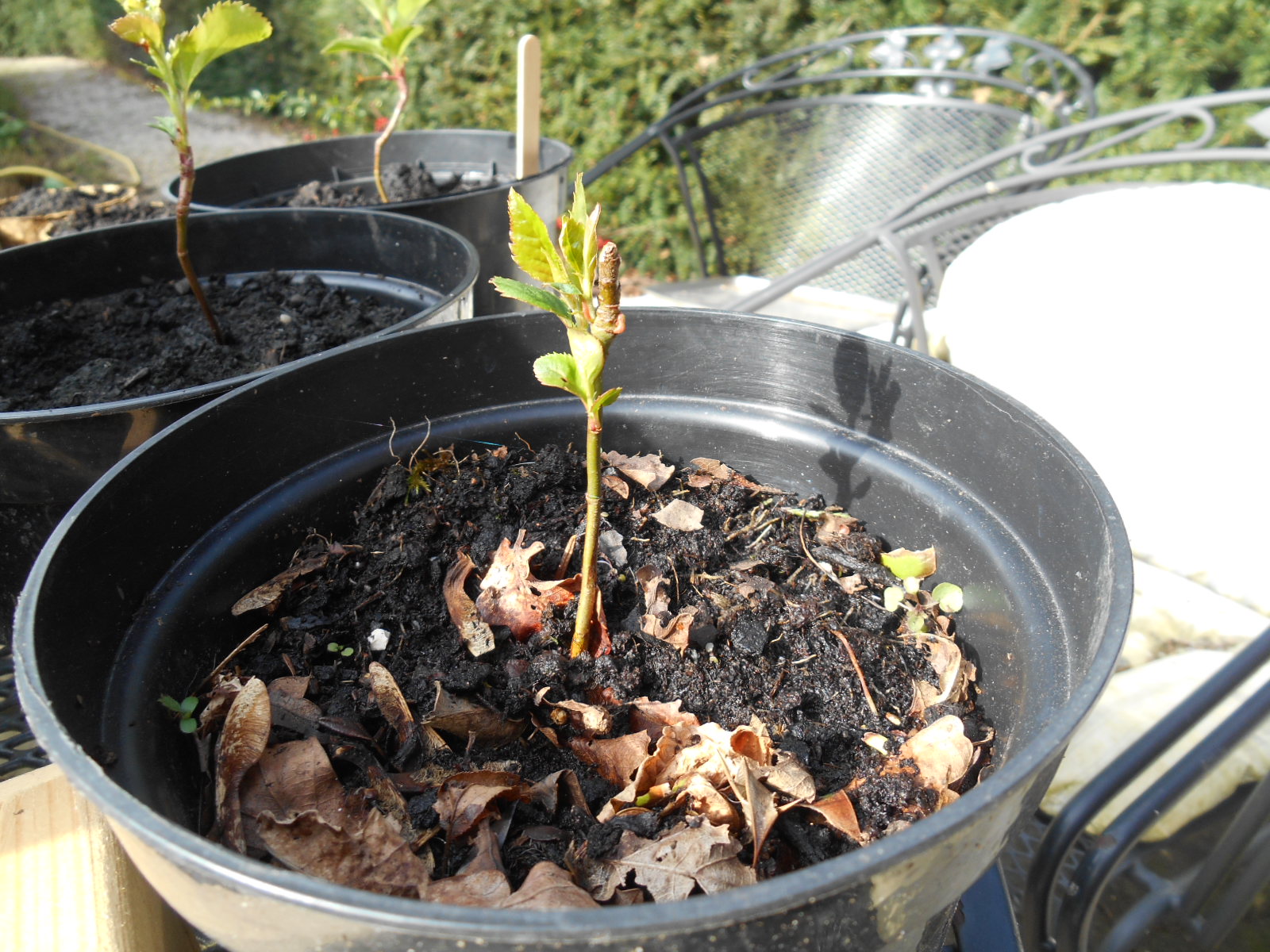
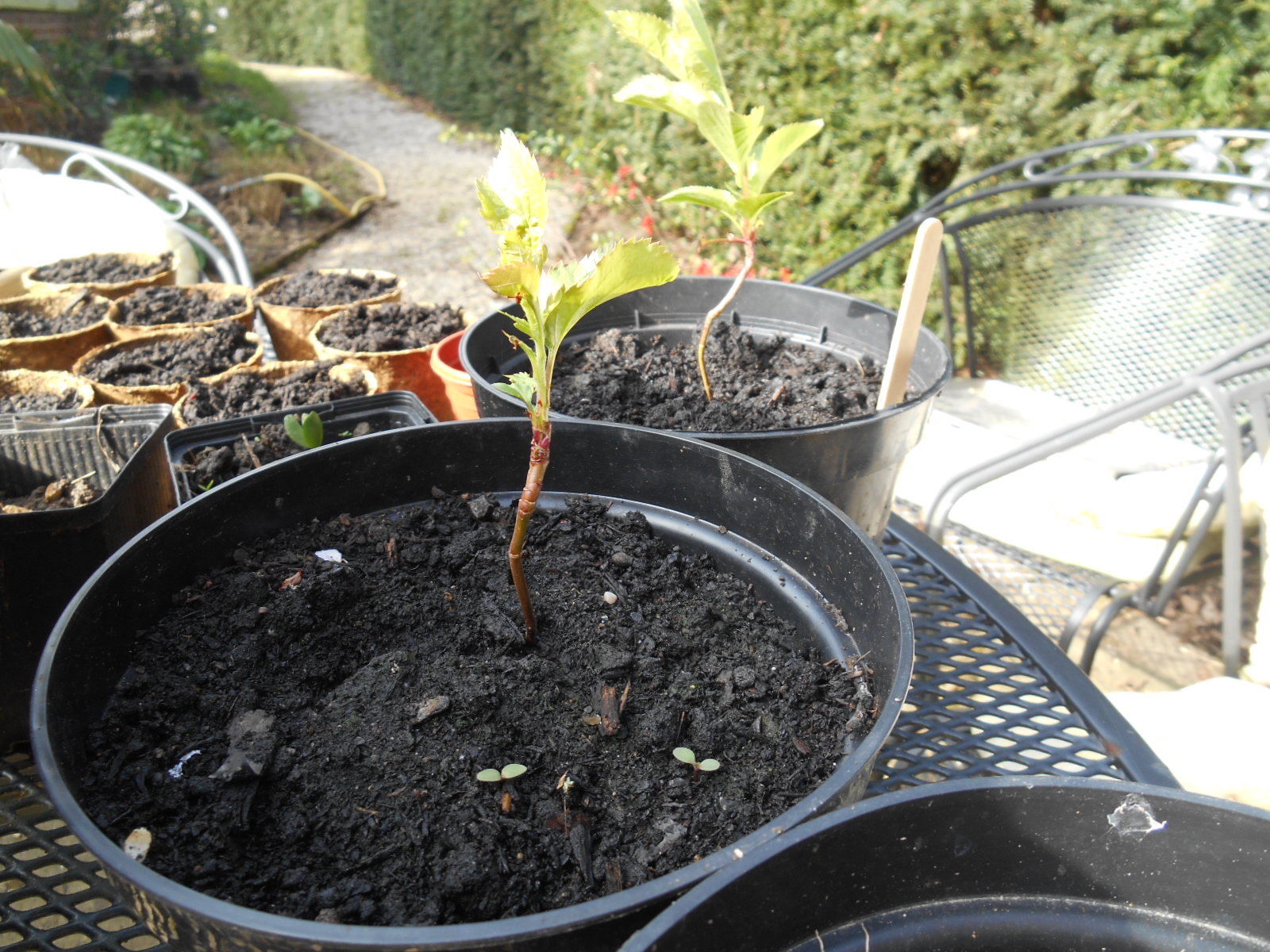
They dropped all their leaves in the winter (we actually thought one of them had died and were going to plant something else in the pot) but then spring came and they came back with gusto! They’ve got beautiful new leaves and strong woody stems. Look at them now:
And here’s some new babies we’ve just got started (there are so many apples in our future 😀 ):
Remember when we had a go at growing our own apple trees from seed? (They’re still going strong by the way). Well, I’ve just come across this brilliant site which shows you, step by step, how to grow all sorts of different trees from seeds you’ve collected yourself!
Ladybirds are good for the garden as they will eat the insects that hurt your plants. A ladybird house, as well as planting things they like (like dandelion and fennel), will encourage ladybirds to stay in your garden because it provides them with a safe roosting place during cold and frosty nights in early spring and a safe place in which to hibernate in winter.
So why not make one?
Put your bug house under a shrub or against a wall where it is warm and sheltered but not hot.
And if you’re feeling a bit more ambitious look at this! Amazing!
Don’t use chemicals in your garden, encourage nature to do the work for you 🙂


















 Violet's Vegan Comics